
Erik Gordon, Area Chair of Entrepreneurial Studies and faculty managing director of the Wolverine Venture Fund at Ross School of Business. The student-led venture fund – the first in the country – recently landed its first unicorn exit. Courtesy photo
The first time University of Michigan startup HistoSonics approached the student-led Wolverine Venture Fund, the MBAs took a pass.
It was 2014, and HistoSonics was raising its Series A for a promising histotripsy technology, a noninvasive treatment that uses focused ultrasound waves to destroy cancer cells. Company execs pitched their tech as a treatment for prostate cancer.
MBAs in the Ross School of Business Wolverine Venture Fund – the first student-led VC fund at a U.S. university – completed four iterations of due diligence. They were willing to take a chance on the unproven tech, they decided, but not on the market. While prostate cancer is a serious disease, several good therapies to treat it already existed..
Liver cancer had no such therapies, except maybe for patients who won the transplant lottery. The Wolverine MBAs voted not to invest, and they shared their feedback with HistoSonics execs.
Three years later, in 2017, HistoSonics came back for its Series B. Not only had it improved its tech, it had switched its market to liver cancer. A new batch of fund MBAs did their own due diligence and voted to invest $250,000.
This fall, HistoSonics was acquired in a deal valuing it at about $2.25 billion.
“That’s a double unicorn,” says Erik Gordon, Area Chair of Entrepreneurial Studies and faculty managing director of the fund.
“No other student fund has a unicorn. We have a company that went out at over $2 billion.”
REAL DECISIONS WITH REAL STAKES
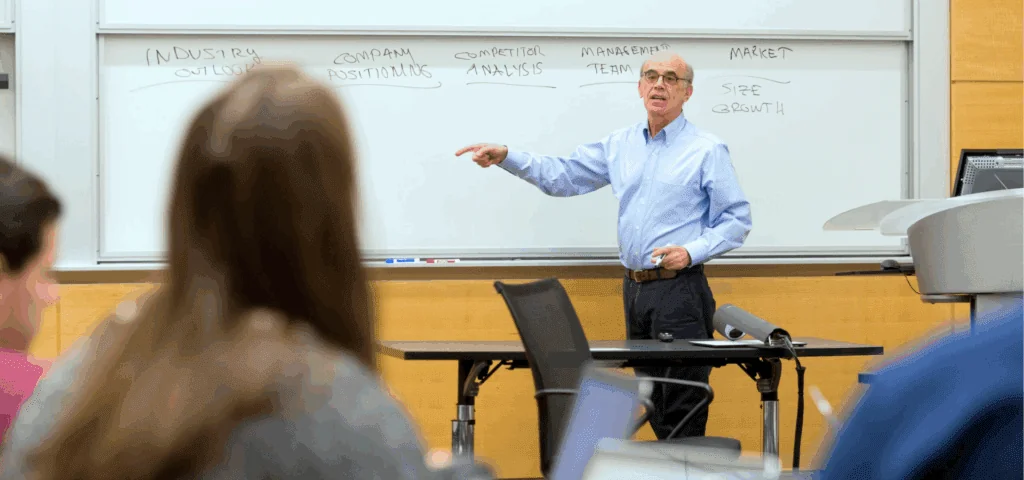
The Wolverine Venture Fund is an elective course at Michigan Ross. It launched in 1997 with a $2 million gift and now manages about $9 million. Gordon has been faculty managing director for 15 years. He has since invited some PhD students from engineering, the life sciences, battery chemistry, computer science, etc., to help evaluate a growing number of deals with deep science and technology questions. While students learn things like early-stage financing in the classroom, students run the fund themselves.
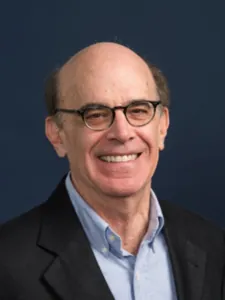
Michigan Ross Professor Erik Gordon
“This isn’t hypothetical,” Gordon tells his classes. “You are investing actual dollars from the university’s endowment, and it’s the scholarship money for students like you.
Students source every deal. They cold call founders, write unsolicited emails, reach out to VCs and accelerators, and meet startups at demo days. Most proposals go nowhere. They sift through mountains of them to find the few worth a closer look. A deal team builds an investment hypothesis and presents it to the full fund. They take feedback, return with deeper research, and present again. Round after round. Only when they have answered as much as anyone can answer in early-stage uncertainty does the fund vote “yes” or “no”.
At any point, three to eight deals can be in motion. Some years the fund invests in two or three companies. Some years it invests in none. Gordon guides the process and asks the hard questions, but the students make every decision.
“They invest in companies I wouldn’t put five cents in, and they pass on companies I would mortgage my house and invest in. But that’s how it works in outside venture capital,” Gordon says.
The vast majority of WVF students do not go into venture capital after graduation. But, they are learning skills they will almost certainly use. It is often the first time they have ever prospected for business. They learn how to present themselves, ask for a conversation, and drum up deal flow. They produce industry-level due diligence, testing assumptions, running sensitivity analyses, and looking for second and third order effects that never show up in classroom cases.
“We have students coming in who know virtually nothing about early stage investing. They don’t know a VC from a CV, and when they leave, they actually are VC investors,” Gordon says.
“They’ve changed the way they think about risk and reward. They’ve changed the way they analyze what’s important and not important. They learn to deal with more uncertainty than they could bear the day they came in.”
THE SWEET VALIDATION OF A DOUBLE UNICORN
Michigan Ross pioneered the first student-run venture fund nearly 30 years ago. Numerous schools have copied the idea since, but it feels fitting that Ross is also the first to land not just a unicorn exit, but a double unicorn at that.
Since the Wolverine fund’s $250,000 investment in 2017, HistoSonic’s histotripsy system received FDA authorization for liver tumors in 2023 and has since treated more than 2,000 patients. The company aims to expand its use into kidney, pancreas, and prostate conditions.
The second HistoSonics pitch to Ross MBAs turned out to be far more favorable than the first. The Series A round students passed on was priced at $1 per share. When the company returned for its Series B, it was a down round priced at 55 cents.
“In VC land, there’s what we call a 10-bagger. If you get 10-times your investment back in five years, you’re a hero,” Gordan says. “This was an 11-bagger, so a lot of bragging rights.”
Gordon has since used the deal as a teaching moment for the current fund class. Discipline, not excitement, guided both decisions.
“We didn’t get lucky. We did two good investment analyses and made two good investment decisions. The first is when we turned down an opportunity to invest in the company. We were right both times,” he told his class.
“I am as proud about how two different groups of WVF students from Ross and across campus got the analyses and investment decisions right as I am about the return.”
NEXT GENERATION DEALS
The deals have changed in Gordon’s 15 years as the fund’s faculty director. Every week now a company is pitching a “new” AI solution that really isn’t using AI at all.
Students have changed, too. Though Wolverine is not a social venture fund, students think about the impact of where they put their money. The fund’s current portfolio includes deals in energy, carbon capture, health care, and AI applications that can improve lives while still delivering venture-level returns.
One startup, for example, replicates the physiology of the human gut to help drug companies predict side effects earlier. Another aims to power implanted medical devices without the wires that now pierce the skin.
Ten years ago, the dean asked Gordon if he wanted to try running a venture fund with undergraduates. Gordon declined. He already felt amazed that graduate students could manage early-stage investing when most arrived knowing nothing about it. He could not picture undergrads doing the same.
A year later, the dean returned with a donor. Ross undergrads have managed their own venture fund ever since. The Michigan Blue Venture Fund is open to juniors and seniors and focused on early-stage investments.
“I underestimated the undergraduates,” Gordon says. “I’m still surprised, because when I walk into the room, they’re undergraduates, so they act like undergraduates. They’re silly. They’re pulling pranks on each other. And then we get down to business, and they turn into these intense, serious people who’ve done extra reading for their prospective deals.”
Just like the MBA students, they are learning to think independently, to take risks, confront the uncertainty of a real business environment, and to own the outcomes.
If the HistoSonics exit proves anything, it is that the model works. Students funded a technology that can destroy tumors with sound waves, and they did it by learning to say no before they learned to say yes.
“You know, in the academic world, we’re pretty good at kidding ourselves about how effective we are. We give people an exam, they score well, and we think we’ve really taught them about mergers and acquisitions,” Gordon says.
“The unicorn exit is cool because it validates that we’re doing a very real-world thing. We’ve had companies that went public or were sold, but having a unicorn? It’s like, wow, it really is working.
“And they got it right twice.”
DON’T MISS: COMMENTARY: A CRUEL DEPORTATION OF A BABSON STUDENT THAT SHOULD OUTRAGE EVERY AMERICAN AND BEST COMPANIES FOR FUTURE LEADERS IN 2026
© Copyright 2025 Poets & Quants. All rights reserved. This article may not be republished, rewritten or otherwise distributed without written permission. To reprint or license this article or any content from Poets & Quants, please submit your request HERE.


