Part of this profile was updated with AI and edited by Poets&Quants.
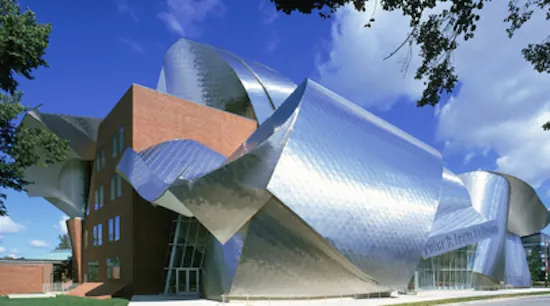
At Case Western Reserve University, Weatherhead now sells flexibility as a real operating model, not just a brochure line. The school uses a single-door admission approach, so students can begin exploring management early while still moving freely across the wider university. That mix of access and flexibility helps frame Weatherhead’s place in the market, including its No. 44 overall finish in Poets&Quants’ 2026 ranking and No. 31 admissions rank.
That cross-disciplinary mindset is central to the undergraduate pitch. Weatherhead says students gain real-world management experience starting in their first year, work across management, technology, engineering, and healthcare, and benefit from small classes where professors know them and their goals.
Programmatically, Weatherhead has moved well beyond the narrower three-program description in the current profile. Undergraduates can now choose from seven business-related majors: accounting, business management, business information technology, economics, finance, marketing, and a customizable management major. Students can also add a 15-credit minor or accelerate into an integrated master’s pathway.
The curriculum is broader than the old copy suggests. Business management students build across economics, accounting, statistics, communication, leadership, marketing, and operations research and supply chain management. BIT majors add programming, systems analytics, database work, and data science. Economics students work with mathematical models and empirical analysis using statistical software, R, or Python.
For students who want to move faster, Weatherhead now highlights integrated pathways into the Master of Accountancy, Master of Business Analytics and Intelligence, Master of Finance, and Master of Supply Chain Management, with some options completed in five years or fewer.
FINDING SUPPORT AT WEATHERHEAD
Support at Weatherhead is more formalized than this profile once described. The school directs students to Weatherhead faculty advisors for help with majors, minors, curriculum, and student experience, and students are expected to declare their major within the first year.
Career development is similarly structured. Weatherhead’s Office of Career Management positions itself as a from-day-one resource, offering career advising, resume reviews, mock interviews, workshops, career fairs, networking opportunities, virtual advising sessions, and career treks.
The most distinctive hands-on piece is Action Learning, the school’s senior capstone. Student teams spend a full 15-week semester working on real projects for real organizations, tackling issues such as process improvement, business growth, organizational development, management control and reporting, or communications. That kind of applied work helps explain why career outcomes remain a relative strength for Weatherhead, including a No. 30 career rank in P&Q’s 2026 methodology.
Experiential learning is not confined to one course. Weatherhead says undergrads gain real-world management experience from the first year, and xLab adds another layer by placing multidisciplinary teams with external clients on digital innovation projects focused on responsible technology.
BREAKFASTS AND TREKS WITH POTENTIAL FUTURE EMPLOYERS
The networking infrastructure is still here, even if the specifics have evolved. Weatherhead says it connects students with alumni and employers through career fairs, information sessions, mentorship, and networking opportunities, and alumni can still plug in through Coffee Connections, mock interviews, and panel discussions.
On outcomes, the school’s 2026 profile submission reports an 88.1% internship rate for the Class of 2024 and a 97.9% employment rate, with top employers including EY, Deloitte, KeyBank, the Federal Reserve System, Amazon, BlackRock, JPMorgan Chase, KPMG, and PNC.
Global exposure remains part of the proposition, too. Weatherhead advertises study-abroad access across every continent except Antarctica, and its 2026 profile submission says students can choose from at least 75 university study-abroad opportunities, including five business-specific options. The same submission says 39.1% of students have a global experience before graduation.
Student life fills in the rest. Weatherhead officially lists undergraduate groups such as Alpha Kappa Psi, the American Marketing Association, Beta Alpha Psi, Consult Your Community, the Entrepreneurship Club, and the Entrepreneurship Through Acquisition Club. For students leaning entrepreneurial, the Veale Institute for Entrepreneurship, LaunchNET, and Sears think[box] deepen the ecosystem around the classroom.
LIFE IN CLEVELAND, OHIO
Cleveland still works in Weatherhead’s favor, but the old description on this page needed a full reset. Weatherhead now frames the city as one of the country’s most livable, with strong healthcare and biotechnology industries, a lively arts scene, and an affordable cost of living. The school also says nearly 40% of Fortune 500 companies are present in Northeast Ohio through headquarters, major divisions, and subsidiaries.
Just as important, Weatherhead sits in University Circle, one of the densest education, healthcare, and cultural corridors in the country. The school says students are surrounded by 15 museums and cultural institutions, four medical centers, more than 30 restaurants, and a deeply connected urban ecosystem. For a business school built around applied learning, that neighborhood is more than backdrop. It is part of the experience.
One thing I’d tighten before publishing: the official site currently frames the school as offering seven majors, while the approved context file describes the portfolio slightly differently with business management concentrations and an economics-with-quantitative-methods track. I resolved that by using the official seven-major framing in the copy and the approved file for supporting context.