






For today’s students, undergraduate business education is no longer just about understanding concepts. It’s about using those concepts before they graduate to analyze real data, contribute to organizations and make decisions with real consequences.
At the same time, technologies like artificial intelligence are reshaping how that work happens and what employers expect from graduates, with more than half of Elon’s business courses now incorporating AI into the learning experience.
This shift is redefining what effective undergraduate business education looks like and how it is delivered for both students and the faculty who teach them.
At Elon University, that shift has shaped a model where learning is not positioned as preparation for the future — it is embedded in real-world practice. Students do more than engage in their learning; they help shape it alongside faculty mentors. The university has been ranked #1 in undergraduate teaching by U.S. News & World Report for five consecutive years, reflecting the impact of that approach.
This approach shapes how students experience business education at Elon. For some, it takes shape through applied, real-world projects. For others, it starts with an idea that quickly moves beyond the classroom.
RETHINKING THE TRADITIONAL MODEL
In many business programs, hands-on learning is concentrated at the end of the student experience. Internships, consulting projects and capstones often serve as the moment when theory meets practice.
At Elon, that sequence looks different.
Applied learning begins on day one and is reinforced through a continuous cycle of experience, feedback and refinement. Rather than building toward a single culminating moment, students develop capability through repeated exposure to real-world complexity.
That approach is visible in experiences like the Love School of Business Analytics Summit, where students work directly with industry partners to solve current business challenges.
In a recent summit, students analyzed a dataset from Crumbl, exploring how menu rotation, customer demand and retention influence growth. Over two weeks, alongside regular coursework, teams worked under time constraints to translate analysis into recommendations presented to company leaders.
The exercise required more than technical proficiency. Students were expected to communicate clearly, defend their thinking and adapt their approach in response to feedback.
The summit also created space for students to share applied work already underway. Interns with the Elon University Center for Applied Analytics and AI presented projects developed through their work with organizational partners, giving both peers and industry professionals insight into how classroom learning translates into ongoing, real-world impact.
That same shift toward early application extends beyond structured coursework.
For Bernardo Vargas-Lopez ’26 and Juan Daniel Chiriboga ’26, it began in the Ecuadorian Amazon.
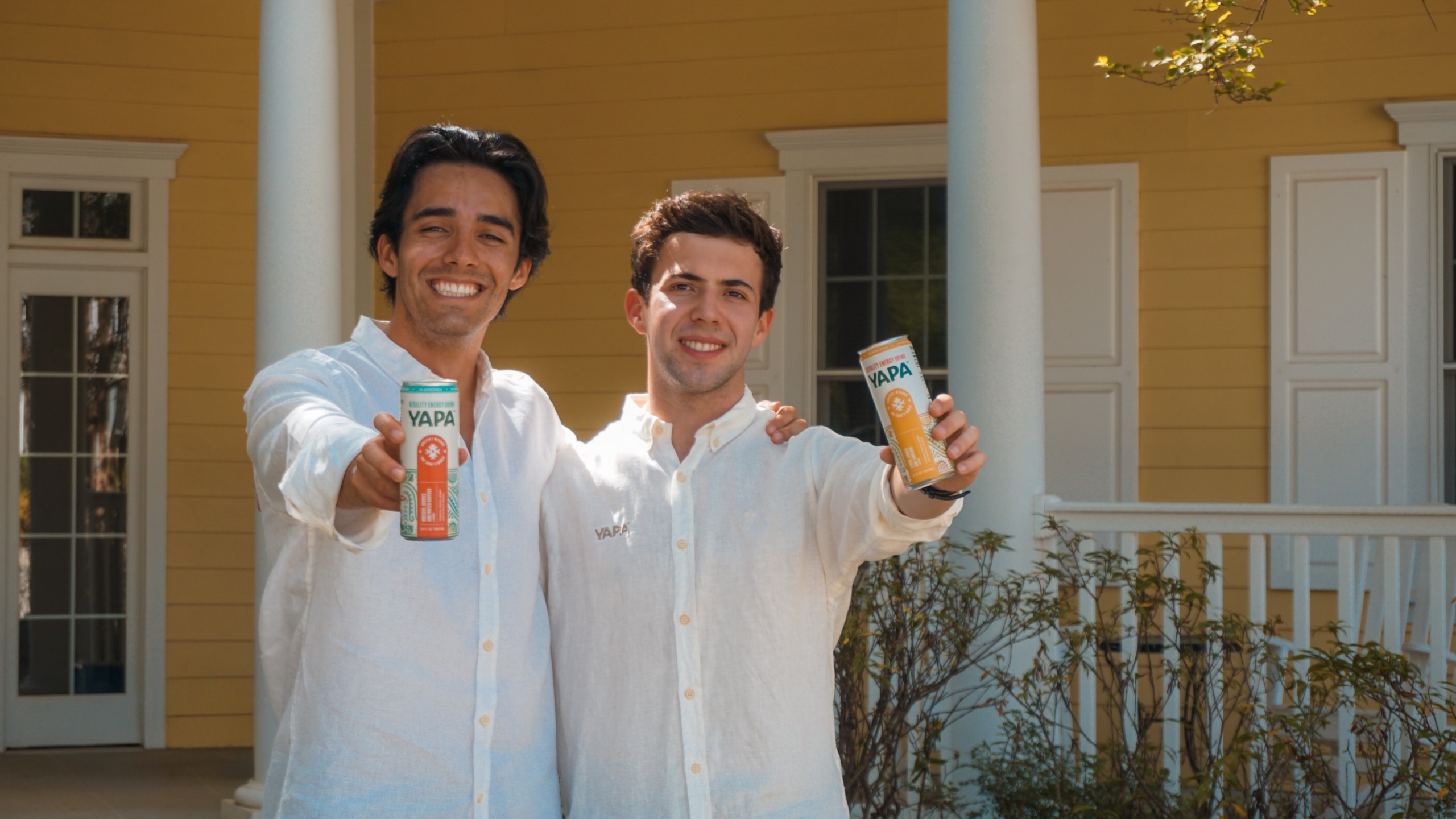
Vargas-Lopez, a sport management major from Austin, Texas, and Chiriboga, an entrepreneurship major from Quito, Ecuador, developed YAPA, a plant-based energy drink, after experiencing guayusa culture in the Amazon. What began as a lunch conversation in the school’s dining hall evolved into a venture shaped by research, supplier conversations and mentorship across disciplines.
Faculty played a role in helping move the idea forward. Through conversations and encouragement from professors, including Professor Sean McMahon, the concept took shape as something worth testing and building.
“At first, it was just an idea,” Chiriboga said. “But the more we talked to people, the more it started to feel real.”
As they continued building the business, including during study abroad experiences in Australia and Japan, they approached the process as learners first.
“We became sponges,” Vargas-Lopez said. “We talked to people in the Amazon, people in large companies and mentors in finance. We gathered as much information as we could so when we came back, we had a clear picture of what needed to happen.”
After graduation, Vargas-Lopez and Chiriboga are focusing on launching the product and finding a path to market.
Their experience reflects a broader pattern. Students are not expected to wait for permission to begin applying what they are learning. They are encouraged to test ideas early, refine them through feedback and build toward something real.
This expectation continues in the classroom. In Associate Professor Elena Kennedy’s “Entrepreneurship for the Greater Good” course, students complete semester-long consulting projects with nonprofit organizations, producing work designed for immediate implementation.
In one term, students contributed more than 1,000 consulting hours, conducted 100 stakeholder interviews and delivered solutions that organizations could use right away. Projects ranged from building automated dashboards that reduce administrative workload to designing campaigns that contributed to housing placements and fundraising outcomes.
These are not simulations. They are decisions with real consequences, made in partnership with organizations that rely on the results.
DESIGNING FOR COMPLEXITY, NOT CERTAINTY
A model of undergraduate business education built on application requires a different approach to teaching.
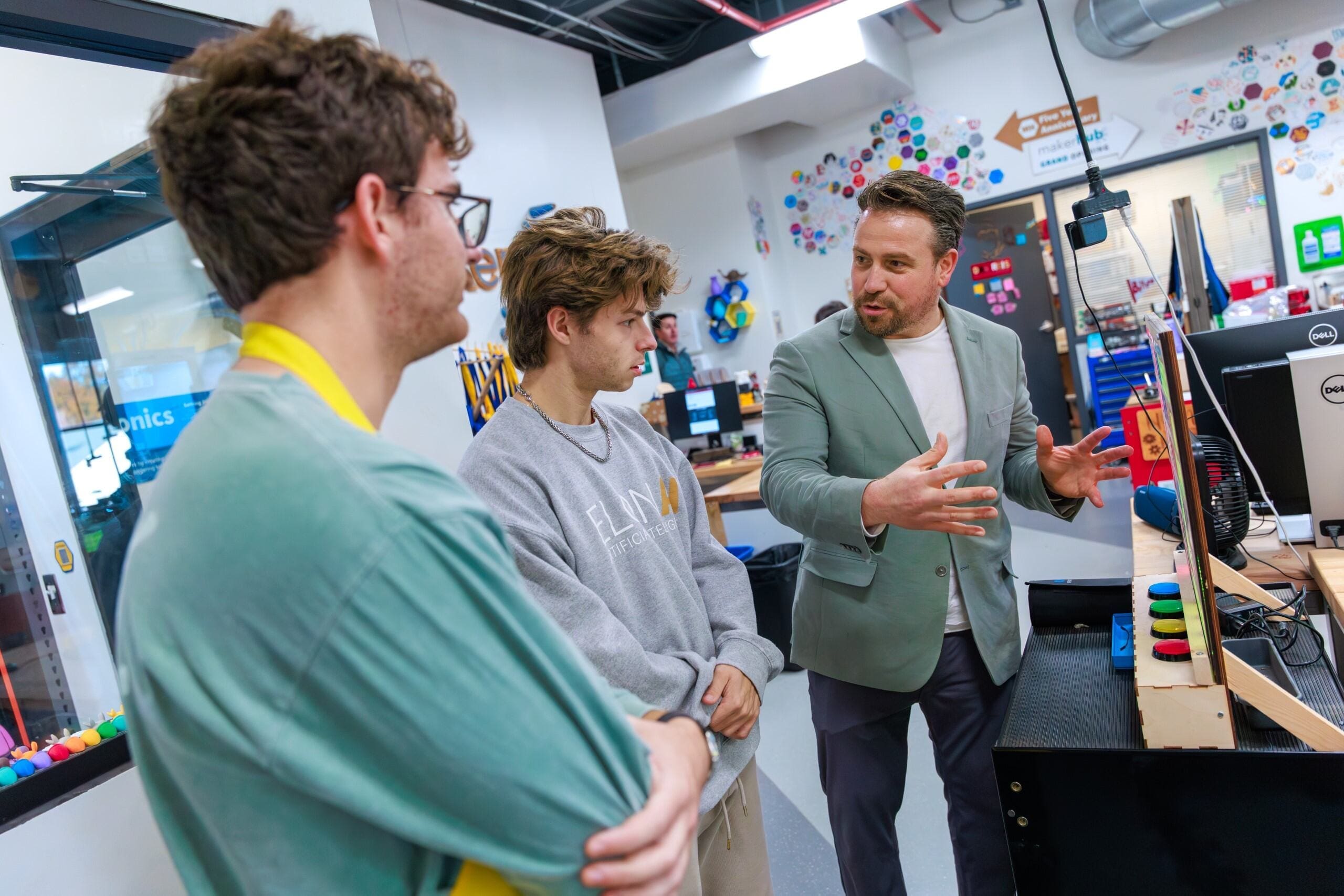
Mustafa Akben, assistant professor of management and Elon’s director of artificial intelligence integration, was recently named one of Poets & Quants’ 50 Best Undergraduate Business School Professors. His classroom reflects a broader shift in how business education is delivered.
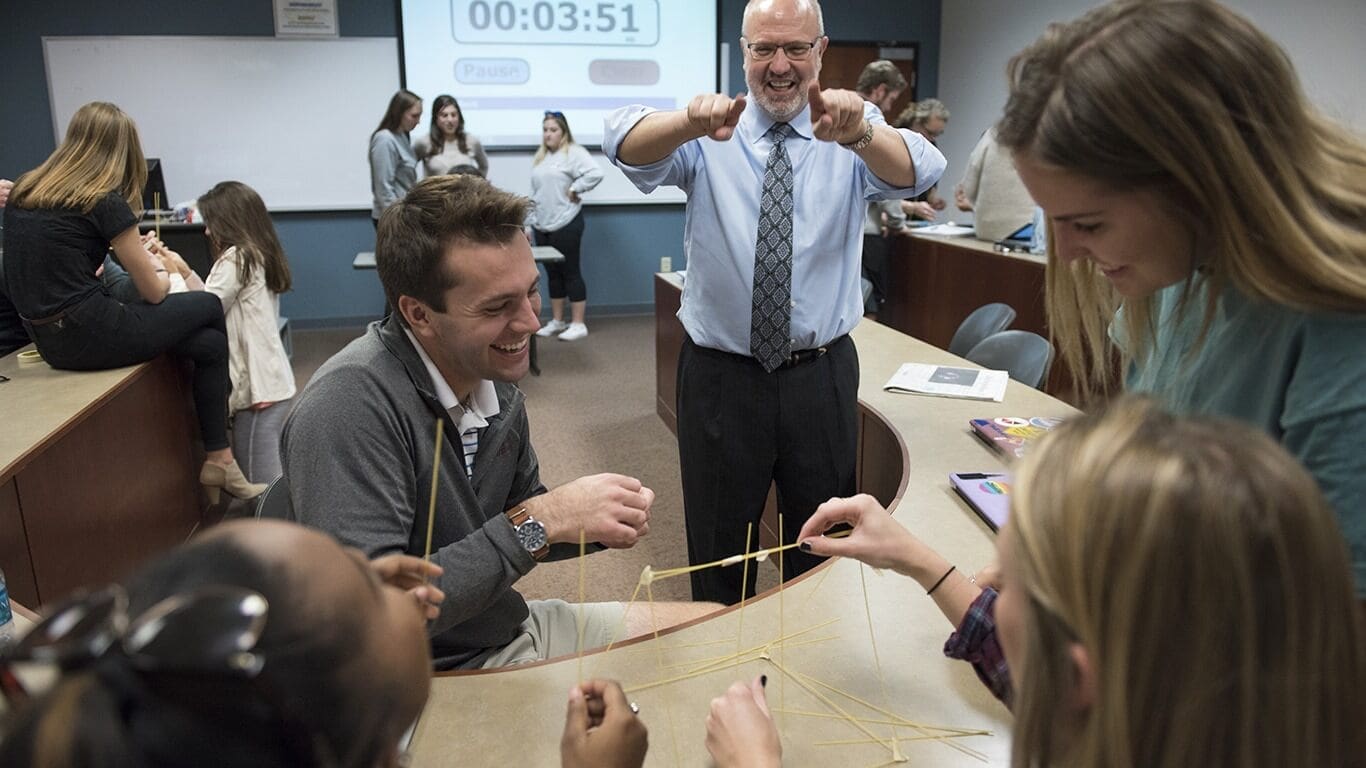
Rather than organizing learning around clear answers, courses are designed around ambiguity. Students engage in simulations, collaborative challenges and experiential exercises that mirror the uncertainty of real organizational environments.
They may find themselves navigating team dynamics in an escape-room style exercise, building and selling products to understand cross-functional coordination or presenting ideas to external audiences in a pitch format.
The goal is not simply to understand concepts. It is to practice using them when the path forward is not obvious.
As artificial intelligence reshapes how work is done, the question is no longer whether students should learn to use AI tools, but whether they can apply them with ethical judgment and critical thinking.
At Elon, AI is not treated as a standalone skill. It is integrated into conversations about leadership, decision-making and human behavior. Students explore how these tools influence creativity, collaboration and organizational outcomes, while also considering the ethical implications of their use.
Technical fluency matters. But without context and judgment, it is incomplete.
DESIGNING EXPERIENCE THAT BUILD CAREER READINESS
One of the persistent gaps in undergraduate business education is the disconnect between academic learning and professional expectations.
At Elon, that gap is addressed through repetition.
Students engage with industry professionals throughout their academic experience, not just at key milestones. Competitions, speaker series, workshops and mentorship opportunities are embedded into the rhythm of the program.
Each interaction builds familiarity and reinforces skills, helping students develop both competence and confidence.
For Macey Rodrigues-Cowl ’25, that process played out through a sales role-play competition. Encouraged by faculty and industry partners, she entered the competition while balancing a full academic schedule and multiple responsibilities. After advancing through a competitive field, she secured a full-time sales position with Grainger in Charlotte.
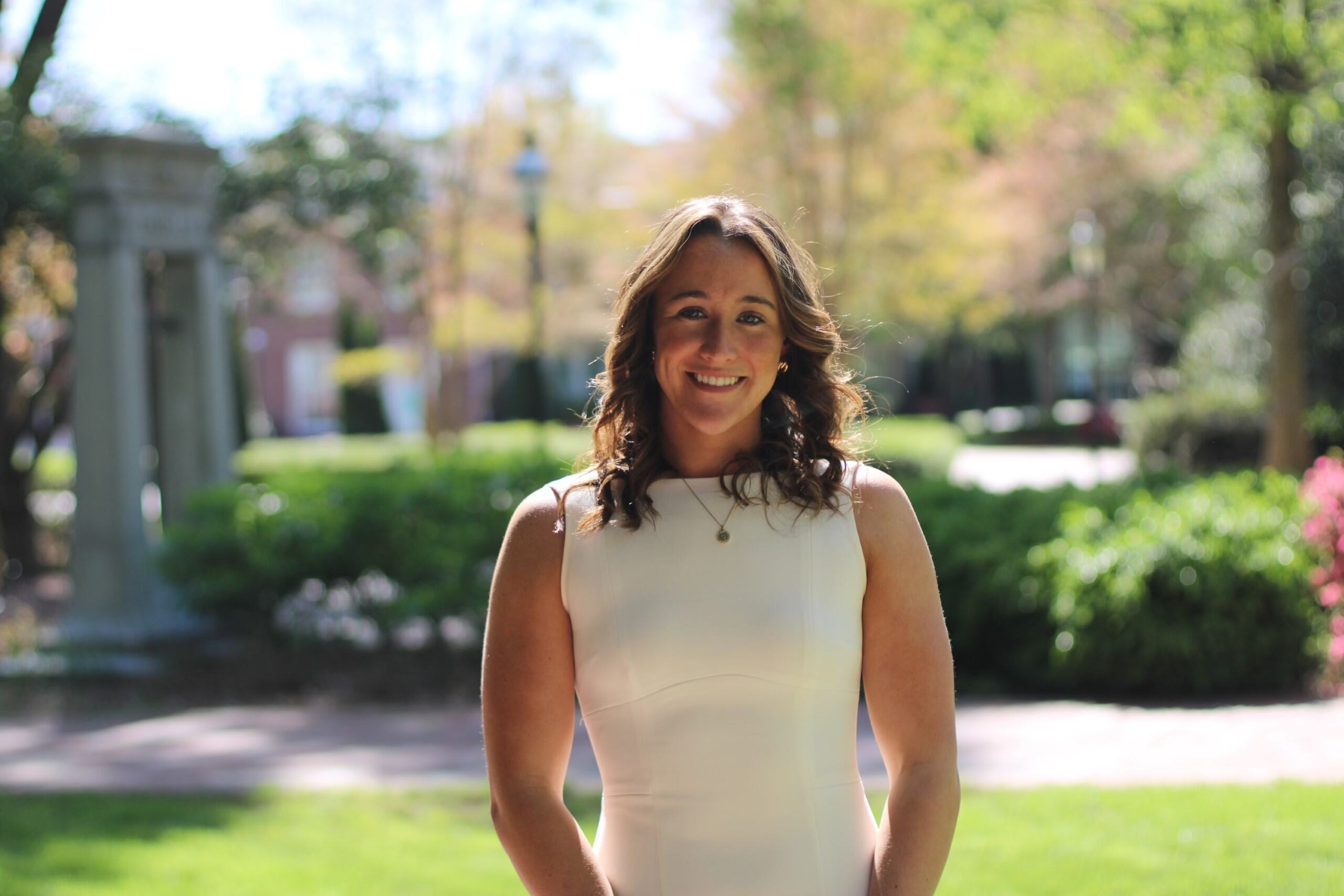
Her experience reflects a broader pattern. Career readiness is not treated as a final checkpoint. It is developed through consistent exposure to professional environments where students can test and refine their abilities.
For students in programs like the Business Fellows, that exposure often extends beyond the classroom and into global business environments.
During a senior-year experience in Prague, finance major Duncan George ’25 shared an early concept for a digital marketplace designed to support student-run businesses with a fintech executive. What began as a conversation quickly turned into a partnership.
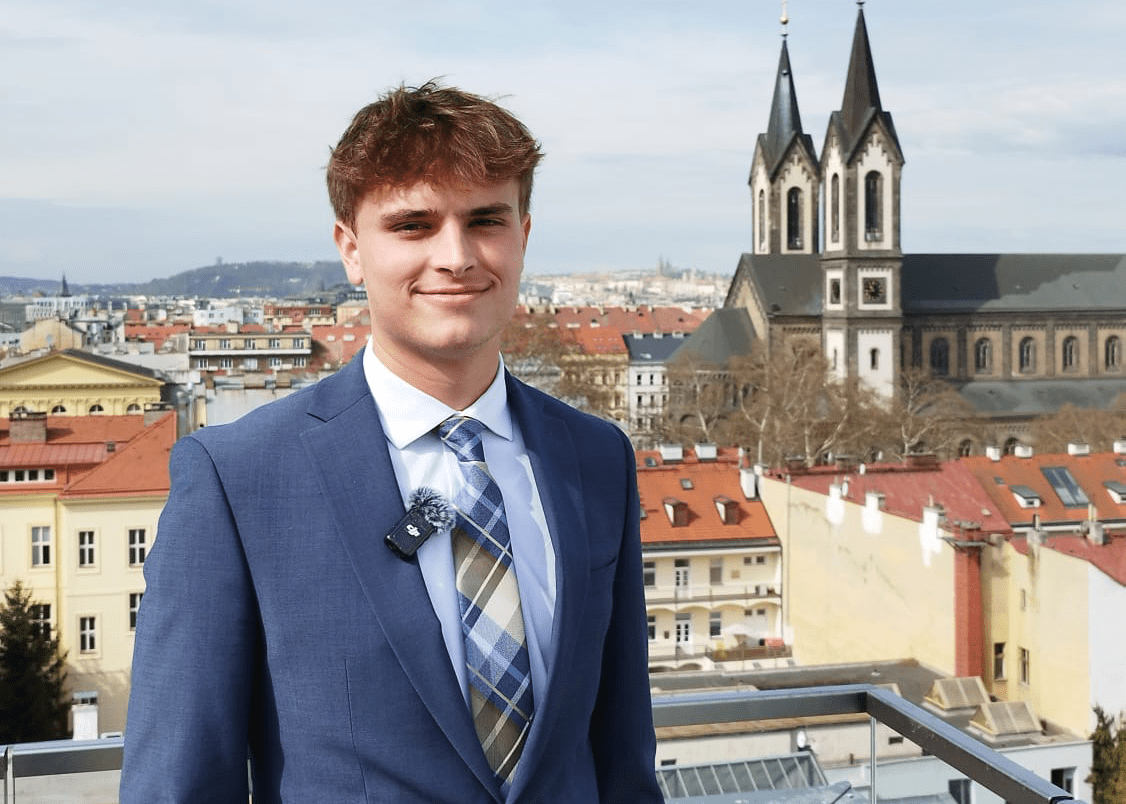
“While touring a fintech firm, I explained the platform I’d been refining,” George said. “The CEO offered to integrate his company’s payment system and become my partner.”
The collaboration continued across time zones, with plans to launch the platform to student ventures. For George, the experience reinforced how quickly ideas can evolve when students are placed in environments that encourage both initiative and connection.
“Every professor I met was involved beyond the classroom,” he said. “That energy pushed me to take an early concept and build something real.”
CREATING SPACE FOR INITIATIVE
Structure alone does not define the student experience. Equally important is the space to explore ideas beyond formal requirements.
At Elon, students are encouraged to pursue initiatives that extend beyond coursework, supported by a network of faculty, alumni and institutional resources that continues well beyond graduation.
Alumna Taylor Casey ’16 built Kahmino, a neighborhood-matching startup that earned a $50,000 NC IDEA Seed Grant. Her work was shaped by mentorship and collaboration within the Elon community, including support from faculty, alumni and graduate analytics teams.

Experiences like this are not isolated. They reflect a system where students are encouraged to act on ideas, supported by mentorship and access to networks that accelerate progress.
When students operate in an environment that values initiative, entrepreneurship becomes a natural extension of the academic experience.
A BROADER DEFINITION OF TEACHING
The future of undergraduate business education will be defined not by how much students are taught, but by how early they are trusted to use what they learn and how well they are prepared to act when it matters.
At Elon, students are not preparing for the real world. They are already operating and becoming more capable within it.
Teaching is not measured by what faculty deliver. It is measured by what students are able to do because of it and how they grow into leaders who make a difference.
Elon University Love School of Business | Hands-On Learning and Global Impact
Elon University’s Martha and Spencer Love School of Business offers an undergraduate business education grounded in hands-on learning, faculty mentorship and real-world experience. Accredited by AACSB International, the school offers 12 undergraduate majors across five departments, with graduate programs in business administration, analytics and accounting alongside graduate certificates. Recognized by Poets & Quants for strong career outcomes, Elon prepares students to connect with industry, test ideas early and graduate with the judgment and confidence to succeed.
© Copyright 2026 Poets & Quants. All rights reserved. This article may not be republished, rewritten or otherwise distributed without written permission. To reprint or license this article or any content from Poets & Quants, please submit your request HERE.


