






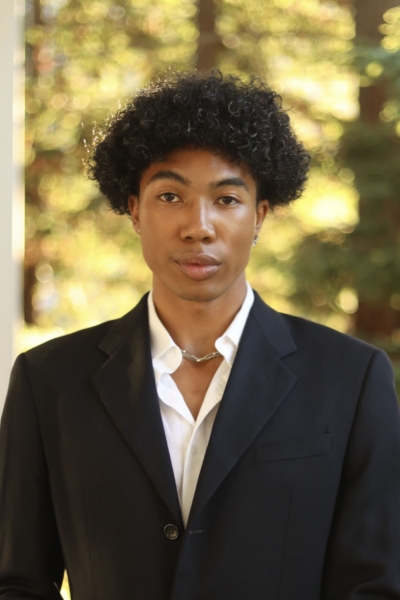
Jonathan Lee, UC Berkeley (Haas)
4) Get Outside The Business School: “Build friendships outside of business. Become friends with artists and creators. They notice patterns others miss and push you to think more expansively. I learned quickly that art is everywhere in business, from design and storytelling to branding and the way you communicate ideas. Those cross-disciplinary relationships later shaped how I built my startup, leading me to collaborate with designers and researchers who influenced both the product itself and how it reached people.”
Jonathan Lee, U.C. Berkeley (Haas)
5) Stop Comparing Yourself To Others: “Don’t feel guilty about moving at your own pace! My first semesters of college felt like a constant barrage of competitive club applications, recruiting cycles, and endless coffee chats. It’s easy to feel like everyone is always trying to get one step ahead. I found myself doing the same, often driven more by obligation and “FOMO” than by genuine interest. Over time, I learned that moving at your own pace doesn’t mean doing less, it means being more intentional. What matters most isn’t how much you do, but the impact you have. Prioritize the things that truly matter to you, and commit to them fully rather than spreading yourself too thin.”
Paige Yu, Carnegie Mellon (Tepper)
6) Keep Your Options Open: “Don’t limit yourself by the confines of an area depth or career paths too early on. Focus on building your core skills first, including problem-solving, data analytics, and communications and then explore specific pathways.
The first job you get is not necessarily where you will end up as an undergrad. What matters more is developing the ability to adapt your skills to new situations and unfamiliar problems. Over time, that breadth of experience will come together and become one of your greatest strengths.”
Yashonandan Kakrania, Emory University (Goizueta)
7) Find Your Community…Early: “One of the most important reasons for my success is because of the friends and faculty who surrounded me. This community not only encouraged me to be myself, but also pushed me to try new activities, face uncomfortable situations, and learn about topics that I was previously unaware of. Professional extracurriculars, such as the Undergraduate Consulting Club, and rediscovered passions like swimming all became opportunities because of my community. This kind of environment doesn’t just make you better individually, it raises the level of everyone that is involved and pushes everyone forward.”
Bertie Vyas, Georgia Tech (Scheller)
8) Make Yourself An Asset: “Find work you’re genuinely curious about, then make yourself useful to the people doing it well. I didn’t plan to work for executives as a sophomore or build AI systems for a consulting firm as a senior—I just kept showing up, asking questions, and doing work that I loved and was curious about. The interesting opportunities came from being helpful, not from optimizing my LinkedIn.”
Ty Keough, USC (Marshall)
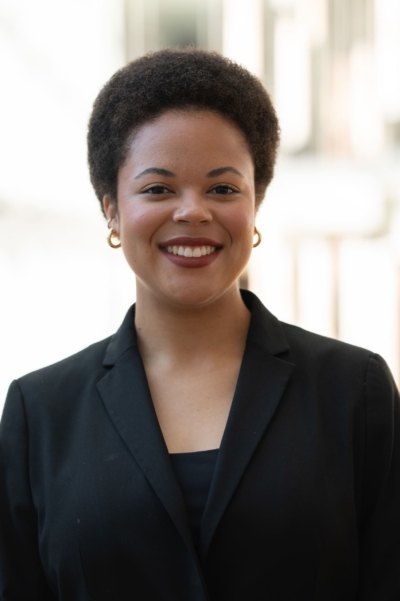
Viveca Henry, University of Michigan (Ross)
9) Study Improv: “Take an improv class and continue building your ability to communicate effectively. Through observations of my peers and those I look up to, distinguished performers are ones who can engage an audience and synthesize information in a concise and digestible manner for their respective audience. Improv allows you the chance to build foundational skills in active recall, staying present, and learning how to think quickly on your feet in high-stakes situations.”
Viveca Henry, University of Michigan (Ross)
10) Embrace Discomfort and Failure: “Like many other freshmen, I spent my first fall at Georgia Tech trying everything, from clubs to intramural sports to professional organizations. One club I was particularly excited about focused on cultivating a more positive and inclusive campus culture. My entire personality hinges on my bubbly, enthusiastic attitude, so I walked out of the club interview feeling more confident than ever. When I got the email to try again next semester, I was shocked and humiliated.
After a few days of reflection, I reframed the rejection – not as a reason to stop trying, but as motivation to continue seeking new opportunities. As the years of college passed by, this experience became the first of many failures. Given the varying facets of business, there were some classes I loved with curriculums and syllabi that felt they were crafted just for me, and others where I struggled. I entered business school with a plan to study Leadership and Organizational Change, and left focused on Operations, Supply Chain, and Analytics – oh, and I’m also pre-law! What I didn’t know freshman year was that failure is what paves the way for finding your “happy path,” best fit, and ultimately, success.
In time, I learned to view failure not as personal inadequacy, but as a natural step to learning. Learning comes from failure, and failure comes from trying. And the key is – never stop trying!”
Caroline Kern, Georgia Tech (Scheller)
“Fail fast and fail often. If you go through your entire college career with no mistakes being made, you took no risks and you built nothing worth building. Business school drills into you the importance of managing risks, but nonetheless taking it. You are entering into an industry full of risks, and if you do not become familiar with taking risks and failing in college, you will have a hard time in industry. Fail fast and often because this means you are broadening your horizons and learning. You are here to learn, and this is the one place that will not penalize you harshly for failing. Make the mistakes now so you can carry the lessons with you and build the necessary maturity to succeed in the business world is one of the greatest lessons business school will teach you. If you always play it safe, you are doing yourself the disservice of hindering yourself from the person you could become.”
Grace Zaucha, Notre Dame (Mendoza)
“Say yes to things that scare you. Last summer, I took a month-long study abroad program in Spain with courses completely outside the business school. I was nervous and anxious, worried about being away from home, in another country, and about learning subjects I had no background in. I almost convinced myself that I should have spent the month taking summer classes or focusing on building my professional portfolio. But being in those classrooms where I wasn’t the expert, where I had to learn entirely new ways of seeing problems through cultural, historical, and social lenses, brought new lessons and experiences into my life that no business course could have provided.
Saying yes does not have to mean you feel ready. Growing up and going to school in the same state meant I always had the psychological safety of being close to home, and I never felt ready to study abroad. But during my experiences with new people, food, and places, I learned that those memories are more important than another month of studying, and now is the time to experience opportunities we won’t have after graduation.”
Samantha Asprelli, Northeastern University (D’Amore-McKim)
DON’T MISS: 13 BIG LESSONS YOU LEARN IN BUSINESS SCHOOL
© Copyright 2026 Poets & Quants. All rights reserved. This article may not be republished, rewritten or otherwise distributed without written permission. To reprint or license this article or any content from Poets & Quants, please submit your request HERE.


