






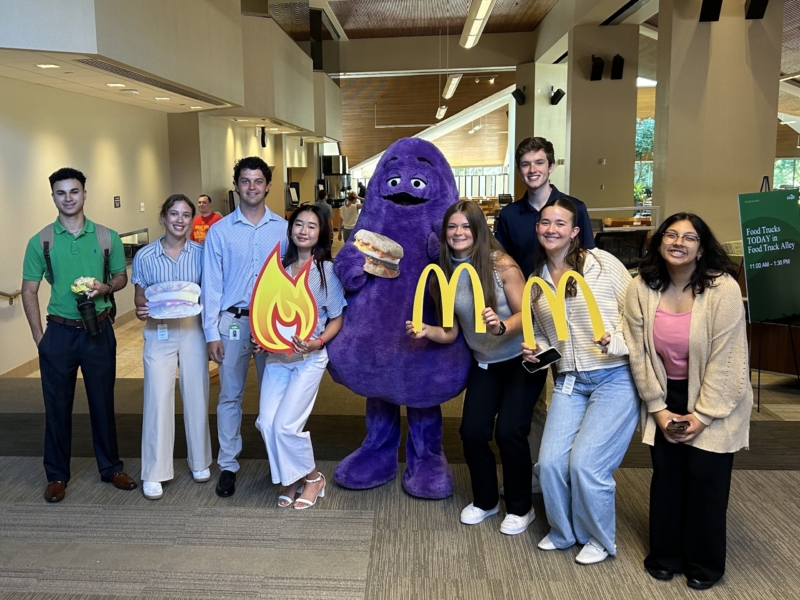
Emily (second from right) hanging out with Grimace during her Cargill internship. Cargill supplies many food ingredients that supports McDonald’s
I told myself that my summer internship in Digital Marketing at Cargill would be what I made of it – and I was determined to make the most of it. Cargill is the world’s largest private company, but I didn’t want that to intimidate me. With only 12 weeks to stand out and make an impact, I approached every moment with curiosity and drive.
Cargill is deeply connected to the food we eat every day, making ingredients, food products, and essentials and partnering with businesses to help our food systems grow. I looked forward to the opportunity to grow within the company; because of Cargill’s size and global reach, employees can explore different departments, develop new skills, and learn about many sides of the business. I remember hearing that “Cargill touches 80% of what’s in your pantry,” which shows just how widespread its impact is (even if it’s often behind the scenes). For example, I wouldn’t normally think about the oil used to fry McDonald’s fries, but now I know Cargill supplies it, which shows how essential yet unseen their role in the food industry really is.
During my time in Cargill’s Bioindustrial (CBI) department, I worked closely with a team of four digital marketing leads under the Vice President and Global Marketing Director. My primary responsibility was a large-scale website rebranding project, where I used Oracle tools to rebrand more than 200 web pages under tight deadlines. I also researched and evaluated SEO performance across product categories, gathering data from Google Ads and Google Search Console to provide actionable insights. In addition, I developed a comprehensive rebranding guidebook and maintained an SEO tracking spreadsheet, which I presented to the product category teams to support ongoing marketing strategies.
Cargill turned out to be an incredible experience—largely because of the people I met. The company is full of talented employees who genuinely want to help, which was especially meaningful since it was my first time stepping into a corporate setting. In such a massive organization – over 155,000 employees worldwide – I knew it would be up to me to seek out connections.
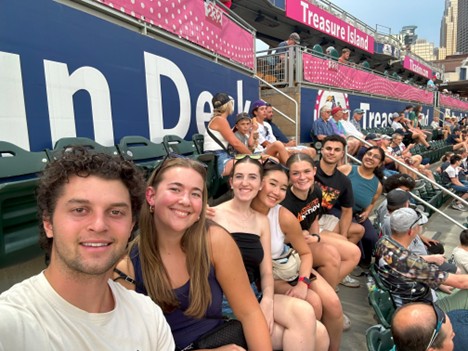
Emily (second from left) with her Cargill colleagues at a game
STANDING OUT IN A CORPORATE SETTING
Three habits helped me make a positive impression on the people I met at Cargill:
1) Communicate Clearly: In meetings I practiced giving short, focused updates. It sounds small, but busy teams notice when you respect their time.
2) Take Initiative: I volunteered for tasks outside my official role, from helping with a rebranding guidebook to coordinating timelines for the Cargill 2030 Rebrand Initiative. Showing that I was willing to learn anything signaled investment in the team.
3) Ask Smart Questions: At first, I asked questions constantly. During an early weekly check-in with my supervisor, I received feedback that taught me to pause and trust myself, checking available resources before immediately asking for help. When I did bring a question forward, I made sure it was thoughtful and specific – “I looked into X and found Y; how does that fit with your understanding?” – which built trust and kept projects moving.
These habits, more than any single technical skill, helped me feel at home in a corporate environment and positioned me as someone my colleagues could rely on.
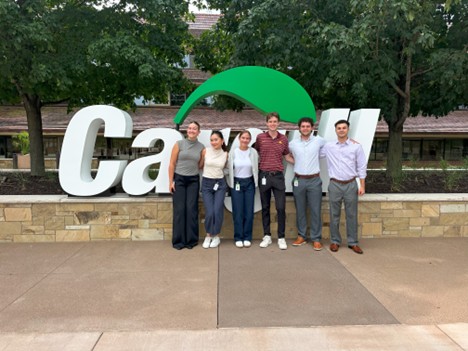
Emily with her team at Cargill headquarters
CREATING MENTORSHIP OPPORTUNITIES
One of the most valuable steps I took was asking for a mentor. Early in the summer, I told my supervisor I wanted one, and she connected me with our global marketing director. This wasn’t the first time we had crossed paths. I had first met her through the interview process and later during an invitation to connect with the Cargill team in February. Because of that early foundation, introducing myself to her as a mentee felt natural and gave us a strong starting point for deeper conversations.
We met bi-weekly to talk about how my internship was going. She also shared career planning and professional and personal advice. I worked to make our conversations two-sided, asking about her career journey and sharing my own reflections. She was kind and approachable, which helped build trust quickly. One unforgettable insight I gained from her was how much a team’s culture shapes your experience. I saw this play out firsthand with our digital marketing team, who made it a priority to check in weekly, communicate often, and connect outside of work through lunches and socials. Experiencing that showed me that the people you work with matter just as much as the projects you take on.
There is a responsibility you carry when a mentor invests in you. I returned the favor by reaching out to more than 50 people across Cargill for coffee chats and sharing those perspectives back with my mentor and team. I also made it a personal goal to deliver a strong final presentation; afterward, my team told me how impressed they were with my ability to present and communicate across groups. Those moments reinforced that even as an intern, I could add value to the people mentoring me. If you’re hoping for a mentor, don’t wait for someone to assign you one—state your interest, build the relationship, and approach it as a genuine exchange.
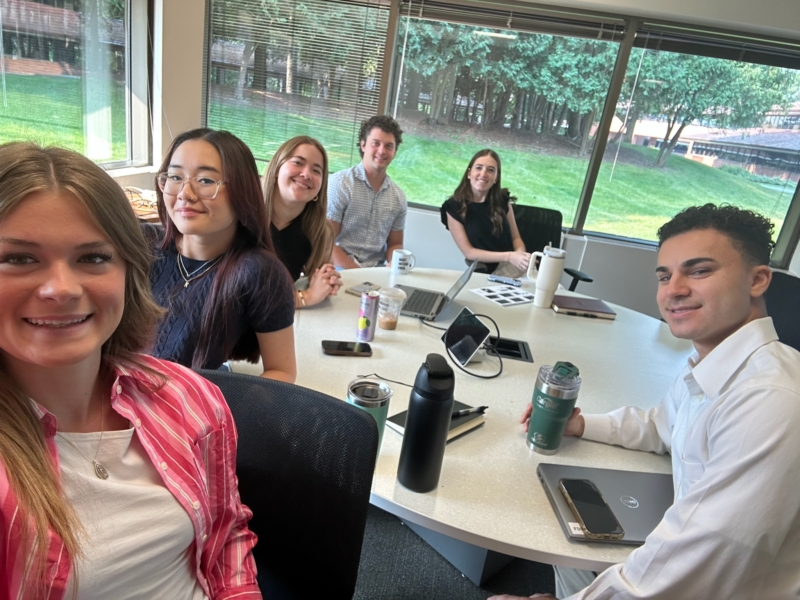
Cargill team meeting
STORIES OF SAYING ‘YES’
One of the most memorable pieces of advice came from a coffee chat with the president of Cargill Bioindustrial. She told me to think of every role and ask myself: What is your “and”?. You want people to remember, “Emily at Cargill and she did this.” That simple idea – finding the “and” that sets you apart – has stayed with me as a personal and professional compass. It’s a question I encourage every student to ask when starting an internship. Throughout the summer, I kept my eyes peeled for an opportunity to create my “and.”
I toured a Cargill Bioindustrial plant and developed a new excitement for seeing the behind-the-scenes side of manufacturing. I joined Toastmasters to improve public speaking, which at first was nerve-wracking. However, each session built a confidence I’ll carry into any career. I joined the Cargill Young Professionals Network and met early-career employees who shared advice on navigating the first years after college. These experiences weren’t just resume lines, they were chances to practice adaptability and to connect with people whose paths I might follow.
I even created opportunities where none existed. After hearing that interns in other departments were giving end-of-summer presentations, I realized I wanted that chance too. I asked my supervisor if I could present and then organize the entire event. More than 20 colleagues attended in-person and virtually. The feedback was overwhelming; people told me I was a natural presenter and appreciated that I took the initiative. It became one of the highlights of my internship and perfectly captured my goal to find my “and.”
Looking back, I realize my “and” was my persistence—the drive to do more than what was asked of me. I made sure to create a final presentation and organize the event, even when it wasn’t expected. I sought out a mentor, built connections with colleagues across Cargill, and joined groups that pushed me out of my comfort zone. I tried to make the most of every opportunity. In doing so, I left behind more than just completed tasks: I left a lasting impression. That persistence, and the experiences it led me to, became my “and.”
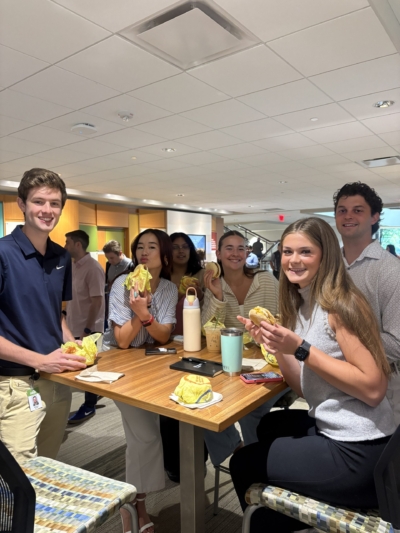
Emily and her teammates enjoying McDonald’s
LOOKING AHEAD
The team you work with can make or break an internship, and mine made it. The Cargill Bioindustrial marketing team was full of energy, fresh ideas, and a genuine willingness to help. I plan to keep those connections alive by sending periodic updates, sharing relevant articles, and checking in. Relationships don’t end when the internship does; staying in touch can turn a summer contact into a lifelong professional ally.
Looking back, my biggest takeaway is that internships are exactly what you make of them. Show up curious, open, and willing to learn. Ask for mentors, create opportunities, and find your own “and.” For me, Cargill wasn’t just an internship, it was a summer of growth shaped by the remarkable people who invested in me and the chances I was willing to chase.
This experience has also reshaped how I approach school. I now think more strategically about the classes I take, choosing ones that strengthen skills I practiced this summer like communication, data analysis, and teamwork. In group projects, I make a conscious effort to listen first, encourage others’ ideas, and step up when leadership is needed – just as I learned from watching my Cargill teammates. And as I look toward future internships and full-time opportunities, I’ll seek out environments where curiosity, mentorship, and growth are encouraged, because I’ve seen firsthand how much those qualities can transform a work experience.
Emily Elletson is a Marketing major at the Carlson School of Management, minoring in Strategic Management. She’s a Content & Design Assistant for the Carlson School undergraduate program and actively involved in the Student Marketing Association and Women in Business.
© Copyright 2026 Poets & Quants. All rights reserved. This article may not be republished, rewritten or otherwise distributed without written permission. To reprint or license this article or any content from Poets & Quants, please submit your request HERE.


