





Every December, the B-school world has a way of arriving at the same crossroads: a year of disruption in the rearview mirror, a new year of uncertainty ahead, and a familiar question hanging over both: What, exactly, should management education be optimizing for now?
The thought leaders in this year’s collection of New Year’s predictions don’t sugarcoat the backdrop. Rapid advances in technology, persistent geopolitical volatility, and a job market that can feel uneven – even at the top – are forcing programs to confront what Brad Harris at HEC Paris calls the shift from “nice-to-have” to “must-haves,” with AI only the most obvious example.
If 2025 was the year AI became ubiquitous, several contributors argue 2026 will be the year the conversation gets more discerning. Cambridge Judge’s Paul Tracey predicts “the peak of AI hype” in the classroom, while others anticipate a more deliberate division of labor between humans and machines – a year when people “reclaim ownership of certain tasks,” as Duke Fuqua’s Elia Ferracuti writes, even as schools deepen AI’s role in learning.
THE NEW SCARCITY: JUDGMENT, NOT ANSWERS
That rebalancing sharpens a different kind of scarcity: judgment. UNC Kenan-Flagler’s Brad Staats argues that as “answers” become abundant, advantage will come from framing “the decision worth making” – and mastering what he calls the “connecting question,” the kind of inquiry that links strategy to action and forces clarity before the data (or the model) takes over.
At the same time, a striking thread across predictions is a renewed hunger for the human. Iowa Tippie Dean Amy Kristof-Brown sees “authenticity” becoming “our greatest currency,” and the University of San Francisco’s Frank Fletcher describes a coming “return to authenticity” and a desire for communication that sounds “textured, reflective, imperfect, and real” – not polished into sameness by machine-generated prose.
That emphasis on the human is not just philosophical – it’s practical. Multiple contributors argue that the differentiators in 2026 will be the skills that can’t be automated at scale: “trust,” “presence,” and the capacity to build relationships that survive friction. Duke’s Scott Dyreng puts it bluntly: in a world where AI is already “table stakes,” the standouts will be the ones who can “build relationships of trust” and “express compassion” – qualities that separate “super-star students” from “super-prompter imposters.”
ROI, MOBILITY & THE RACE TO REDESIGN
Beneath all of this sits the question that won’t go away: value. Washington Foster Dean Frank Hodge frames 2026 as a year when the MBA’s “value proposition” must be defended with new clarity, as candidates weigh “access, affordability, and opportunities” – and schools are pressed to explain ROI not only through short-term employment outcomes but through “long-term relationships” and a “growth mindset” built for perpetual upskilling.
Global dynamics, meanwhile, are reshaping where students study and where careers are built. Ian Fenwick, dean of the Sasin School of Management in Thailand, points to “continued visa uncertainty” and a pull toward Asia as “job opportunities and future growth expectations” surge across the region, while schools there elevate quality and relevance – creating programs that blend “deep regional insights” with “global perspectives” and a distinctly real-time laboratory for AI adoption.
Program design is also moving faster than the old templates. Emory Goizueta’s Brian Mitchell calls 2026 “the year of the One-Year MBA,” arguing that compressed career arcs and opportunity costs are pushing more candidates toward accelerated formats – and that one-year structures are becoming platforms for innovation rather than niche alternatives.
And hovering over the entire package is a deeper institutional challenge: what business schools choose to stand for when tradeoffs get sharper. Brad Harris warns that, in a polarized world with rising costs and waning subsidies, schools will have to make non-negotiable commitments – not just statements – about “where we spend our time, talent, energy, and money,” even if that means paying a penalty elsewhere. In that spirit, the predictions that follow aren’t just forecasts – they’re a map of the pressures, priorities, and reinventions business education expects to face in 2026.
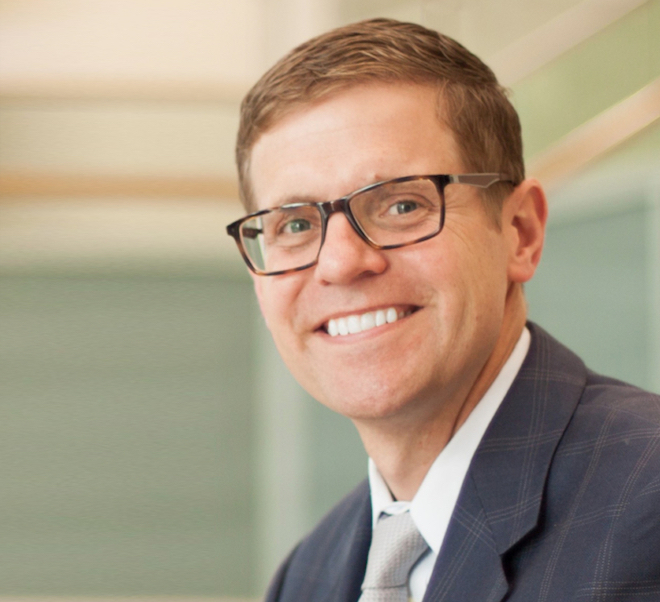
Brad Harris: “Even while we are integrating the latest tech and future of work-esque themes into our programs, we’ve got to be in the trenches with our students on a decidedly human level – with compassion, empathy, and courage – to fulfill our bigger purpose.”
IN 2026, THINGS WILL ABSOLUTELY change (again) for business schools. How they change is the real question, though. At HEC Paris, we’re aiming to be more agile than ever to meet whatever challenges come, but we’re also anticipating and planning for a few specific changes.
First, a lot of “nice-to-have” topics that could previously be addressed with a few standalone courses or programs here and there, will become “must-haves.” Technological innovations, including but not limited to AI, are an obvious area that requires intention and deeper integration throughout programs, but it is surely not the only one. Issues around geopolitics, climate science, and major social challenges are inextricable from traditional business disciplines, and our curricula need to reflect that reality. We’ve been extensively working on our curricula, hiring faculty in transversal areas, and designing a structure for change so that we can meet this challenge.
Second, I truly believe that human connections are going to matter more than they ever have before. At HEC, we tell ourselves internally that our programs, and the people behind them, change lives. Our MBA and EMBA participants typically tell us, in very explicit terms, that they are here to add to their knowledge and skill base so that they can accelerate their professional journeys. It is an additive goal – true and noble, for sure, but also safe and non-threatening (who doesn’t want to get smarter?). Yet, just under the surface, there’s an implicit acknowledgement that something needs to change or, even scarier, that something needs to go away in a student’s life for them to reach their potential. These changes are more complicated and are not solved by simply adding to one’s knowledge; they require honest reflection, questioning of one’s identity, and, ultimately, real support. So, even while we are integrating the latest tech and future of work-esque themes into our programs, we’ve got to be in the trenches with our students on a decidedly human level – with compassion, empathy, and courage – to fulfill our bigger purpose.
Third, b-schools are going to have to make choices and tradeoffs about what they stand for in an increasingly polarized world. Here, I am not talking about what’s on the websites. I’m talking about where we spend our time, talent, energy, and money. As government subsidies wane and costs increase, we’ll have to say “These are the values we care about and they are not negotiable,” even if that means losing out on talented faculty and students. We pride ourselves on being the most global MBA and EMBA program in the world, and we think that gives us an edge in the classroom. The benefits of diversity don’t arise from magic, though. It requires work, clear and acted upon values, and enough conviction to make tough choices (even if it means we pay a penalty in rankings, enrollments, etc.).
I’ve always loved the quote “The future rewards clarity, but punishes certainty” (B. Johansen), and I imagine I will recite it often as we face 2026. I continue to believe that B-schools can make a positive difference, and I believe HEC is positioned to deliver.
– Brad Harris, Associate Dean, MBA Programs, HEC Paris
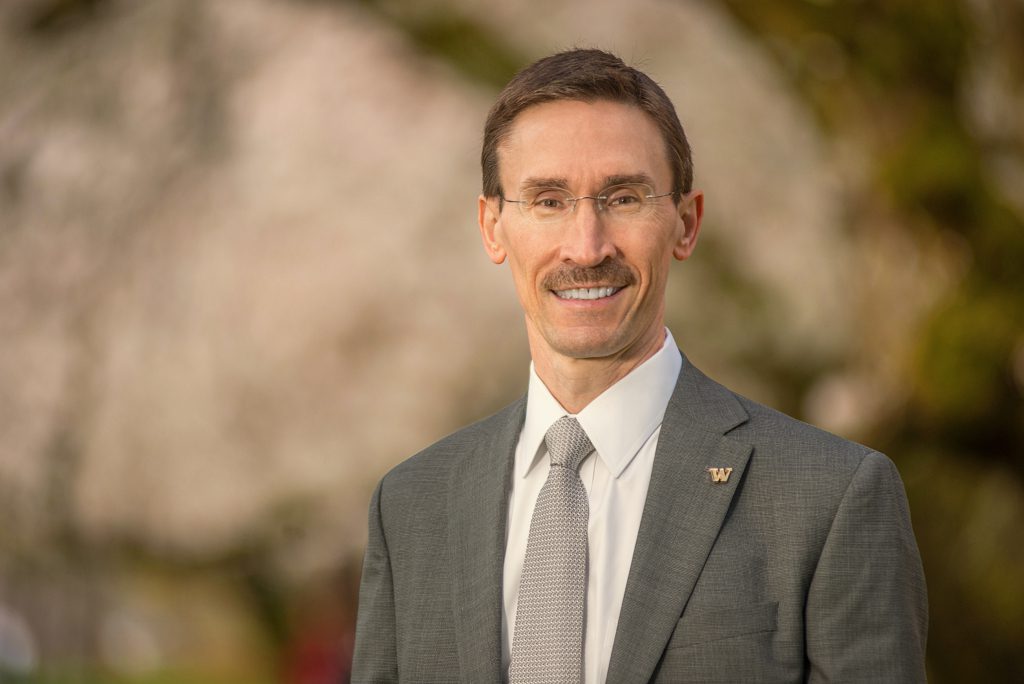
Washington Foster Dean Frank Hodge: “The value of a growth mindset has exponentially risen in an economic environment that demands leaders who are AI ready, climate aware, and think holistically about value to society while considering profits to a company.”
IS AN MBA DEGREE WORTH IT? This question is not new, but it has taken on added urgency in today’s environment of rapid technological and societal changes. In 2026, I believe answering the “value proposition” question will be more important than ever. Costs are rising, and at many top programs, employment statistics have declined. Challenging times … is an MBA degree worth it?
A recent survey of residents in the State of Washington revealed that three attributes of higher education matter more, by a lot, than any other attributes: access, affordability, and opportunities. Though the survey did not distinguish between undergraduate and graduate education, I believe the latter two attributes are critical to MBA programs and are the traditional measures of a programs return on investment (ROI). Since costs are unlikely to decrease unless one significantly alters the structure of their program (e.g., converting to an online program), the primary focus will be on “opportunities.” What opportunities do you provide students and how do those opportunities differ from what others offer?
At the Foster School of Business, we define the value proposition of an MBA degree not only by short-term outcomes (e.g., immediate employment opportunities), but also by long-term relationships and the development of a growth mindset, a mindset that inspires and enables graduates to always be upskilling and reskilling in preparation for the next opportunity. The value of a growth mindset has exponentially risen in an economic environment that demands leaders who are AI ready, climate aware, and think holistically about value to society while considering profits to a company. The seeds of a growth mindset are planted in the classroom, but they grow through exposing students to real-world, unstructured issues outside of the classroom, especially in collaboration with world-class companies. We are fortunate to have many of those companies next door in Seattle. The relationships we have with them form a valuable opportunity for our graduates both during and after they earn their degrees. These relationships are one of the critical components of how we define our ROI. How will you define your ROI in 2026?
– Frank Hodge, Orin & Janet Smith Dean, Washington Foster

Amy L. Kristof-Brown, Henry B. Tippie dean, Iowa Tippie: “Nuance, warmth, and trust cannot be automated. Real conversations and attentive listening will become critical foundations of credibility and connection.”
IN 2026, AUTHENTICITY WON’T JUST matter – it will become our greatest currency.
After years of optimizing for speed, scale, and efficiency, we will begin to notice what has been lost along the way: genuine human presence. As artificial intelligence accelerates output and automation perfects process, authenticity will stand out – not as a fleeting trend, but as something deeply appreciated and increasingly valued.
Being present will matter as much as being productive. Giving someone your full attention – without multitasking or distraction – will feel like respect in its purest form. Handwritten notes will regain their power, not because they are efficient, but because they take time – a signal of care in a world obsessed with immediacy.
Face-to-face communication will reclaim its value as we recognize what disappears in endless emails, messages, and virtual meetings. Nuance, warmth, and trust cannot be automated. Real conversations and attentive listening will become critical foundations of credibility and connection. Not every meeting requires it, but foundational relationships will thrive when they’re nourished by personal presence.
As organizations continue to strive for efficiency, those that choose presence over pace – and act with intention – will stand apart. Authenticity will become a differentiator in leadership and relationships precisely because it cannot be scaled or outsourced. In a world built for speed, authenticity will be the quiet force that restores meaning – and the loudest signal of trust.
– Amy Kristof-Brown, Tippie College Dean
Next Page: Predictions from leaders at Sasin, Cornell, Duke and UNC.
© Copyright 2026 Poets & Quants. All rights reserved. This article may not be republished, rewritten or otherwise distributed without written permission. To reprint or license this article or any content from Poets & Quants, please submit your request HERE.


