






ESCP Dean Leon Laulusa: “2026 will no doubt be defined by the widespread and responsible integration of artificial intelligence into management education.”
AS WE LOOK TOWARD 2026, the landscape for business schools is marked by profound transformation driven by geopolitical tensions, technological disruption, and the urgent need for responsible leadership. At ESCP, we see these forces not as obstacles but as catalysts for innovation and renewed purpose.
The coming years will require business schools to prepare leaders who can navigate uncertainty with agility, cultural intelligence, and hybrid skills across disciplines. Students today recognize that leadership in 2026 and beyond requires interdisciplinary fluency. They value educational pathways that blend rigor, creativity, and technological literacy, and our growing portfolio reflects that demand.
One of our most significant developments for 2026 is the launch of the Global Master in Management with CEIBS, a partnership that connects Europe and Asia’s leading business ecosystems. This collaboration offers students the chance to immerse themselves in two major economic regions and develop a truly global management perspective – increasingly essential for business leaders.
We are also deepening our commitment to double degrees that combine complementary competencies, whether in data science, defense, public policy, or engineering. Partnerships are also evolving. Collaborations with leading American institutions such as Johns Hopkins University and Georgetown University, as well as strengthened collaborations across Asia, will offer students more mobility, joint learning opportunities, and exposure to global leadership challenges. These alliances are central to our ambition to welcome even more international students to ESCP, enriching the diversity and dynamism of our community.
Business schools will also need to expand their reach into new strategic domains – even those once considered outside their scope. Our new Executive MSc in Strategy, Leadership and Defense Studies responds to a geopolitical environment in which resilience, security, and strategic foresight are now critical capabilities. The forthcoming MSc in Economics and Public Policy will equip students with skills to bridge the gap between economic theory and business practice, particularly in fields such as international trade, digital and AI regulation, sustainability, and geopolitics.
2026 will no doubt be defined by the widespread and responsible integration of artificial intelligence into management education. At ESCP, we began embedding AI across all programs, research, and operations in the fall of 2024. This work will continue into 2026 and beyond to ensure that our entire community can use the technology to its full potential as a strategic tool that enhances learning, supports faculty innovation, and prepares students for an AI-augmented workplace. Ethical and transparent use of this technology will remain a core principle.
Beyond degree programs, business schools are developing new opportunities for lifelong learning adapted to the needs of today’s leaders at the forefront of transformation in their organisations. As careers lengthen and skills cycles shorten, flexible, high-quality online learning will be indispensable. Through the ESCP Extension School, we are opening continuing business education to new learners on topics ranging from sustainability and AI to entrepreneurship.
In short, business schools face a demanding but exciting future. At ESCP, our mission remains clear: to educate accountable, bold and creative leaders capable of driving human-centred transformations in business and beyond.
– Léon Laulusa, Executive President and Dean of ESCP Business School
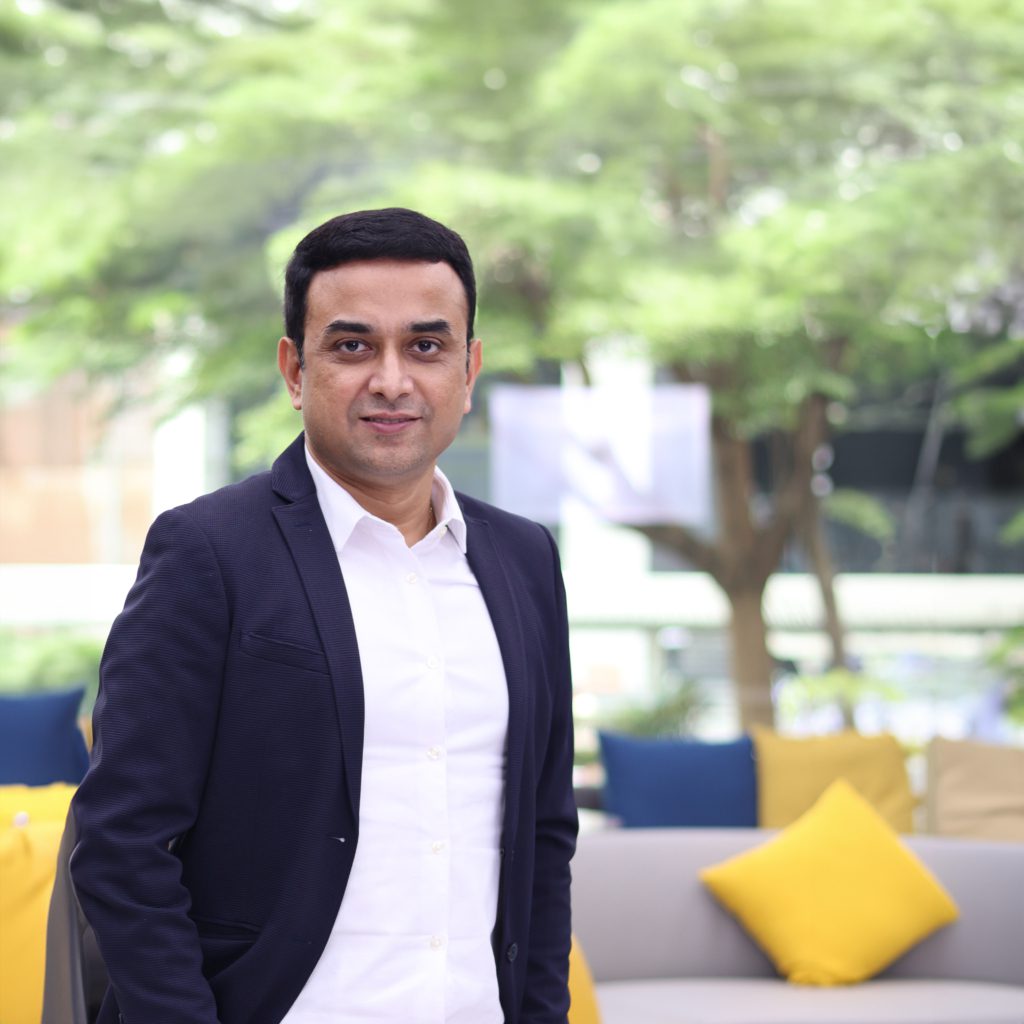
Sasin’s Dibyendu Bose: “The pace of change in the market has certainly increased over the last 10 years, particularly with a greater global focus on Asia. I think this trend will only continue.”
IN TODAY’S GRADUATE JOBS MARKET, employers are looking for more than technical knowledge. They want graduates who can work across cultures, understand different markets, solve real problems, have understanding of technology and keep learning as the business world changes. They value people who can think strategically, communicate clearly, and take action in uncertain situations. Companies now operate in a fast, connected, and above all global environment, and graduates must be ready to adapt and contribute effectively.
Creativity, understanding of technology, leadership, and the ability to work in teams are among the top skills that help graduates stand out. Our graduates at Sasin also demand the importance of learning through real-world experience. Action Learning Labs give them practical experience applying classroom knowledge to real business challenges. Moreover, graduates report that through doing so they build networks across industries and countries, giving them access to opportunities that span geographies. We currently offer exchange programs with more than 50 partners across the globe and a wide range of Action Learning Labs to choose from, including the ESG Lab, AI Lab, and Consulting Labs in collaboration with MIT, Fudan, and Tsinghua.
Job markets differ across countries and industries, but the core skills employers seek remain consistent. In Southeast Asia, there is high demand for managers who understand regional growth markets and can lead cross-border projects. Employers value innovation, sustainability, and transformation capabilities. Across industries such as technology, finance, healthcare, and consumer goods, graduates who can combine practical knowledge with leadership and cross-cultural understanding are highly sought after.
Our program portfolio is designed to develop these capabilities. Our aim is to develop graduates that are ready to meet employer expectations, contribute immediately to organisations, and succeed in a rapidly evolving business environment.
Our business school was founded in 1982 through collaboration with Chulalongkorn University, the Kellogg School of Management, and the Wharton School. From this basis we have prioritized global standards while remaining deeply relevant to our home region of Southeast Asia. In my view, this combination is reflective of the expertise that business school graduates need to have and employers are looking for. Ideally, graduates should possess a global outlook, but at the same time develop an understanding that a “one size fit all” approach is not relevant and how things work in one region can be vastly different to another. Being aware and fluent in differing social, cultural and business norms is a very valuable skill.
GLOBAL SKILLS, LOCAL CONTEXT, REAL-WORLD READINESS
Market demand for MBA education has witnessed significant change in recent years. With technology and AI reshaping how people work, learners now look for programs that equip them with future-ready skillsets, help them connect with others, exchange ideas, and turn knowledge into real action. This shift reflects how business works today and it shows how MBA programs must evolve to stay relevant for tomorrow’s world.
Today, organisations need leaders who can navigate uncertainty, think creatively, understand human behavior, use technology wisely, and solve problems in real time. Our MBA at Sasin has continued to evolve over the past 43 years to meet these expectations, placing more emphasis on strategic thinking, practical analysis, digital branding, and leadership. These are skills that machines cannot replace and employers now value highly.
Flexibility is also essential. With a curriculum divided roughly 50:50 between Required Core Courses and Elective Courses, our students can build strong business fundamentals while choosing subjects that match their career goals, whether in finance, data, entrepreneurship, or family business. This structure fits the growing demand for personalized and practical learning.
The introduction of Action Learning Labs is another important change we have introduced. Labs such as the Consulting Lab, ESG Lab and the AI Consulting Lab give students the chance to work on real projects, allowing them to apply what they learn in class to real business challenges.
Having a global outlook is important. Sasin’s deep international collaborations – particularly with MIT Sloan, Kellogg, Tsinghua, Fudan, and Zhejiang University – provide students with access to global expertise and cross-cultural projects that many regional programs cannot match. At the same time, our learning is rooted in Southeast Asian business realities, making the degree especially valuable for those seeking to lead or build organisations in one of the world’s fastest-growing regions.
We focus on this balance between global and regional relevance, and it provides a strong foundation for our MBA. We are the only Thai business school in the Financial Times Global EMBA Top 100 and the school is ranked among the Top 25 in Asia by QS Global MBA Rankings.
Overall, our MBA continues to evolve in line with market needs, global trends, and the skills required for tomorrow’s world. The pace of change in the market has certainly increased over the last 10 years, particularly with a greater global focus on Asia. I think this trend will only continue. This aligns with our vision to be a leading global management school for tomorrow’s world, built on the idea of global relevance and regional expertise.
– Dibyendu Bose, Deputy Director, Sasin School of Management

UPF Barcelona’s Rodrigo Cetina: “In the near future, those that can measure how sustainable the integration of technology is or not, and those that propose solutions, will be individuals with very valuable skills for the job market. They will prove invaluable for their institutions.”
EMPLOYERS ACROSS GLOBAL JOB MARKETS are increasingly concerned about how to manage rapidly changing environments. Organizations must continuously adapt to remain competitive, especially given the rapid technological transformation driven by automation and AI. Skills related to management of change are particularly important and, for this reason, adaptability has become one of the core skills graduates need, and it will continue to be essential in the future.
The rise of AI also provides clues about the skills employers will value for the foreseeable future. Generative AI tools, for example, are ineffective without critical thinking and analytical abilities. These human skills are what turn generative AI into a tool with true transformative potential. Critical thinking also strengthens data literacy, another competency that is becoming indispensable. The ability to interpret dashboards, extract meaningful insights, and make informed decisions will be highly valued across sectors, from HR to the humanities.
Universities must double-down on providing experiential learning, offering opportunities that go beyond lectures and help students develop key interpersonal capabilities to meaningfully connect with others. Skills such as collaboration, cooperation, empathy, negotiation, and effective face-to-face communication are crucial in global, competitive markets. As organizations increasingly rely on AI agents and chatbots, the human ability to build authentic connections becomes even more valuable. While AI can facilitate communication, humans must remain at the center of relationship-building within teams, institutions, and with clients.
At institutions like the UPF Barcelona School of Management, where sustainability is a core part of our mission, graduates are also trained to understand the environmental impact of economic activity. In the context of AI, this includes awareness of energy consumption, carbon footprint, water use, and the physical infrastructure required to support these technologies. In the near future, those that can measure how sustainable the integration of technology is or not, and those that propose solutions, will be individuals with very valuable skills for the job market. They will prove invaluable for their institutions.
Employers are also shifting towards evaluating the hybrid skill sets graduates bring, rather than relying solely on degree titles or institutional reputation. Profiles such as marketing graduates with data analytics knowledge, business students trained in sustainability, or professionals equipped with AI-related skills will become increasingly competitive.
Regarding differences across industries and regions, the global demand for tech and AI talent will continue to expand. Growth is expected in areas such as cybersecurity, data privacy, AI implementation, and other fields linked to digital transformation. As finance continues its transition toward fintech, technical computing skills will also be in high demand. Additionally, sectors related to green energy and sustainability will keep growing, requiring not only engineers but also professionals capable of assessing and improving sustainability across organizations.
– Rodrigo Cetina, Associate Dean for Education & Academic Affaris at UPF Barcelona School of Management
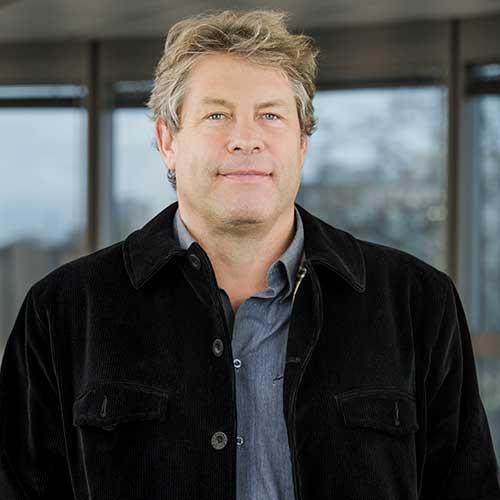
ESCP’s Benoit Heilbrunn: “If the MBA is to survive the era of endless upskilling, it must become not an accelerator of careers but an accelerator of understanding.”
IN 2026, THE MBA SITS at a paradoxical crossroads. Market demand tends to decrease and the meaning of that demand has shifted. For decades, the MBA symbolized upward mobility, mastery of managerial reason, and entry into the global elite of decision-makers. Today, candidates increasingly approach it with ambivalence: they seek not only skills but clarity, not only employability but orientation in a world where traditional corporate narratives have lost much of their legitimacy. The rise of purpose-driven rhetoric, the inflation of leadership discourses, and the exhaustion of the innovation ethos have created what might be called a cognitive fog. The MBA is asked to dissipate it – or at least to name it.
This changing demand reflects a deeper transformation. In a labor market shaped by automation, platformisation and financialization, the value of managerial knowledge is no longer taken for granted. Students know that the technical skills they acquire have a short half-life; what they increasingly seek is the ability to interpret the systems in which they operate. In other words, they expect critical literacy: an understanding of power, institutions, narratives, and the symbolic infrastructures of economic life. This is the blind spot of many MBAs, still built upon a pedagogy of optimization and performance inherited from the 1980s.
To remain relevant, the MBA must therefore evolve in at least three directions. First, it must shed the illusion of neutrality. Contemporary organisations are not only economic engines; they are cultural and political dispositifs that shape behaviors, desires and identities. An MBA that ignores this dimension becomes a form of managerial training that reproduces the very problems it claims to solve. Thoughts and insights in philosophy , sociology of organisations, political economy and ethics must be placed at the core, not the margins.
Second, the program must address what might be termed the crisis of meaning in management. Leaders are not short of tools; they are short of interpretive frameworks. In an age of ecological limits, social fragmentation and algorithmic governance, decision-making is not primarily a technical problem but a problem of judgement. The MBA must therefore cultivate reflexivity, imagination and the capacity to navigate uncertainty – qualities traditionally cultivated in the humanities.
Third, the MBA must reposition itself among a crowded landscape of qualifications: specialized masters, micro-credentials, executive short programs, and online certifications. Its distinctive value will not lie in offering more technical content but in providing what no short program can: a space for intellectual reconstruction. If the MBA is to survive the era of endless upskilling, it must become not an accelerator of careers but an accelerator of understanding.
In 2026, then, the MBA’s future depends on its willingness to acknowledge that management is not an engineering science but a cultural practice. The task is not to add more courses on digital transformation or innovation theatre, but to cultivate a generation capable of thinking beyond the clichés of contemporary capitalism – a generation capable of resisting buzzwords, interpreting complexity, and rebuilding meaning where managerial discourse has often created only noise.
– Benoit Heilbrunn, Associate Dean of the MBA at ESCP Business School
Next Page: Predictions from
© Copyright 2026 Poets & Quants. All rights reserved. This article may not be republished, rewritten or otherwise distributed without written permission. To reprint or license this article or any content from Poets & Quants, please submit your request HERE.


