






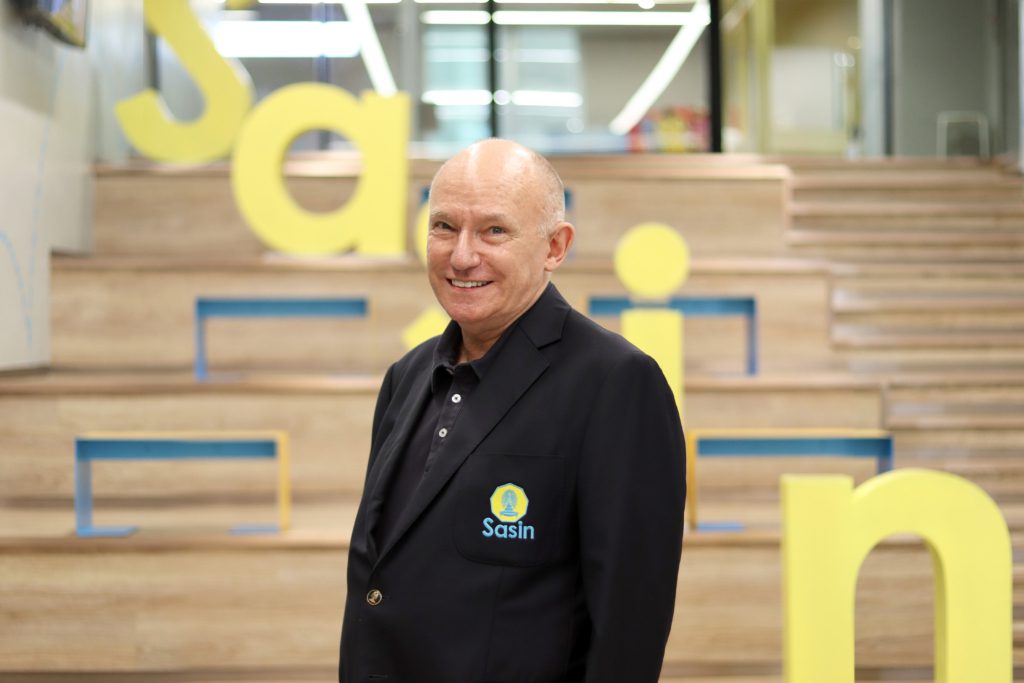
Sasin Dean Ian Fenwick: “We are seeing job opportunities and future growth expectations surging in much of Asia. Asia is increasingly optimistic for the future, in sharp contrast to North America and Europe.”
WE CAN EXPECT AN EDUCATION MARKET shaped by continued visa uncertainty, driven by geopolitical transformations. As educational access to countries becomes more fraught, we can expect to see more students – from Asia in particular – rethinking their investment of time, energy and money in applying for programs in countries which might prove difficult to enter. Recent tightening of visa policies in the United States and the United Kingdom has further heightened anxiety among prospective international students. If there’s one thing potential students want to avoid, it’s uncertainty and the incipient risk of failure.
At the same time, we are seeing job opportunities and future growth expectations surging in much of Asia. Asia is increasingly optimistic for the future, in sharp contrast to North America and Europe. All this is encouraging business schools in Asia to elevate their programs, take on accreditation, and provide high-quality, high-relevance options for those wishing to pursue a career in what is now the world’s most dynamic region. Southeast Asian economies in particular are positioning themselves as engines of innovation, growth and entrepreneurship, creating compelling opportunities for business graduates.
This dynamic is encouraging the emergence of a broad array of quality educational options across Asia. Schools in China, Singapore, Thailand and India are becoming genuinely international in their student composition, faculty expertise, and curriculum. In addition, some of these institutions offer something distinctive: deep regional insights combined with global perspectives. Students gain an understanding of Asian business practices, regulatory environments, and cultural contexts while receiving education that meets the highest international standards. For many this represents the best of both worlds: the prestige and rigor of globally recognized programs with the practical advantage of studying in the region where they plan to build their careers and businesses.
The rise of AI and innovation-led growth across Asian markets is reshaping business schools’ curricula. Positioned at the intersection of emerging technology adoption and rapid market transformation, Southeast Asian institutions are especially well-placed. Students don’t just learn about AI in theoretical terms – they work with companies actively deploying these technologies in contexts where regulatory frameworks are still evolving, and market opportunities remain wide open. This creates a distinctive learning environment where technology meets real-world application in ways that more mature markets can’t replicate.
This advantage extends to pedagogical approaches. Business schools in the region are increasingly emphasizing action-learning methodologies that compress traditional timelines and emphasize local market realities. Students engage in consulting projects with startups scaling across ASEAN markets, work with family enterprises navigating succession planning, and tackle challenges specific to this region, balancing tradition with rapid modernization. The focus is on developing capabilities that translate immediately into career impact – understanding not just global business principles, but also how they manifest in markets where relationships, cultural context, and regulatory environments differ from Western models.
– Ian Fenwick, Dean, Sasin School of Management
I RECENTLY SPENT TWO WEEKS in China connecting with our large, ever-growing Cornell SC Johnson College of Business alumni network there and meeting with our dual-degree academic partners at Tsinghua University’s PBC School of Finance and Peking University’s Guanghua School of Management. Business leaders asked me again and again, what it is that I foresee for the future of the global economy and business conditions? What do I recommend for them and their business strategies? Where do I see the future opportunities?

Andrew Karolyi
Amid the abrupt trade and capital market policy shifts last year away from a six-decade trend of expansion of globalization, including the radical restructuring of tariff relationships, many business leaders found themselves in a defensive posture. While some impacts have been felt, surprisingly many of the worst large-scale predictions in terms of decreased trade flows, receding direct and portfolio capital flows and the anticipated economic fallout for companies have not materialized. At least, not yet. But the effects of these changes are still unfolding, and this is where we find ourselves at the beginning of 2026.
The questions I heard in China are the same questions we’re all asking wherever we are globally. There is an important answer to offer. What we teach at the Cornell SC Johnson College of Business, and what I have been teaching for 36 years as an international economist, is that building maximal operational and financial flexibility will offer protection during spikes of uncertainty, whatever the source of it and whether a local or multinational corporation, an investment fund, asset owner, or an individual investor.
So, what I predict is that the corporate leaders emerging as success stories in 2026 will be those who do just that: prioritize flexibility. They will develop resilient financial strategies, accumulating healthy stocks of cash reserves to withstand the next shock and the one after that. They will use external capital markets to their advantage now to fortify reserves against those shocks. From an operational standpoint, the successful leaders will examine their supply chain structures and diversify their sourcing strategies to manage unexpected trade policy shocks. Building resilience in labor market strategies for businesses is another important dimension, especially for U.S. based corporations at a time when visa restrictions are more binding. Successful leaders and companies will continue to grow relationships across the globe strong enough to weather challenges — and they will move from defensiveness to proactively embracing new opportunities that solve real problems and serve real people.
In short, I’m not predicting the next big shift. What I’m predicting is that the strategies, tactics, and tools that meet the moment, one of unexpected shifts, will matter more than ever.
– Andrew Karolyi, Charles Field Knight Dean of the Cornell SC Johnson College of Business
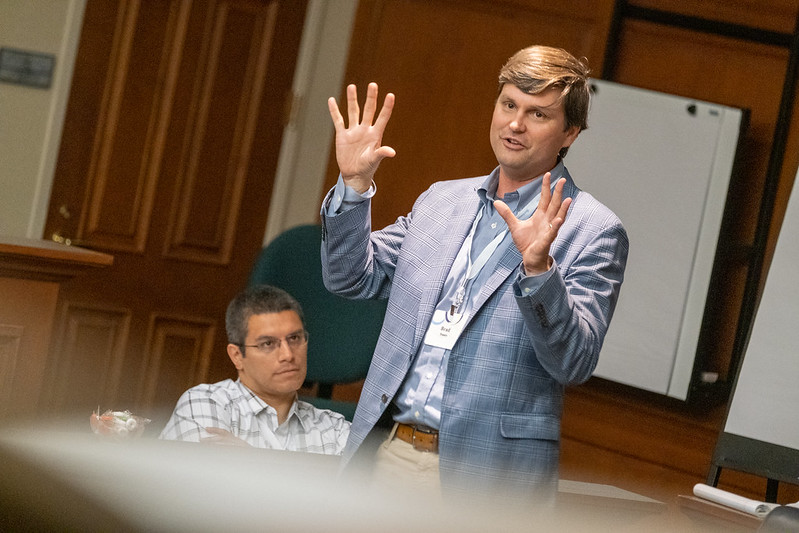
UNC’s Brad Staats: “As AI automates more of the mechanics of analysis, the value shifts toward leaders who can define the problem at the right altitude: not too broad to be vague, not too narrow to be irrelevant.”
IN 2026, AS GENERATIVE AI makes “answers” abundant, the scarce capability will be asking the right questions. My prediction is that the highest-performing leaders and graduates will distinguish themselves less by how quickly they can produce an analysis and more by whether they can frame the decision worth making. Nodding to John Tukey, the new reality is that a good answer to the right question matters far more than a perfect answer to the wrong one, and AI only increases the cost of getting the question wrong faster.
The practical skill underneath this is what my colleagues Tarun Kushwaha, Adam Mersereau and I have labeled as the craft of the “connecting question.” These are questions that link strategy to action: aligned with strategic goals and KPIs, designed to be actionable, and oriented toward foresight rather than hindsight. They force clarity on the relationship between inputs and outputs, and they motivate models that actually matter because they inform consequential decisions. As AI automates more of the mechanics of analysis, the value shifts toward leaders who can define the problem at the right altitude: not too broad to be vague, not too narrow to be irrelevant.
This will reshape what students demand from business schools. They will want repeated reps in forming forward-looking questions, diagnosing root causes versus symptoms, and sizing the scope of the decision before touching the data. The curriculum edge will come from teaching how to turn ambiguity into a question that creates connective tissue between important objectives and day-to-day choices, and then converting insight into decisions, leading sustained operational follow-through, and building a culture of learning and innovation.
– Bradley R. Staats, Senior Associate Dean of Strategy and Academics, UNC Kenan-Flagler Business School

Duke Fuqua’s Scott Dyreng: “In 2026, the ability to build relationships of trust, to engage in lively verbal communication, to read and react to non-verbal cues, to persuade, and to express compassion will separate the super-star students from the super-prompter imposters.”
AI IS UPON US LIKE a storm on Mount Everest, and even those who are most prepared are fighting to survive.
In 2025, every MBA student already uses AI to digest complicated cases, analyze the viability of projects, and sort through countless scenarios. In 2025, every MBA student already uses AI to write memos with compelling recommendations supported by a balanced set of arguments. In 2025, every MBA student already has a private tutor (though not human) to help with every aspect of written preparation and analysis.
The wind and snow are changing the very shape of the landscape of an MBA education, and nothing can be done to stop it.
Are we therefore compelled to take refuge in a feeble tent, suck on supplemental oxygen, and pray for better weather as the storm rages all around? No!
Instead, we will venture out and find new routes to the summit.
In 2026, AI will become transformative in MBA education, not merely transactional. While the student might give a prompt to AI in exchange for an answer to a question, or even a full-blown essay, the best educators will learn how to use AI to help students develop powerful attributes that will enable them to thrive in an AI-assisted world.
In 2026, classroom participation will be captured perfectly by sophisticated audio technologies and evaluated by AI, eliminating monotonous, unenviable work for human teaching assistants. This AI-enabled classroom, already in beta-testing at Fuqua, will give feedback to students on the quantity and quality of their participation, while simultaneously providing feedback to faculty far more useful than traditional student evaluations.
In 2026, quizzes and exams will return to timeless written and oral formats. AI will be used to assess the responses, not generate the answers. Team projects will not only be assessed on the quality of the deliverable, but also evaluated using an AI-enabled assessment of group participation, compelling students to work collaboratively instead of dividing to conquer.
In 2026, the ability to build relationships of trust, to engage in lively verbal communication, to read and react to non-verbal cues, to persuade, and to express compassion will separate the super-star students from the super-prompter imposters.
In 2026, we will realize the not-so-old adage “AI won’t take your job, but someone who uses AI will” is sorely lacking. AI is table stakes already. In 2026, AI will help us hone the best qualities of being human.
So as the storm rages, we need not fret. In 2026, AI will become a force that transforms MBA education to make it more human than ever before.
– Duke’s Scott Dyreng, Senior Associate Dean for Innovation
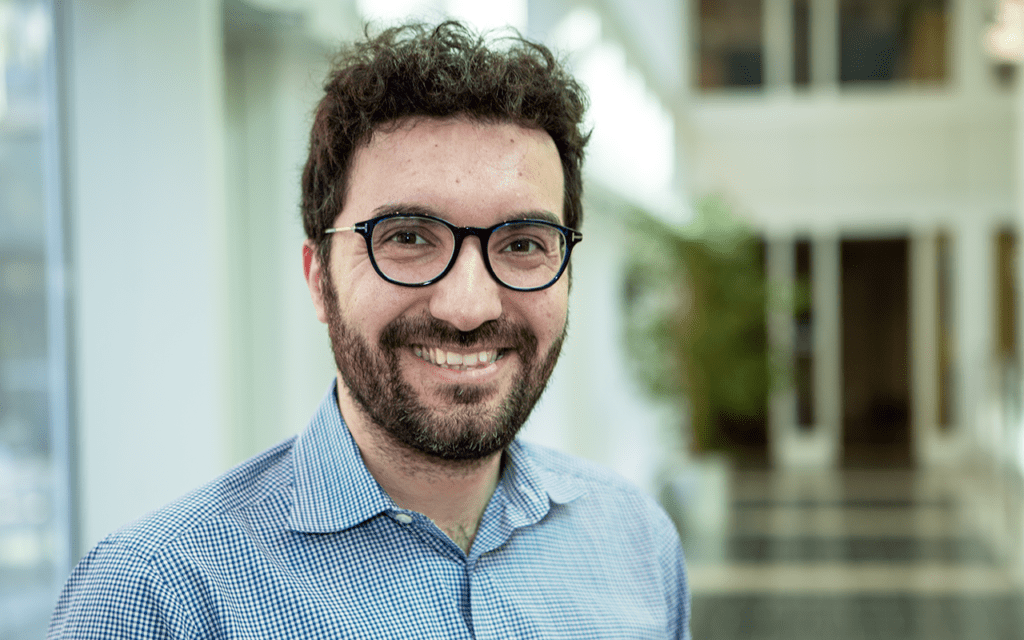
Duke Fuqua’s Elia Ferracuti: “Students who combine technology with human strengths to spark ideas and shape better outcomes will be best positioned for success across sectors.”
IN THE THREE YEARS SINCE the release of ChatGPT, artificial intelligence has permeated our personal and professional lives. Individuals, corporations and universities have experimented with large language model (LLM) chatbots for many uses, from simply seeking information about a topic to complex data analysis. Through this experimentation, we have learnt a great deal about the domains in which LLM chatbots excel and those in which they remain deficient. In 2026, we will take stock of what we have learnt. As a result, I predict that 2026 will be the year humans reclaim ownership of certain tasks that we have perhaps too quickly passed onto chatbots, while, at the same time, delegating other tasks to LLM chatbots even more.
There are three things we learnt about LLM chatbots that are worth emphasizing, as they will have important implications for business schools and higher education in general.
First, LLM chatbots do not create new knowledge in the human sense. As explained beautifully by physicist David Deutsch in the book “The Beginning of Infinity,” human knowledge is explanatory: it produces new explanations that account for things we can and cannot see and prove resistant to falsification. Producing new explanations requires creative, outside-the-box thinking because these explanations often deviate considerably from past experiences. LLM chatbots, by construction, are algorithms that transform some inputs into outputs by generalizing very large amounts of data. Thus, they primarily distill explanations that already exist and are unlikely to produce new insights.
As a result, I predict that businesses will allocate human intelligence to tasks that require creativity and the ability to come up with new explanations for unfamiliar business problems, and artificial intelligence to tasks that require the processing of large datasets and the optimization of well-defined and known objectives. Accordingly, universities will have to adapt and equip students with a creative mindset by fostering and promoting their ability to think outside the box about things we (think we) know, and perhaps even more importantly, offer and test new explanations for things we do not know. At Fuqua, we encourage such a mindset in the classroom by exposing students to cutting edge business problems and outside of the classroom through the work of centers – such as Duke Innovation & Entrepreneurship – and labs – such as the Innovation Co-Lab.
Second, access to more information more quickly does not equate to knowledge, and chatbots are likely to do more damage than good if users do not use them effectively. There is little doubt that LLM chatbots can be tremendous propellers to one’s skills and knowledge: to borrow (and twist) Einstein’s words, my chatbot and I are more clever than I. But to use chatbots effectively, users need to know (i) what they want, (ii) how to ask the chatbot precisely what they want; and (iii) how to evaluate/verify whether the chatbot produced the desired output.
This means the mastery of subject matter and technical skills is ever more important, and the successful resolution of business problems will require increasingly frequent orchestration of diverse perspectives – both artificial and human. As a result, I predict that businesses will focus their recruiting efforts toward individuals with excellent technical skills and an ability to use LLM chatbots effectively. This presents a unique opportunity for MBAs at institutions that are committed to fostering and promoting students’ ability to think critically, challenge assumptions, analyze conclusions, and understand the reasons behind those conclusions. Students who combine technology with human strengths to spark ideas and shape better outcomes will be best positioned for success across sectors. At Fuqua, we have fully embraced this challenge through what we call collaborative AI leadership.
Third, the history of technological innovations has taught us that humans are primarily social animals. For example, consider how the ability to watch a concert or sporting event remotely has not displaced people’s interest in attending these events in person. Thus, I predict that while chatbots will enhance universities’ ability to achieve their education goals by expanding the tools available to faculty and students (e.g., chatbot teaching assistants or interactive learning tools, among many other applications), it’s highly unlikely they will diminish the value of the classroom experience. When I offered my students the option to attend class remotely because of a possible storm last year, almost all of them showed up in person, claiming that their ability to focus and learn from others was much diminished outside of the classroom.
I expect that the classroom will continue to play the fundamental roles of harnessing students’ attention to the fullest, offering a shared experience that motivates students to exert their best effort, and favoring the transmission of tacit, non-codified knowledge through observation of and collaboration with others, as originally intended by the first universities introduced in Italy in the late 12th century.
To conclude, I believe that artificial intelligence has already changed and is going to further revolutionize our lives. However, it will be important for us as individuals, business leaders, educators, or students to remember and leverage what makes us humans unique, such as our creativity, our ability to think critically, and our natural inclination toward social bonds and cooperative societies.
– Duke Fuqua Professor Elia Ferracuti
Next page: Predictions from the University of San Francisco, IESE, and Iowa Tippie.
© Copyright 2026 Poets&Quants. All rights reserved. This article may not be republished, rewritten or otherwise distributed without written permission. To reprint or license this article or any content from Poets&Quants, please submit your request HERE.


