







Networking – It’s an ugly word.
For students, it conjures up images of greasing palms and exchanging favors. It is dirty and phony – the easy way out when someone lacks the brainpower and work ethic to make something happen on their own. Let’s face it: it’s uncomfortable making small talk…and devastating to get rejected.
If you want to play the game, it’s just something you have to do, students say.
Well, maybe freshman say that. By senior year, networking takes on a different meaning. By then, networking has become a way to meet people who share their passions – the ones who’ll educate and guide them. Networks can tip them off to projects, internships, and jobs that might not be posted in the career center. Of course, networking is a place to practice those ever-critical soft skills before the stakes rise in the real world.

Steven Preval, Rutgers Business School (Newark)
Steven Preval admits to a different reason for shying away from networking as a freshman. He was just too busy adjusting to college and beefing up his GPA. Sometimes, he suffered from imposter syndrome, feeling too “inexperienced and unsure of himself.” As a result, he didn’t take advantage of attending events or contacting alumni.
“Once I understood how important relationships are for internships and long-term career growth, I became much more intentional,” adds Preval, a 2026 graduate of the Rutgers Business School’s Newark campus who’ll join Google in September. “I began scheduling coffee chats with professionals in roles I aspired to hold and asked specific questions about the steps they took to get there. Instead of viewing their success as distant, I broke it down into actionable steps I could follow. That shift in mindset helped me become more proactive and ultimately opened doors that I might have missed if I had stayed passive.”
Julia Birchfield spins a similar tale. A marketing major at the University of Delaware’s Lerner College, Birchfield describes networking in terms of being awkward and intimidating. Even more, she worried about becoming a “burden”, so she pushed it back as something to try later. Over time, Birchfield learned many of her peers experienced that same hesitation with networking. Once she began having conversations with strangers, she understood that networking is really just a fancy word for connection. And it isn’t “uncool” either, she adds.
“Networking isn’t about perfect small talk; it’s about curiosity, listening, and building relationships one genuine interaction at a time,” Birchfield continues. Once I leaned in, everything shifted. Those conversations led to my first internship, which opened the door to the next one, and ultimately to the full‑time role that launched my career. I met mentors who advocated for me, peers who shared opportunities, and professionals who offered advice I still rely on. If I could go back, I’d start building more connections earlier – not just for the access it creates, but for the confidence, clarity, and momentum that come from engaging with people who want to see you succeed.”
For Birchfield, “Getting comfortable being uncomfortable” was a life-changing habit – one she wishes that she had embraced sooner. At the core, avoidance – or lack of awareness – often became the biggest regret that the Class of 2026 shared when they looked back on business school. Earlier this year, Poets&Quants asked this year’s Best & Brightest Business majors to share their biggest regrets about business school. From avoiding risk to saying ‘yes’ too often, these are the 15 things that business majors would change about their college experience.
1) Said No Earlier: “At first, I felt like I had to say “Yes” to every opportunity to prove my worth. Eventually, I realized that saying “No” to the good allows you to say a resounding “Yes” to the great. It’s not about doing everything; it’s about doing what matters deeply.”
Ariyal Jain, Arizona State (W. P. Carey)
“I wish I learned about the power of “no” sooner. Gies Business Chief Information Officer Chris Tidrick shared with me that every “yes” is hundreds of “no’s” and this reshaped how I think about opportunity cost. While being involved in a multitude of organizations can be a great thing, our Admissions and Recruiting Director Kaci Abolt taught me that saying no, to even good things, is healthy and necessary. I wish I protected my time sooner in my college career and chose things that I valued. A busy schedule is not necessarily a signal of success – it can also be a sign of unclear priorities. If I could speak to my younger self, I would tell him to prioritize quality over quantity and never be too busy just for the sake of being busy.”
Jonathon Xavier Jacome, University of Illinois (GIes)
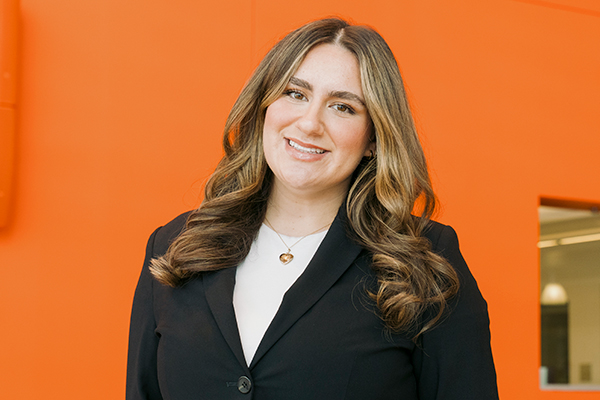
Silke Pion, Syracuse University (Whitman)
2) Built Networks Earlier: I try to live my life looking forward as I have come to understand there is nothing I can do to change the past. that said, if I could have done something differently in business school it would be to take advantage of the Whitman Career Center trips. The Whitman Career Center offers many trips to major cities to visit firms and network with alumni. I have only ever heard incredible things about the Whitman on Wall Street trip and it is something I wish I would have participated in during my sophomore year. I think the trip is a great exposure to major firms and allows for networking in a low-stakes environment prior to the internship recruiting season. I think attending the trip would have helped boost my confidence when it came to the internship search and having a better sense of what kinds of roles I would be most interested in pursuing.”
Silke Pion, Syracuse University (Whitman)
“During my freshman year, I conducted many coffee chats and zooms. In many cases, I never ended up reaching back out to these people. Knowing what I know now, each connection is a possible employer, colleague, or link to someone else you may one day like to know or meet. By failing to stay in touch over the years, I inadvertently trimmed many branches off the tree of what could have been my network. That said, I currently have a much more refined way of keeping track of such things that I have come to be very happy with!”
Gregory Durgin, Boston University (Questrom)
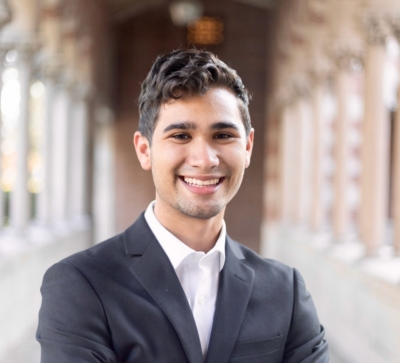
Noah George, USC (Marshall)
3) Got Involved in Research: “It wasn’t until my senior year that I fully realized the depth of research conducted at Marshall. If I could go back and change my undergraduate experience, I would have become more involved in organizational research. It offers a unique lens into why businesses succeed or fail over time. Beyond the insights, working side-by-side with professors would have been a great way to build the kind of mentor relationships that have truly defined my time here. On top of all that, academic research offers rigorous investigative processes and unique methodologies that would have helped me refine my own approach to problem-solving. While I discovered this late in my undergraduate career, I am eager to conduct professional research into how the world’s best businesses thrive at McKinsey.”
Noah George, USC (Marshall)
“I would have applied to be a research assistant for a business school professor, specifically one studying business decision-making, financial regulations, or AI adoption. I feel I took advantage of several leadership and extracurricular activities during my four years, but I would have enjoyed the chance to understand the data collection, experiments, and analysis that go into the research underpinning my business courses. I also had the opportunity to participate as a test subject in a handful of business studies, which made me curious about the work that happens behind the scenes to turn these experiments into business insights.”
Nolan Watson, University of Texas (McCombs)
4) Been Less Afraid to Fail: “At times, I let the pressure to perform well influence my decisions, and I occasionally chose the safer or more familiar option instead of challenging myself in ways that may have stretched me further. Ironically, this goes against the very advice I now give others about exploring and stepping outside of your comfort zone. Growth rarely comes from playing it safe. If I could go back, I would take more intellectual risks and trust that even if I struggled, the lessons learned would be far more valuable than a perfectly protected GPA.”
Chloe Ausburn, College of William & Mary (Mason)
5) Sought Help Earlier (and More Intentionally): “In my first year, I believed that proving my worth would come from my independence and ability to complete tasks on my own; however, I have come to find that the best outcomes come from teamwork. McDonough School of Business courses include collaboration in the curriculum to help students learn to work with others as they would in the workplace. Early in my sophomore year, in a project for my Ethical Values of Business class (an extremely thought-provoking core requirement), I attempted to formulate ideas on my own, but struggled to connect the class concepts. However, when given the opportunity to work with others, I found that bouncing ideas off others helped us to spot nuances and consider things I had not thought about. With students from so many backgrounds and experiences, you can learn something from everyone, and I have now learnt to take the time to do so.”
Luke Hogan, Georgetown University (McDonough)
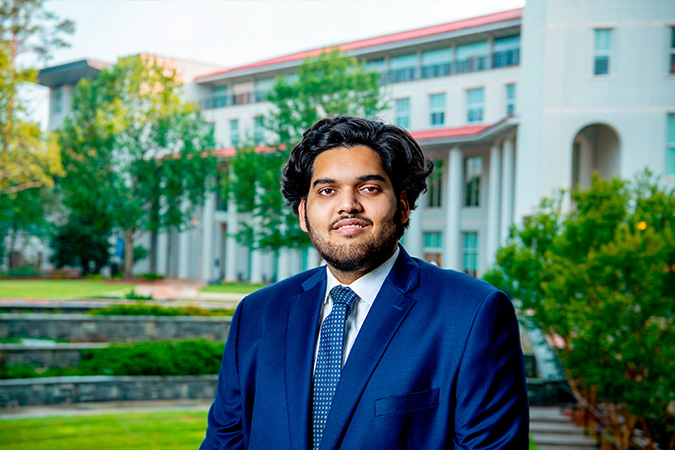
Yashonandan Kakrania, Emory University (Goizueta)
6) Tested Other Disciplines: “I came into Emory as a film and media student, but switched to business a year later. Looking back, I wish I had explored the intersection of these two industries, such as the business side of film and entertainment more deeply, learning about studios, production, and the streaming industry alongside my business coursework. It’s easy to gravitate toward traditional pathways such as consulting and finance in business schools, and I did the same. I recently started revisiting my interest in the entertainment industry and realizing how naturally it connects with what I’ve learned. I’m excited about the path I’m on, but I would have liked to spend more time exploring non-traditional intersections of business and creativity earlier on.”
Yashonandan Kakrania, Emory University (Goizueta)
“If I could go back, I would spend more time with people pursuing majors outside of business. College is a rare opportunity to meet talented people across disciplines—it’s the perfect place to geek out with others. I would love to learn more about hotel operations from friends in NYU’s School of Professional Studies or hear about the backstage of Broadway productions from buddies at the Tisch School of the Arts. By my senior year, it felt like I had become attached to the comfort of Stern’s warm community. Though being part of a home community is important, I think stepping outside my comfort zone would help me bring even more back to it.”
Martin Wu, New York University (Stern)
Next Page: More Regrets, Including Self-Care and Risk-Taking
© Copyright 2026 Poets & Quants. All rights reserved. This article may not be republished, rewritten or otherwise distributed without written permission. To reprint or license this article or any content from Poets & Quants, please submit your request HERE.


