



Basics
Carnegie Mellon University, Tepper School of Business
Industry: AI Infrastructure / Learning Layer
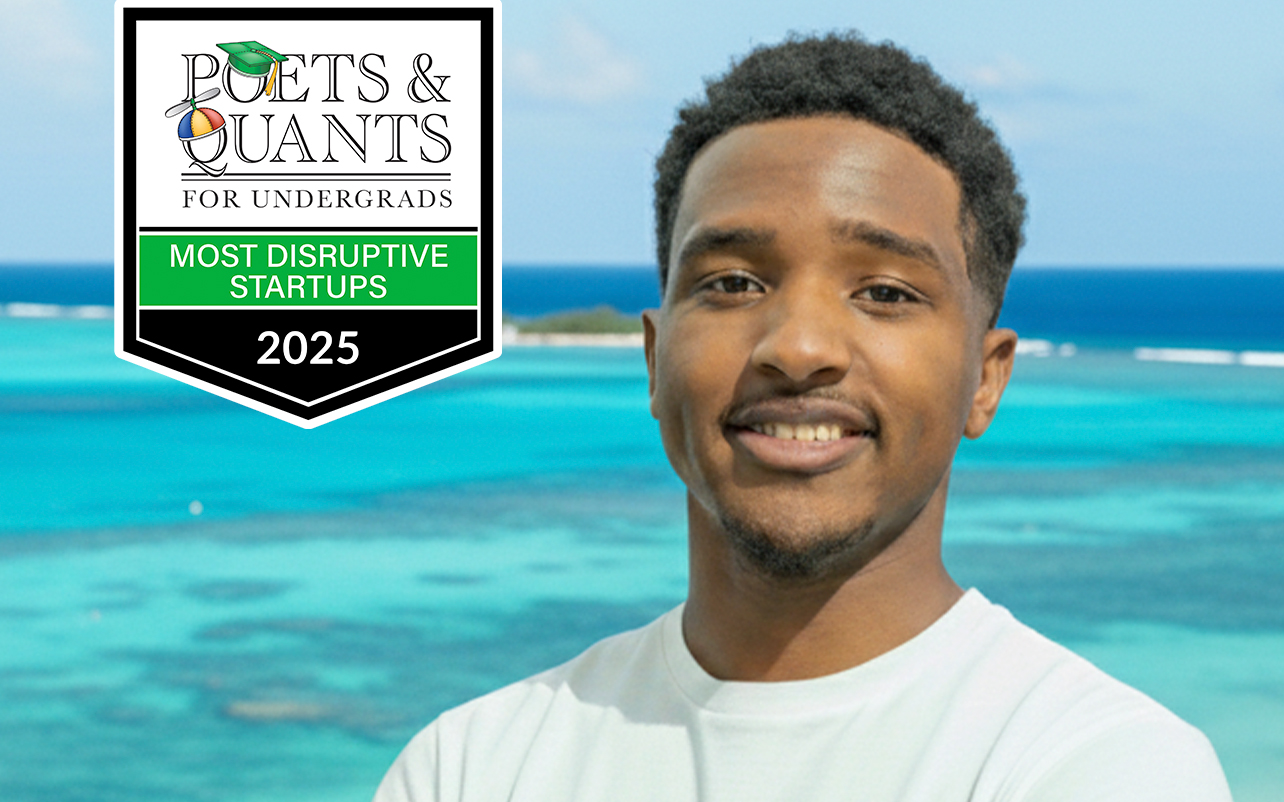
Founding Student Name(s): Akeil Smith
Brief Description of Solution: Basics is an AI-native learning layer that helps the new workforce and companies build the skills needed to thrive in the age of AI.
As AI advances, millions of jobs are being reshaped, yet 42 percent of companies have paused AI projects because employees struggle to use these tools effectively.
Basics solves this by making learning happen inside the tools people already use. Through our invention called AI Continuity, progress and context move seamlessly across platforms like ChatGPT, Cursor, Copilot, and AI browsers.
A marketing team can learn to write better prompts, design visuals, and automate reports. At the same time, an individual can use Basics to gain the skills to get a new job, launch a business, or build products using AI, all while their progress is tracked and personalized across every tool they use.
Funding Dollars: Currently raising pre-seed
What led you to launch this venture? I noticed a growing disconnect between how I use AI tools and how most people experience them. Although these tools can make learning and productivity more accessible, many people who need them most find them intimidating or hard to use. Basics changes that by meeting people where they are and guiding them to real outcomes inside the tools they already use.
Learners can build skills like machine learning in Cursor or design in Figma, while companies train employees, track progress, and measure productivity gains through AI.
What has been your biggest accomplishment so far with venture? Our biggest accomplishment has been inventing AI Continuity, a system that allows people to move seamlessly between different AI tools while keeping their progress, context, and learning preferences saved.
This technology does not exist in major platforms like OpenAI or Copilot because true cross-platform continuity would remove the barriers that keep users locked into one tool.
With Basics, we are the first to connect these tools through a single learning layer. AI Continuity has transformed how people interact with AI and how learning happens within it. For the first time, users have a learning passport that remembers how they learn best and tracks their progress across every tool. This makes education and skill development more accessible, personalized, and connected than ever before.
How has your business-related major helped you further this startup venture? Working at the intersection of AI and business has shown me how technology can directly impact a company’s financial performance. I think about how our product contributes to the bottom line through measurable productivity gains, lower training costs, and greater workforce efficiency.
This perspective allows me to position Basics not just as a learning tool, but as a system that drives revenue growth, strengthens human capital, and delivers a clear return on investment. By linking technical outcomes to financial results, we help companies see exactly how AI adoption creates real economic value.
Which business class has been most valuable in building your startup and what was the biggest lesson you gained from it? One class that deeply influenced me was Commercialization and Innovation, which studied how leading tech companies approached innovation and captured market share. Through case studies and frameworks like the Innovator’s DNA, I learned that innovation is not always about creating something entirely new but about recognizing market gaps and connecting existing ideas in new ways.
A great example was Airbnb, which reimagined how people find accommodation by connecting travelers with unused living spaces, an idea built on existing concepts but executed at the right time and with the right technology. That approach to solving a real problem by rethinking what already exists reshaped how I view innovation and how I approach building my own startup.
What business professor made a significant contribution to your plans and why? I would say Dave Mawhinney and Carrington Motley have had the greatest impact on me. From my first day at Carnegie Mellon, Dave created an environment where anyone, no matter their background or experience, felt empowered to start something of their own. He encouraged us to take action, send cold emails, show up, take risks, and do the things others might avoid. What I appreciated most was his openness to being questioned and challenged, which gave me the confidence to start my own company as an undergraduate and learn by being curious rather than complacent.
Carrington Motley taught me to approach problems analytically using tools like the business model canvas and customer discovery. He showed me how research, structure, and a deep understanding of customer pain points form the foundation for creating real value. That perspective helped me see the science behind entrepreneurship and how it complements the scrappy creativity that Dave emphasized. Together, they taught me to combine discipline with innovation and build ventures that are both thoughtful and grounded in real customer needs.
What founder or entrepreneur inspired you to start your own entrepreneurial journey? How did he or she prove motivational to you? My biggest inspiration comes from my parents. They both trained as accountants, worked at EY, and were on track for successful corporate careers, but they made the bold decision to take a risk and start their own accounting firm. Over time, that firm grew into a broader business offering internal audit, consulting, and fintech solutions. Watching them build something from the ground up taught me that anything is possible when you believe in yourself and commit fully to your vision.
They showed me that success does not come from playing it safe but from having the courage to take risks and the perseverance to turn ideas into reality.
What is your long-term goal with your startup? I’m going to change the world.
I’ve already started by making education and AI as accessible as they have ever been.
Basics gives anyone, no matter their background or income, the ability to learn real-world skills directly inside AI tools.
Soon they can gain the equivalent of a college or even PhD-level education on their own, using the same technology shaping the future of work.
This unlocks opportunities that were once out of reach and empowers 100x more people everywhere to solve real problems.
The people I impact will go on to impact the world.
And I want them to say that Basics gave them the skills to do it.
How has your local startup ecosystem contributed to your venture’s development and success? The Swartz Center for Entrepreneurship at Carnegie Mellon has been one of the most important parts of my journey as a founder. It gave me the confidence to believe I could start something meaningful and the resources, mentorship, and community to make it real. The people there truly care. They go out of their way to help you grow, connect you with opportunities, and push you to think bigger. I have felt that support every step of the way, and it has played a huge role in building every company I have started, including Basics.
DON’T MISS: MOST DISRUPTIVE BUSINESS SCHOOL STARTUPS OF 2025
© Copyright 2026 Poets & Quants. All rights reserved. This article may not be republished, rewritten or otherwise distributed without written permission. To reprint or license this article or any content from Poets & Quants, please submit your request HERE.


