







Michigan Ross’s Sharon F. Matusik: “The future will favor leaders who can effectively gain the skills and experiences they need to meet their professional and personal goals.”
A golden age for builders
AS WE LOOK TO THE coming year, we see tremendous opportunity for those with an entrepreneurial mindset and a bias toward action. Periods of disruption can feel destabilizing, but they are also when value can be created. As our alumnus Sam Zell frequently shared, “If everyone else is going left, look right.” New technologies, new business models, and new societal needs are converging, creating opportunities for leaders willing to act decisively.
At the Ross School of Business, as we look to 2026, our resolutions reflect a clear conviction: the future of business is being shaped by those who combine imagination and values with action, and innovation with impact.
Resolution #1: Meet Innovation Where It Happens
In spring 2026, Ross will open a new campus in downtown Los Angeles – an important milestone in our evolution. LA sits at the intersection of technology, media, healthcare, climate innovation, and entrepreneurship. It is a place where ideas move quickly from concept to company.
Our LA campus will serve as a hub for executive education, our Executive MBA Program, and deeper engagement with alumni and corporate partners on the West Coast, and over to Asia and beyond. More than geography, it reflects our commitment to placing Ross learners at the center of a dynamic innovation ecosystem that complements all the positive momentum here in Michigan.
Resolution #2: Turn AI Into an Entrepreneurial Advantage
Artificial intelligence is accelerating the pace at which ideas can be tested, ventures launched, operations optimized, and organizations scaled. It is also laying the groundwork for disrupting business models across many fields. Strong demand for our AI concentration within the MBA program confirms that today’s students see AI not as a technical curiosity, but as a core business capability and an important factor in shaping what the most effective business models of the future will be.
In 2026, we resolve to lead in the applied use of AI to transform business models by integrating learning experience innovation with industry partnerships. For example, we are hosting top-level executives from across industries to share how AI is transforming their fields. We are expanding AI-infused coursework across disciplines and equipping students to translate insights into execution. Part of this effort includes a partnership with Google, which involves Ross-specific AI agents across the school. These tools support work such as venture planning, teaching effectiveness, operational scaling, and organizational transformation – bringing technology in to inform thoughtful and human-centered judgment related to operational effectiveness as well as strategic issues of competitive advantage.
Resolution #3: Personalize the MBA for a Nonlinear World
In a golden age for builders, traditional career paths are also evolving, and education must evolve accordingly. The future will favor leaders who can effectively gain the skills and experiences they need to meet their professional and personal goals.
We are accelerating our efforts to personalize the MBA experience, giving students greater flexibility to develop the specialized knowledge they need for their professional success. Through career-oriented pathways, action-based learning applied to the most current challenges firms are facing, and technology-enabled analytics, we aim to help our Ross MBAs navigate the many learning experiences at Ross, at the University of Michigan, and with our alumni to position them with the personalized capabilities, connections, and community to achieve their own individual goals.
Resolution #4: Prepare Leaders for Ownership and the C-Suite
Entrepreneurial leadership is not limited to founding new companies. It also involves seeing opportunities where others see challenges and includes acquiring, scaling, and stewarding existing enterprises. It also means stepping into leadership roles at moments of inflection.
Our Entrepreneurship Through Acquisition track continues to grow, reflecting strong student interest in ownership and long-term value creation. At the same time, we have a new MBA pathway that connects students directly with leadership opportunities tied to breakthrough innovations emerging from the University of Michigan’s world-class science, medical, and engineering schools. (Fun fact: there are approximately 110 departments in the top 10 at U-M.)
From healthcare and mobility to climate solutions and advanced materials, Michigan researchers are generating life-changing discoveries. Ross MBAs can help turn some of those discoveries into durable enterprises – leveraging their business expertise and the world-famous “Go Blue” community they are a part of to scale up these ventures.
Looking Ahead
Golden ages are defined not by ideas alone, but by action. One of our key differentiators at Ross is action – through our action-based learning orientation and the bias towards action our graduates are known for. Here, we are preparing leaders who see opportunity in complexity and possibility in change – leaders who are ready to build.
Our 2026 resolutions are grounded in the belief that this moment calls for ideas and action. We are energized by what lies ahead and are committed to developing graduates who do not merely respond to the future but aim to actively shape it.
– Sharon F. Matusik, Edward J. Frey Dean of the University of Michigan Ross School of Business

Kellogg Dean Francesca Cornelli: “We want to advance research and practice that help leaders embrace disagreement as a tool for growth rather than division.”
AS WE ENTER 2026, I find myself reflecting on a paradox: We are living through a moment of profound uncertainty, yet I have never been more optimistic about the future of business education and leadership.
The world needs leadership right now – the right leadership, with the right approach and the right training. People who can bridge divides in a polarized world, who understand that disagreement, when approached thoughtfully, is not a barrier, but a catalyst for progress.
At Kellogg, we have always believed this. Our faculty research has shown for years that diverse viewpoints, engaged respectfully, drive innovation and better decisions. That is why last year we launched the Litowitz Center for Enlightened Disagreement. We want to advance research and practice that help leaders embrace disagreement as a tool for growth rather than division.
Looking to the year ahead, I am hopeful for the power of future leaders who will embody these abilities and meet the world’s challenges with insight, integrity and impact. Here is to another year of learning, collaboration, and leadership that matters.
– Francesca Cornelli, Dean of the Kellogg School of Management at Northwestern University
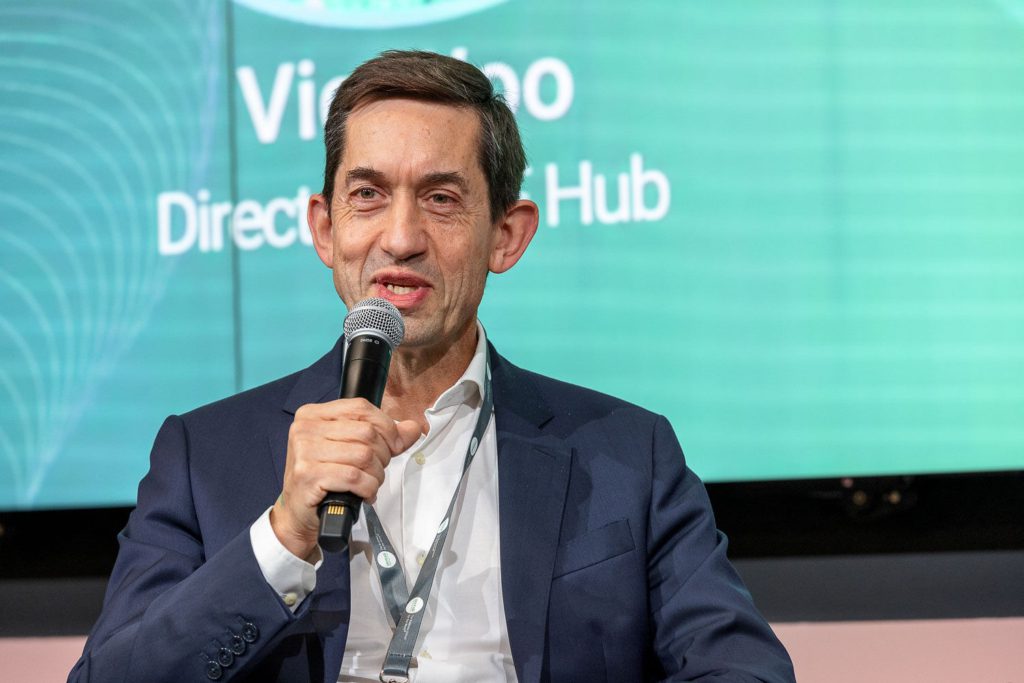
INSEAD’s Francisco Veloso: “In a world where AI adapts to the individual, the value of diverse perspectives – cultural, professional, generational – becomes even more critical.”
Human-Centred Vision for Responsible AI Leadership
2025 WAS A MONUMENTAL YEAR for INSEAD. We celebrated our first Nobel Laureate, Philippe Aghion, The Kurt Björklund Chaired Professor in Innovation and Growth at INSEAD, and held our position as the Financial Times #1 European Business School for the second year running.
We marked 25 years of the Asia Campus, the moment INSEAD became a truly global institution, as well as five years of the San Francisco Hub for Business Innovation. Both milestones show how our footprint keeps expanding where ideas and industries move fastest.
Our faculty sustained their global influence, with four professors named among the Top 50 Most Influential Management Thinkers by Thinkers50 and a rise to second place in The Case Centre Impact Index.
We launched the Master in Finance to prepare professionals for the realities of today’s global financial system. Learning is AI-driven, while keeping a strong focus on technical mastery, interpersonal skills and the international perspective that defines INSEAD.
This aligns with how we see our role in the AI era: developing leaders who act with wisdom and values; designing intelligent organisations that balance efficiency with humanity; supporting entrepreneurship that renews systems responsibly; and shaping markets that remain fair, inclusive and sustainable. Because even as AI reshapes strategy and operations, the challenges of climate and sustainability remain urgent and central.
AI is now connecting every aspect of the school. We are augmenting our educational offering, advancing research and turning insight into influence by convening thought leaders, policy makers, industry pioneers and alumni to ignite high-impact collaborations to ensure inclusive and responsible progress.
The work flows both ways: insights from partners and markets inform programmes and studies, and classroom and research outputs return to the field.
One visible example is the high-impact AI Venture Lab pilot, which brought together more than 500 founders to build AI-native ventures. Another is our work on immersive learning, by transforming written case studies into immersive AI-powered learning experiences. Learners interact with AI-generated case protagonists and receive real-time feedback about their performance.
Our faculty have been building capabilites in AI for decades. They turn research and insights from students and executives into tools with immediate value. Recent examples include Xavier AI, the first AI strategy consultant; Lexarius, a platform that provides tailored “real-play” conversations to help people develop critical skills; and the world’s largest encyclopaedic knowledge portal Botipedia, built under the INSEAD Human and Machine Intelligence Institute (HUMII), which is dedicated to human-machine collaboration to enhance decision-making and human agency.
In a world where AI adapts to the individual, the value of diverse perspectives – cultural, professional, generational – becomes even more critical. Our global classroom, with its rich mix of backgrounds and experiences, is more essential than ever. It challenges assumptions, broadens thinking and prepares leaders to navigate complexity in a fragmented world.
In 2026, we will keep pushing the conversation forward. With careers now spanning 60 years, renewal is not optional; it is a necessity.
It is clear that business education is moving into a new phase, and leadership now depends on pairing AI fluency with human judgement. Leaders must help their teams navigate uncertainty, unlearn outdated models, and maintain psychological safety when roles and identities are in flux. They must balance efficiency with meaning, autonomy with accountability, and short-term gains with long-term purpose. Our goal is to equip people at every stage with the entrepreneurial mindset, digital fluency and ethical grounding to reinvent themselves and their organisations over time.
INSEAD anchors this in our approach, ensuring organisations and markets remain intelligent in design and human in purpose. In the years ahead, we will work to define and advance human-centred, responsible leadership. Because, as AI transforms work, leaders must be more human, not less.
– Francisco Veloso, Dean of INSEAD
Next Page: Deans from the University of San Francisco, Georgetown McDonough, and Cambridge Judge Business School offer their resolutions for 2026.
© Copyright 2026 Poets & Quants. All rights reserved. This article may not be republished, rewritten or otherwise distributed without written permission. To reprint or license this article or any content from Poets & Quants, please submit your request HERE.


