






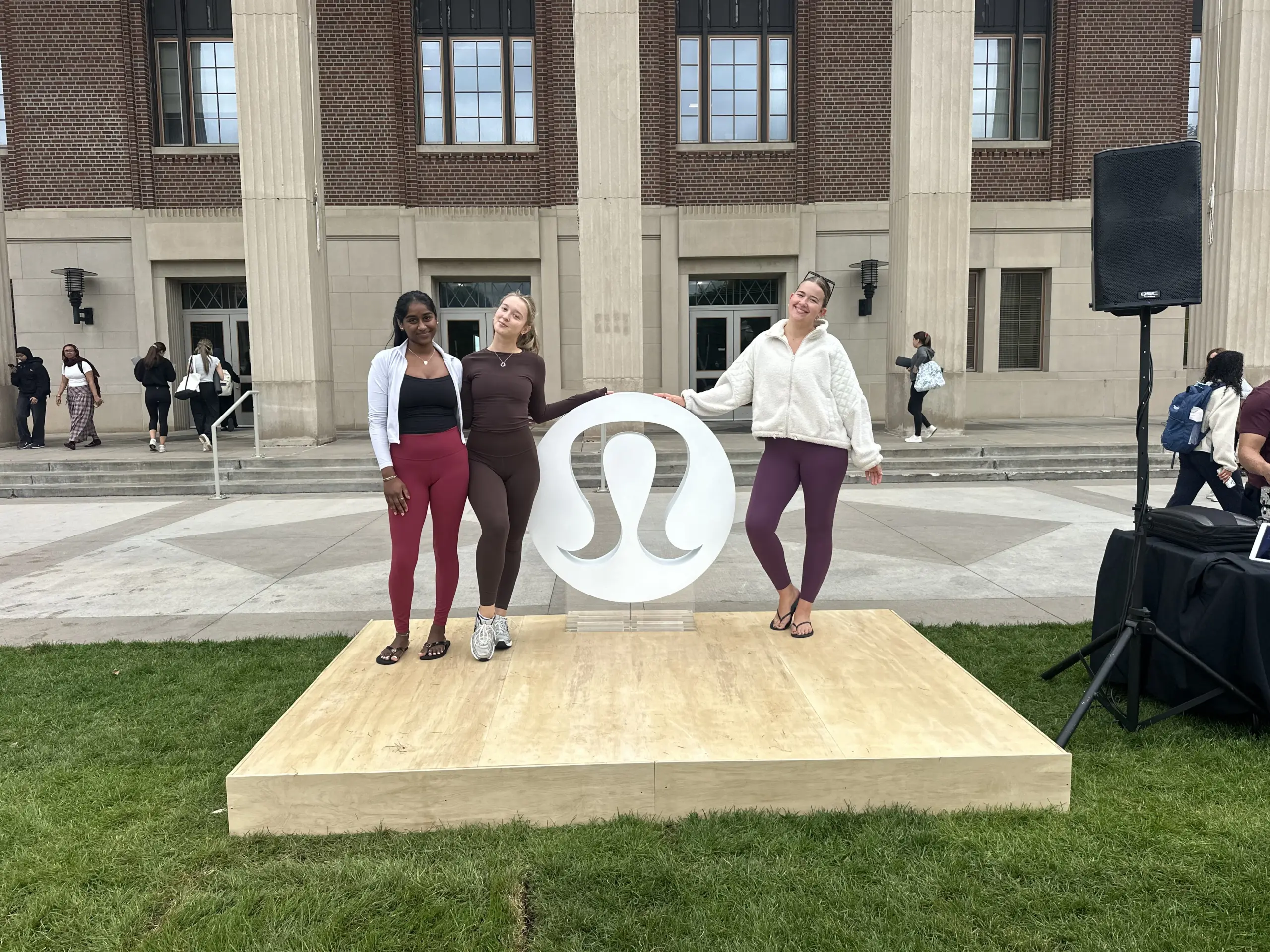
Emily (Right) and her classmates attend a lululemon yoga event in collaboration with the University of Minnesota outside Coffman Memorial Union.
Nearly 70% of college students reported experiencing a mental health concern within the past year, according to a 2026 UnitedHealthcare survey. The most common concerns were anxiety, stress, depression, and ADD/ADHD. College is usually portrayed as an exciting time filled with independence, new opportunities, and personal growth. While all of those things can be true, college also comes with pressure to succeed academically, build friendships, get involved, find internships, and prepare for a career – all while trying to figure out where you belong.
NAVIGATING EXPECTATIONS AS A TRANSFER STUDENT
I experienced many of those pressures when I transferred to the University of Minnesota’s Carlson School of Management as a sophomore. I immediately felt behind. Other students already had internships, leadership positions, close friendships, and organizations where they were involved. I felt like I needed to catch up. I thought that meant joining as much as possible and attending every event I could in order to fit in.
By October, that mindset had started to catch up with me. I was balancing summer internship interviews and midterm exams. At the same time, I was also trying to attend every Carlson event and every meeting for organizations like Women in Business and the Student Marketing Association. Instead of enjoying everything I had become involved in, I was constantly thinking about what I needed to do next. I was comparing myself to other students and felt guilty whenever I skipped an event.
Over time, constantly trying to keep up started to take away from the experiences I had been so excited about in the first place. Even when I was at an event or spending time with friends, I was often thinking about the next assignment, interview, meeting, or opportunity on my calendar. I realized that I was putting so much pressure on myself to make the most of college that I wasn’t allowing myself to actually enjoy it.
Eventually, I brought those feelings up to my roommates, who had both been at the University of Minnesota and Carlson since their freshman year. Talking with them helped me realize that I did not need to attend everything to belong, especially as a transfer student trying to find my place. They reminded me that everyone can feel behind at times, even when it seems like they have everything figured out.
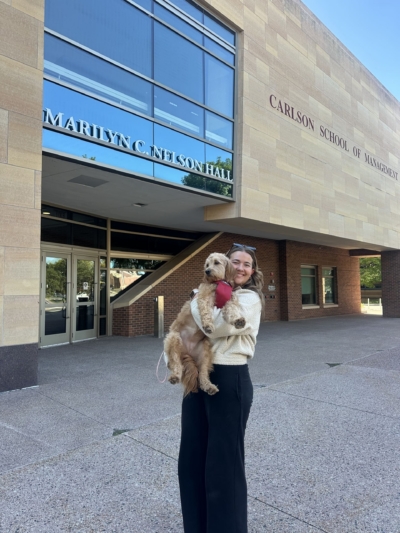
Emily and her mini Goldendoodle, Mochi, spend time together outside the Carlson School of Management.
SHIFTING PRIORITIES AND FINDING BALANCE
That conversation changed how I approached the rest of my college experience. I started saying no to events that I felt like I “should” attend and prioritized the organizations and opportunities I genuinely cared about and found meaningful. I also became more intentional about making time for activities that supported my well-being, such as playing intramural volleyball and attending workout classes at RecWell.
I’ve also realized how much the smaller things in my life can help me recharge. I love spending time with animals, especially my dog, Mochi. Some Sundays, I go home to spend time with my family, and when my parents are in Minneapolis, they will sometimes bring Mochi so I can see her. Even just sitting with her and petting her helps me slow down and relieve stress. No matter how busy my week has been, I almost always feel better after spending time with her.
I’ve learned that maintaining my mental health is not always about making one major change. For me, it has been more about recognizing when my schedule starts to feel overwhelming and being willing to reevaluate my priorities. I have become more comfortable saying no, leaving space in my schedule to recharge, and choosing activities because I genuinely enjoy them rather than because I feel like I should be doing them.
I’ve also learned to pay more attention to when I start comparing my college experience to everyone else’s. When I notice myself feeling behind, I try to remind myself that there isn’t one right way to experience college or measure success.
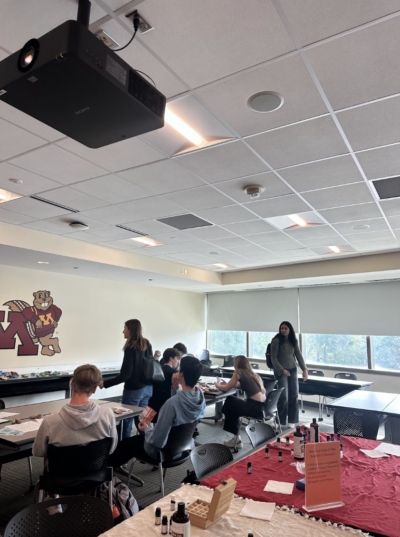
Students gather in a Hanson Hall classroom for Wellness Connections, enjoying coloring, snacks, and a calming environment designed to help them relax and recharge.
INSTITUTIONAL SUPPORT AND STUDENT WELL-BEING
Carlson and the University of Minnesota have also helped make student well-being more visible by creating opportunities for students to take a break from their normal routines. Across campus, events like an outdoor yoga class I attended outside Coffman Memorial Union gave me a chance to step away from academics, spend time with friends, and recharge. Carlson also offers opportunities like weekly Friday mat Pilates classes, along with Wellness Week and Wellness Connections, which make prioritizing well-being feel like a regular part of the college experience rather than something separate from it.
What stood out to me was how simple it was. I could walk into a room, grab a snack, meet Carlson’s wellness counselor, and spend time relaxing around other students. There was no expectation to accomplish something or add another item to my résumé. It was simply a space to take a break. Having opportunities like this within a business school is important because it reminds students that taking care of themselves deserves a place alongside academic and professional development.
Experiences like Wellness Connections also reinforced something I had already started learning on my own: taking care of my well-being does not always require a dramatic solution. Sometimes it starts with recognizing that I need a break, creating space in my schedule, talking to people I trust, or taking advantage of the support available to me.
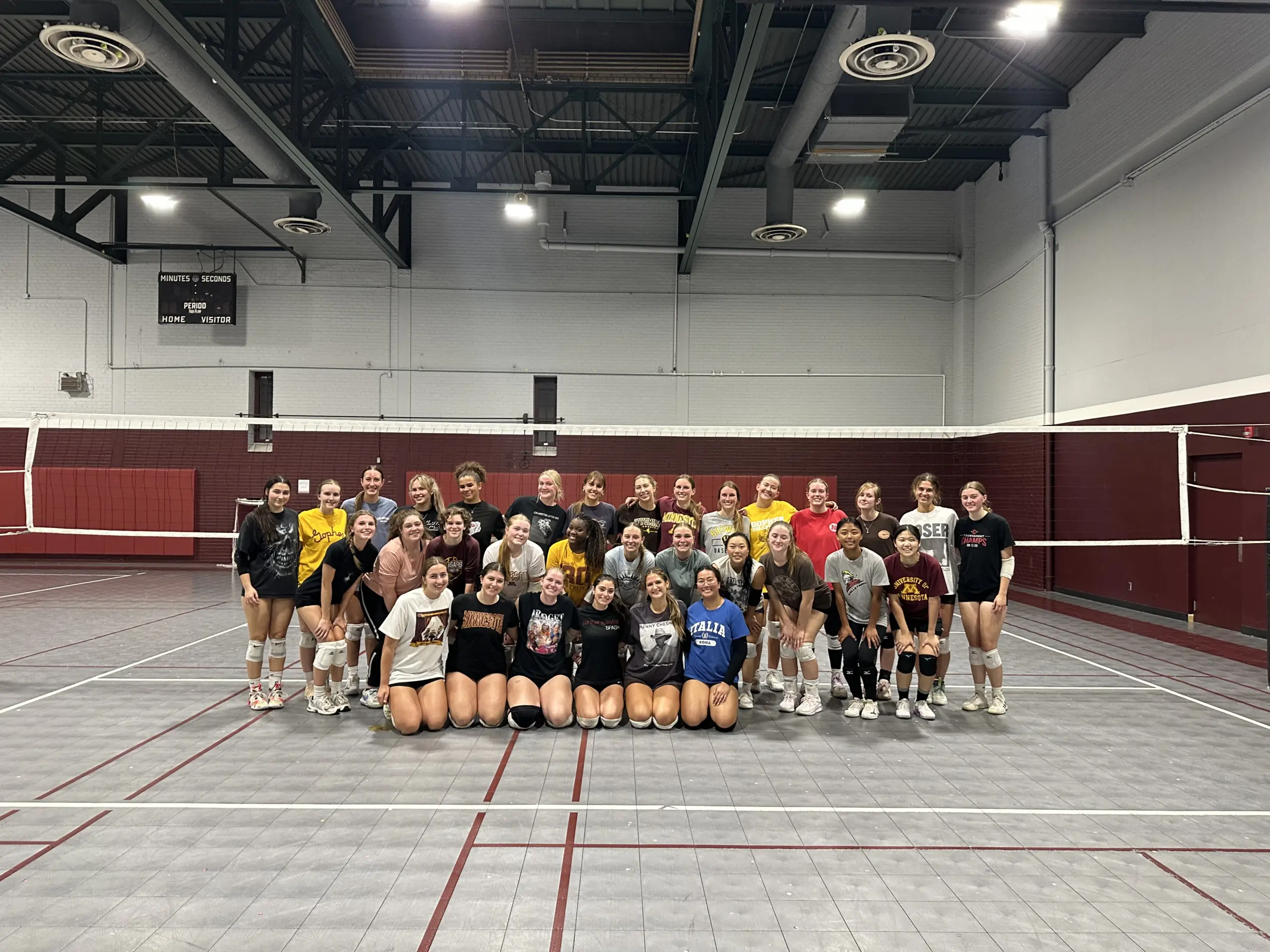
Emily and members of the Women’s Volleyball League celebrate the start of the semester at their fall kickoff open gym at RecWell.
REDEFINING SUCCESS IN COLLEGE
College students can easily look around and feel anxious that everyone else is ahead. Someone has a better internship, another person has a leadership position, and someone else seems to have their entire career planned. Trying to keep up with everyone can make it easy to lose sight of what actually makes your own college experience meaningful.
I have learned that you don’t have to join everything to belong, and being the busiest person in the room doesn’t mean you are the most successful. Sometimes finding the clubs, friendships, internships, hobbies, and communities that genuinely make you happy is how you find where you belong.
Everyone’s experience with mental health is different. For some students, these challenges can become much more serious and require support beyond changes to a schedule or conversations with friends. That’s another reason I think it is important to recognize when something doesn’t feel right and to know that asking for help is part of taking care of yourself, not a sign that you are falling behind.
College success should be about more than the grades you earn or the job you land. Learning how to recognize when you need support, make time for what matters to you, and take care of your well-being is just as much a part of the college experience.
BIO
Emily Elletson is a Marketing major at Minnesota Carlson, minoring in Strategic Management. She’s a Content & Design Assistant for the Minnesota Carlson undergraduate program and actively involved in the Student Marketing Association and Women in Business.
DON’T MISS:
MINNESOTA CARLSON MOMENTS: GETTING THE MOST OUT OF YOUR STUDY ABROAD EXPERIENCE
MINNESOTA CARLSON MOMENTS: MY JOURNEY AS A TRANSFER STUDENT
MINNESOTA CARLSON MOMENTS: MAKING THE MOST OF MY SUMMER INTERNSHIP AT CARGILL
© Copyright 2026 Poets&Quants. All rights reserved. This article may not be republished, rewritten or otherwise distributed without written permission. To reprint or license this article or any content from Poets&Quants, please submit your request HERE.


