






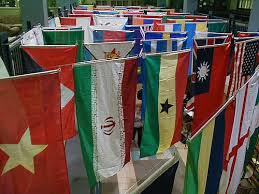
Clark University Joins the United Nations Academic Impact (UNAI)
Clark University’s School of Business (CUSB) just announced they will be joining the United Nations Academic Impact (UNAI).
This means that Clark will now be a part of a strong global network of universities working together with the United Nations, to solve the top pressing global challenges like sustainability, human rights, and of course peace.
Dean David Jordan explained the significance of this milestone. “Our United Nations Academic Impact membership recognizes the work undertaken here at the School of Business in promoting local, national, and international social engagement, and the reputation of Clark University as a whole in driving social initiatives as part of our academic environment.”
ADDING TO CLARK’S SUSTAINABILITY PUSH
In case you haven’t heard, UNAI is part of the Higher Education Sustainability Initiative, operating on ten core principles that drive meaningful change in areas ranging from access to education to global citizenship. Clark’s School of Business has been actively involved in promoting sustainability through its long-standing participation in the UN’s Principles for Responsible Management Education (PRME), which integrates SDGs into academic program
President David Fithian adds that this move is in line with Clark’s long-standing mission – to create a more just and sustainable world. Clark will have an even bigger platform for tackling the urgent global issues they very strongly care about.
Alongside Clark, the other most recent newbies to be welcomed into the UNAI are Nagaoka University of Technology in Japan and Epoka University in Albania.
“Clark University has a long history of working toward a more just and sustainable world,” Clark President David Fithian said. “Joining the UNAI expands our network while we continue to address urgent social, political, and ecological challenges.”
Next Page: Why employer branding matters.
© Copyright 2026 Poets & Quants. All rights reserved. This article may not be republished, rewritten or otherwise distributed without written permission. To reprint or license this article or any content from Poets & Quants, please submit your request HERE.


