






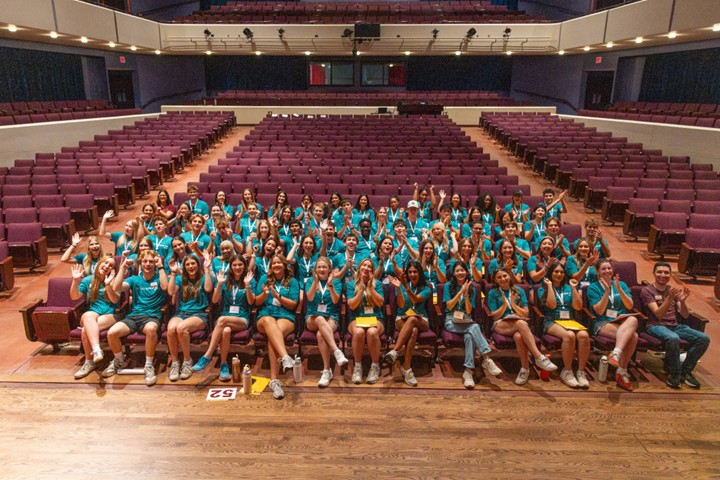
Emily (fifth from the left in the front row) joins fellow Carlson Crew Leaders and Design Your Life teaching assistants as they prepare to welcome incoming first-year and transfer students to Carlson on College Day.
When I first entered business school, I thought I knew what to expect: networking opportunities, internships, and classes that would prepare me for a successful career.
What I didn’t expect was how much I would learn about myself along the way.
At the University of Minnesota’s Carlson School, courses like Design Your Life, Leading Self and Teams, and Design Your Career introduced me to concepts I hadn’t associated with business school: understanding personal values, reframing failure, recognizing strengths, and making difficult decisions.
As I approach graduation, I’ve realized that some of my most valuable lessons haven’t come from traditional business coursework. Instead, they’ve come from learning how to navigate uncertainty, seek guidance, and build meaningful relationships.
And while these lessons have shaped my experience at Carlson, they’re ones I believe every business student can benefit from.
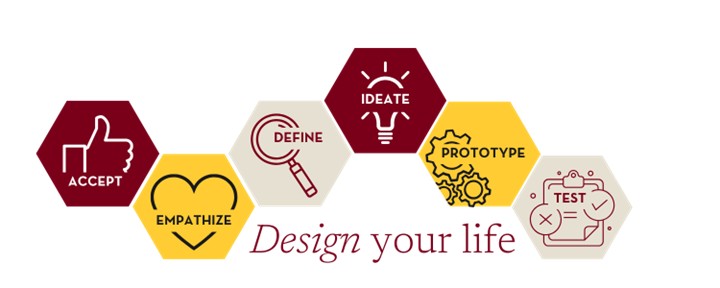
The Design Your Life framework outlines six stages of the design thinking process: accept, empathize, define, ideate, prototype, and test. This approach encourages students to explore possibilities, navigate uncertainty, and make intentional decisions about their futures.
CAREER COACHING IS MORE THAN RESUME ADVICE
When I first transferred to Carlson, I scheduled an appointment with Shontel Smith, the Marketing Career Coach, to prepare for my first career fair. I wanted advice on my resume, recruiting, and how to approach employers.
What began as one appointment turned into an ongoing relationship throughout my sophomore and junior years. We discussed internship opportunities, potential minors, and my long-term career goals.
One of our most valuable conversations happened during my junior year when I received multiple internship offers. While I was incredibly grateful, I also felt overwhelmed by the pressure of making the right decision. Each opportunity offered something different, and I worried about how my choice might affect my future. Instead of making the decision alone, I met with Shontel to create a pros and cons list. We evaluated compensation, company culture, opportunities for growth, the type of marketing work, and the potential for a full-time offer. She also encouraged me to think beyond the job descriptions and consider what I wanted from the experience.
Ultimately, I chose U.S. Bank because of its people-centered culture, professional development opportunities, and the positive experiences I’d heard from former interns and employees. After completing my internship, I felt those priorities had aligned with my experience, and I accepted a return offer. But the biggest takeaway wasn’t the offer. It was learning how to approach decisions with greater confidence.
I advise other business students to treat career coaching as more than a place to polish your resume. For example, come prepared with specific questions. In my case, two questions I found particularly helpful were: “What factors should I prioritize when comparing different career opportunities?” and “How can I determine which opportunity best aligns with my personal values and long-term career goals?”. In addition, I’d encourage you to identify your priorities and ask for help evaluating opportunities against your long-term goals. A good coach shouldn’t make the decision for you, but they can help you ask questions you might not have considered.
LEARNING HOW TO MAKE DECISIONS
Another unexpected lesson from business school has been the value of design thinking. Carlson requires all first-year students take a course based on design thinking, which is an approach to solving problems that encourages you to explore possibilities, reflect on your priorities, test ideas, and adjust your thinking rather than immediately searching for one perfect answer.
One tool I’ve found especially useful is a decision matrix, which I first learned about through my coursework.
When facing a difficult decision, I identify the factors that matter most to me, such as compensation, growth opportunities, networking, or personal comfort. I then score each option against those criteria to better understand which aligns with my priorities.
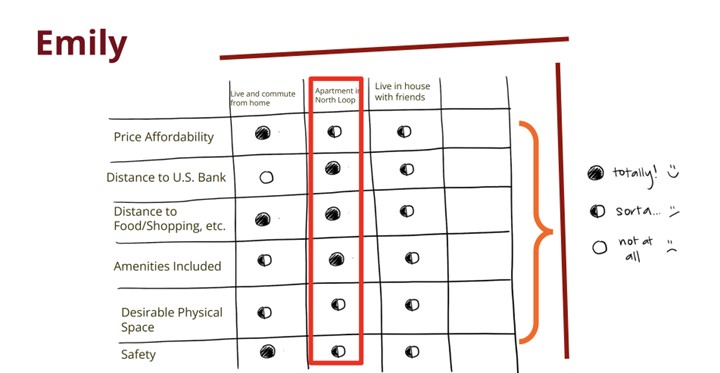
Emily’s decision matrix, created using the Design Your Life framework, evaluates three post-graduation housing options based on factors such as affordability, proximity to work, amenities, and safety.
I’ve applied this process to decisions involving internships, career opportunities, and even housing. What surprised me was that the final score wasn’t always the most valuable part. The process of identifying my priorities often taught me more about what I wanted than the numbers themselves.
I’ve also learned that making a thoughtful decision doesn’t guarantee certainty. Sometimes, the best opportunities still require stepping outside your comfort zone.
For students navigating internship offers, choosing a major, or deciding what comes after graduation, I’d encourage trying this approach. You don’t need to have every answer, but understanding what matters to you can make the next step feel less overwhelming.

Carlson School, Building Exterior
THE VALUE OF FINDING YOUR PEOPLE AND BECOMING A MENTOR
When I transferred to Carlson from the University of Nebraska–Lincoln, I was entering a new environment and trying to find my place.
Some of my first connections were transfer teaching assistants, who helped me find my way through classes, campus resources, and student organizations. More importantly, they helped me feel like I belonged.
That experience eventually inspired me to become a transfer teaching assistant myself.
Now, one of the most rewarding parts of my college experience is helping other students navigate the same uncertainty I once experienced. Whether I’m answering a question, connecting someone to a resource, or simply catching up with a student in the hallway, I enjoy seeing their confidence grow.
Through Gallup’s CliftonStrengths assessment, which helps individuals identify their natural talents, I also learned that one of my top strengths is Developer. This strength centers on recognizing potential in others and finding fulfillment in helping them grow.
Suddenly, I had a better understanding of why mentorship and supporting other students felt so meaningful to me.
This experience taught me that networking isn’t always about meeting someone who can help you land your next internship. Sometimes, it’s about building genuine relationships, learning from others, and finding opportunities to give back.
For business students, my advice is simple: Find people who are willing to support you, and look for opportunities to do the same for someone else. You don’t need a formal leadership position to make an impact. Sometimes, being willing to answer a question or offer encouragement is enough.

Emily Elletson
PREPARING FOR MORE THAN A CAREER
Looking back, I entered business school focused on building my resume and preparing for my first job. Those goals are still important, but I’ve learned that college is also an opportunity to become more confident in who you are and how you approach the world.
My biggest advice to other business students is to take advantage of the resources and people around you. Schedule the career coaching appointment, explore opportunities outside your comfort zone, and invest in relationships beyond what they might do for your career.
I try to approach each day with the goal of becoming 1% better, whether that’s learning something new, asking a question, helping someone else, or taking a small step toward a bigger goal.
You never know when the person sitting next to you in class might become a lifelong friend, mentor, or future colleague. And you never know which seemingly small experience might change how you see yourself.
Business school has certainly helped prepare me for my career. But perhaps its greatest impact has been teaching me how to make decisions, build relationships, and continue growing long after graduation.
MY BIO
Emily Elletson is a Marketing major at Minnesota Carlson, minoring in Strategic Management. She’s a Content & Design Assistant for the Minnesota Carlson undergraduate program and actively involved in the Student Marketing Association and Women in Business.
DON’T MISS:
MINNESOTA CARLSON MOMENTS: WHY MENTAL HEALTH MATTERS IN COLLEGE
MINNESOTA CARLSON MOMENTS: GETTING THE MOST OUT OF YOUR STUDY ABROAD EXPERIENCE
© Copyright 2026 Poets&Quants. All rights reserved. This article may not be republished, rewritten or otherwise distributed without written permission. To reprint or license this article or any content from Poets&Quants, please submit your request HERE.


