



Management majors at the University of Wyoming College of Business doubled from 159 to 328 between fall 2021 and fall 2025, while accounting rose 52% to 313
BUILT FOR THE STATE
Thiel says he is passionate about center-based learning, and he describes the college’s centers as tools of the land-grant mission, not just engines for research.
“These are centers that are really designed to serve the state,” Thiel says.
The strategic plan points to outreach programs including the Center for Business and Economic Analysis, the Low Income Taxpayer Clinic, the Center for Professional Selling and the Center for Principle-Based Leadership and Ethics. It also names the Ellbogen $50K Competition, the Venture MBA and student organizations as ways to foster entrepreneurship.
One example is the Cowboy Leadership Experience, a noncredit executive leadership curriculum run through the ethics and leadership center. Its audience is Wyoming business owners who lack the big-city executive education options available elsewhere.
“If you’re in a metro, or especially if you’re on the East Coast, there are so many executive leadership programs to choose from,” Thiel says. “We don’t have that.”
A credit-bearing executive MBA is now in the works, Thiel says, with Cook working alongside the college’s professional graduate program director.
The Leadership Academy is aimed at students and isn’t limited to business majors. Students from across the university form project teams, study Wyoming’s core industries, and propose solutions to problems those industries face, with engineers often working beside business students.
“Some are not the most pragmatic, but they’re really visionary,” Thiel says.
The ethics program has a national profile, too. Thiel says it is one of two programs endowed by the Daniels Fund, which pays for a class that prepares students for outside case competitions. In its debut at the International Business Ethics and Sustainability Case Competition, Wyoming’s team earned multiple runner-up finishes.
THE PLACEMENT PUZZLE
Tydings’ numbers come with a twist. Placement has climbed from 79.5% in 2022-23 to 85.1% in 2025-26, based on a senior exit exam and the college’s Cowboys & Career celebration. But the number of employer partners fell from a peak of 40 in 2023-24 to 22, and it has held there since. The shift sits awkwardly beside the strategic plan, which calls for increasing students’ access to corporate partners. Tydings says the drop was deliberate.
“We were stretching ourselves a bit,” Tydings says. “So we really took some time, audited who our employer partners were, how they were interacting with our students, how they were treating our students through internships, through jobs.”
She says the remaining partners are companies that are always hiring and that give the college steady feedback. Much of the placement rate is driven by accounting, she says, where she believes graduates are placed at close to 100% because of demand from CPA firms in and out of the state.
“They would love all of our business graduates to be accounting majors,” Tydings says. “Well, that’s obviously not feasible.”
The college staffs two dedicated career advisors and an employer relations coordinator, which she says is unusual on her campus, where a single advisor often covers an entire college.
“They’re not matchmakers,” Tydings says. “We’re not a job placement service. We talk about that a lot.”
Activity has climbed with the placement rate. Appointments completed by advisors and career staff rose from 2,497 in 2023-24 to 3,338 in 2025-26, up 34%. Career fair participation grew 74%, from 375 to 653, and students taking internships for credit rose from 67 to 107. Tydings says required academic advising produces about 1,500 appointments a year, and the college has worked to steer more students toward career advising, partly through scholarships tied to attending networking events. Another lever has been the faculty.
“It may be shocking, but our students actually do listen to our faculty for the most part,” Tydings says.
THE ACCREDITORS’ HOMEWORK, AND AN AI BET
For all the good news, the reaccreditation left the college with homework. Thiel, who focused on assurance of learning, says the college is good at launching things but less good at proving what they accomplish.
“We’re really good at standing up programs,” Thiel says. “We know our students are getting jobs. But we need to refine how we capture that impact.”
Another test is coming. Beaulier says new AACSB standards call for closer monitoring of what happens in the classroom, so the college will need a system that shows faculty are teaching current material beyond end-of-semester evaluations. He believes the next review isn’t until 2031. The strategic plan anticipated some of this, calling for required online teaching training and protocols to improve below-average teaching.
On AI, Beaulier is openly bullish. Faculty AI subscriptions have become a significant expense, he says, and while nothing is mandated, MBA faculty have agreed that every class will carry an AI component. The university has announced a campuswide AI platform for faculty and students, part of the president’s push to lead in the space.
“It’s a game changer,” Beaulier says. “We want to be on the frontier of it.”
WHAT KEEPS THEM UP AT NIGHT
Asked what they are proudest of, several of the leaders point to culture. Cook says the college prizes grit over pedigree.
“I don’t care if you didn’t go to Harvard,” Cook says. “You’re at the University of Wyoming. Grit, values, the code of the West. These are the things that employers are looking for.”
It is a message a first-generation kid from Iron Mountain would recognize.
Tydings says she is proudest of the college’s retention gains, and what worries her is the job market. Students and parents ask her why anyone should earn a data analytics minor when a chatbot can do the analysis. Thiel worries about how to become a national brand. Wyoming is one of the states facing the largest projected declines in high school graduates, he says, so the college has to reach learners at other stages of life.
For Beaulier, the concern starts at the top. President Shane Reeves, who took over July 1, has been blunt that the university has to “grow or we’re going to die,” Beaulier says, and the college has been growing.
“He expects so much more from us,” Beaulier says.
The second worry is closer to home. He doesn’t want the college falling asleep at the wheel on curriculum, and he is willing to question the core.
“Do they need to be beaten over the head with a lot of calculus,” Beaulier says, “or is there something that’s much more practical and relevant for a business student?”
It is a slow, multiyear slog, he says, but the alternative is irrelevance. And if the college gets it right, the payoff is the national recognition he keeps coming back to, whether or not the football team cooperates.
“Every student should experience what we’re doing here,” Beaulier says.
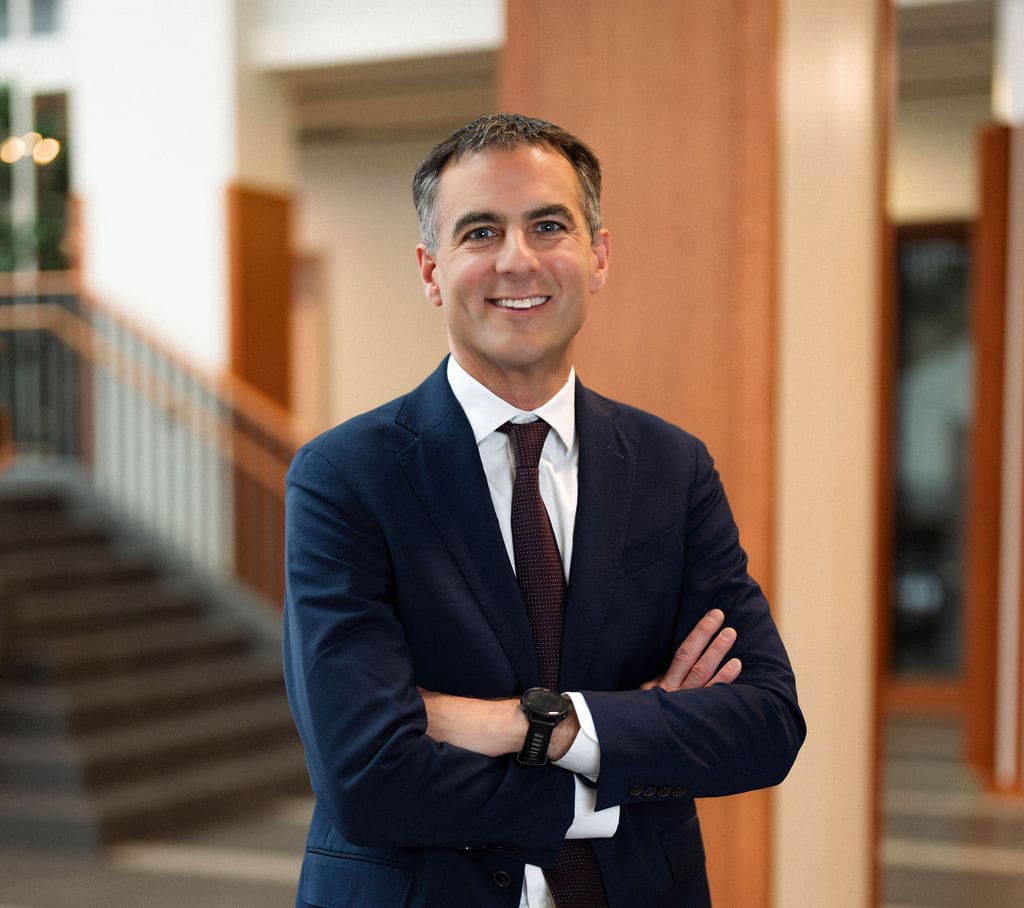
Scott Beaulier on what sets the college apart: “We lean into teaching principled ethics. We’re teaching them leadership and how to succeed in a business world where just having a strong backbone is going to set you apart. Donors love that values piece of our program.”
DON’T MISS MY ONLINE MBA JOURNEY: HALFWAY THROUGH THE MARATHON
© Copyright 2026 Poets&Quants. All rights reserved. This article may not be republished, rewritten or otherwise distributed without written permission. To reprint or license this article or any content from Poets&Quants, please submit your request HERE.


