






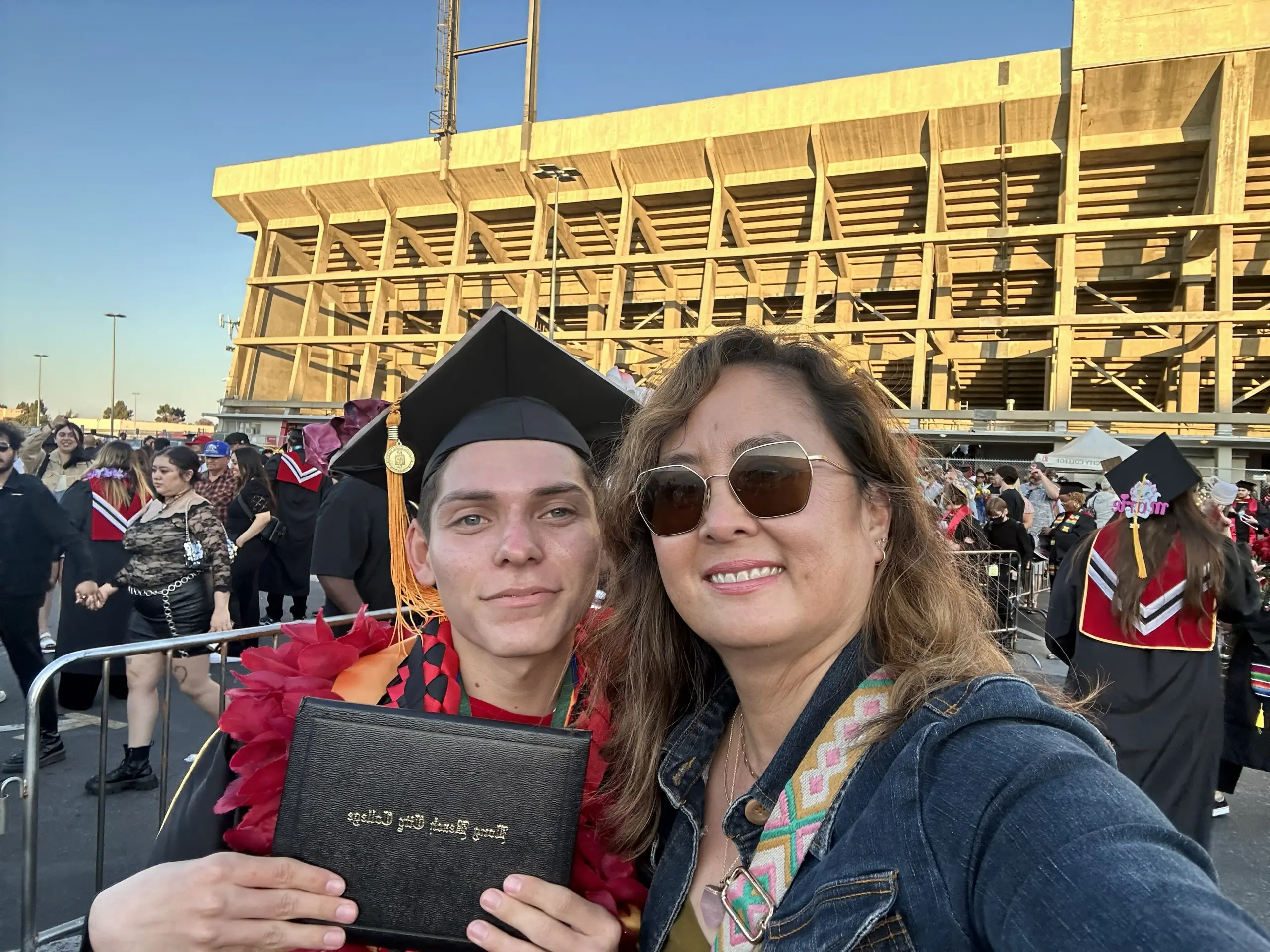
Carlos with his high school marketing teacher at his Long Beach City College graduation, where he earned his associate degrees in Accounting and Business Administration during his junior year of high school.
I knew how to navigate college. I just didn’t know how to navigate Berkeley.
Before entering the Haas School of Business, I had spent years taking college courses through Long Beach City College and Cal State Long Beach. There, I knew which offices to visit, whom to approach for guidance, and how to utilize academic resources. Coming from a family whose professional experiences largely involved blue-collar work, much of that knowledge wasn’t inherited. I developed it through experience and people willing to guide me.
Berkeley, however, introduced an entirely different environment. Some of my classes were two-to-four times larger than those I was accustomed to attending. Establishing relationships with professors required more initiative, and finding my footing became overwhelming. Despite my previous college experience, I suddenly felt like a beginner again.
LEARNING A NEW LANGUAGE
Haas presented an interesting contrast.
Within a large public university, Haas sometimes feels like a private school of its own. Smaller classes, dedicated academic and career resources, and more personalized attention offer a different experience. But beyond those resources, I encountered a professional culture with expectations I hadn’t anticipated.
Conversations about LinkedIn profiles and upcoming internships seemed unavoidable. Someone might ask which consulting club you joined before you’d even figured out which organizations exist.
Then came casing.
During recruitment for student-run business clubs, I discovered that case interviews could require applicants to analyze unfamiliar business problems, perform mental arithmetic, and communicate their reasoning under pressure. Some clubs offered just one introductory workshop shortly before interviews.
I had studied business for years. Somehow, I had never heard of casing.
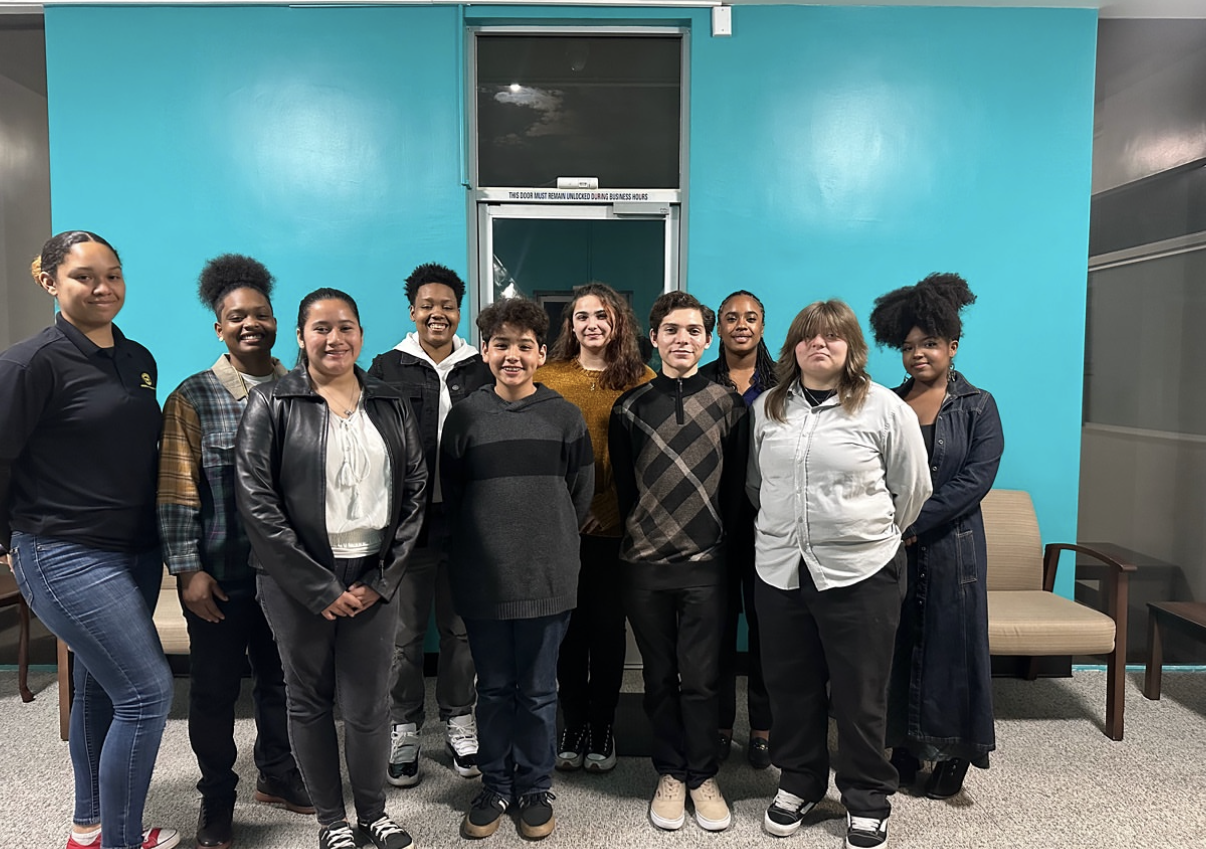
Carlos serving as the Youth Board Treasurer for Love Beyond Limits, a nonprofit organization where he had previously worked as an Administrative Assistant Intern during his sophomore year of high school.
THE TIMELINE I COULDN’T ACCELERATE
Haas offered resources to support my professional development, but I was discovering that navigating the opportunities surrounding business school required another kind of education. Knowing business concepts wasn’t the same as understanding the expectations of professional recruitment. Employers weren’t just looking for someone who understood the material. I also had to learn how to communicate my experiences, demonstrate what I could contribute, and build the professional skills that made those experiences meaningful.
What I hadn’t anticipated was that learning those expectations came with its own timeline, one my previous college credits couldn’t accelerate.
I entered Berkeley with roughly two years of college credits and initially considered graduating early. Academically, the possibility made sense. But encountering Haas’s professional environment made me question whether finishing sooner was necessarily what I wanted. Graduating earlier could mean having less time to explore industries, gain experiences that strengthened my professional interests, and learn how to present those experiences confidently to employers.
What if I spent a year pursuing an industry only to discover another that interested me more? Would accelerating graduation give me enough time to explore everything I hadn’t previously known existed? And would I have enough time to turn those discoveries into experiences and skills I could confidently bring to an employer?
SAME DEGREE, DIFFERENT TIMELINES
Those questions made me appreciate my position in Haas’s four-year Spieker Undergraduate Program, which allows students admitted directly from high school to spend four years within Haas and Berkeley.
They also made me consider students pursuing the same degree through Haas’s two-year pathway. Transfer students may arrive with considerably more academic or professional experience than I possess. Yet transferring from another institution can mean rebuilding relationships and discovering unfamiliar resources within a shorter period at Haas.
My consideration of early graduation isn’t equivalent to transferring. It simply helped me recognize how differently students can experience the same institution.
Nor is spending additional years at Haas automatically preferable. For some students, graduating sooner creates important financial or professional opportunities. Previous experience can also make a shorter transition remarkably productive.
What I’ve learned is that academic preparation and professional exploration don’t necessarily follow the same timeline.
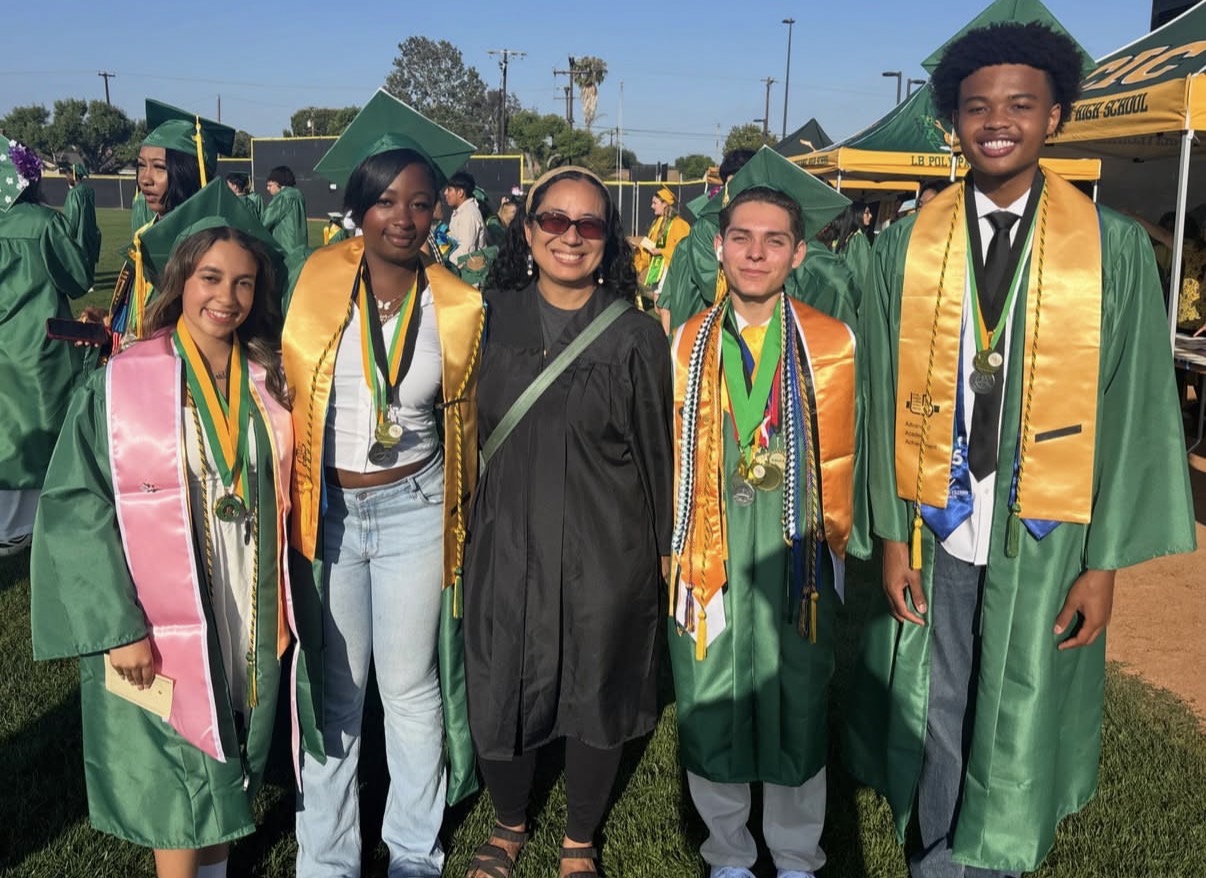
Carlos celebrating his high school graduation alongside some of his closest friends at Long Beach Polytechnic High School and his AP English teacher.
USING TIME DIFFERENTLY
I now approach Haas with greater intention. When I encounter a recruiting process I don’t understand, I ask older students what they wish they had known. I look into organizations before deadlines approach. When I finally understand something that once confused me, I try to pass that information along.
I also know what I want from my remaining time. I want to explore how business connects with education, social impact, and law without feeling that one semester has to determine my career. My work in philanthropy and Haas’s Social Impact Leadership concentration are helping me test those interests.
I entered Berkeley believing my college credits would allow me to graduate sooner. What I hadn’t considered was how much I still needed to discover. Haas has taught me that time isn’t valuable simply because we have more of it. Its value also depends on what we choose to do with it.
Bio: Carlos Guadamuz-Bielma is a student at UC Berkeley studying Business Administration through the Haas School of Business’s Spieker Undergraduate Program, with additional interests in rhetoric and public policy. A first-generation Latino student from Long Beach, California, Carlos grew up in a low-income, single-parent household and spent part of his childhood in foster care. He also identifies as LGBTQIA+, experiences that have shaped how he thinks about money, education, access, and opportunity.
At Berkeley, Carlos has become especially interested in the intersection of business and social impact. Through work in philanthropy, donor analytics, fundraising, and grant strategy, he has grown increasingly curious about how institutions decide where resources go, whose ideas receive support, and what creates opportunity in the first place.
Carlos is still exploring where his interests in business, education, philanthropy, public policy, and law will ultimately take him. Through Poets&Quants, he hopes to share an honest perspective on navigating Haas and Berkeley while reflecting on how his background continues to shape the way he understands business, opportunity, and the institutions behind both.
DON’T MISS: STUDENT VOICES: THE BUSINESS OF OPPORTUNITY AT UC-BERKELEY HAAS
© Copyright 2026 Poets&Quants. All rights reserved. This article may not be republished, rewritten or otherwise distributed without written permission. To reprint or license this article or any content from Poets&Quants, please submit your request HERE.


