






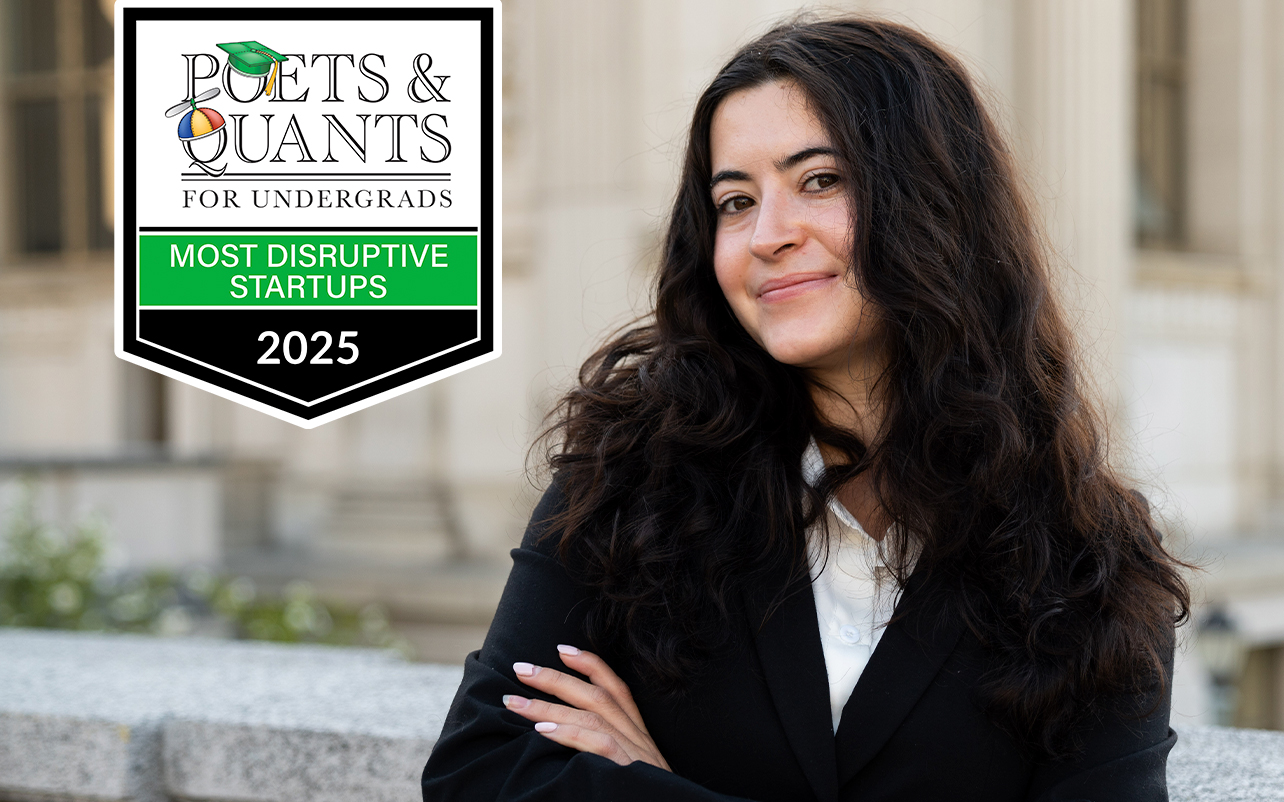
Quilly
University of California-Berkeley, Haas School of Business
Industry: Social Networks
Founding Student Name(s): Hannah Wissotzky
Brief Description of Solution: Quilly helps college women build an actual support system during one of the most disorienting transitions of their lives. Instead of throwing girls onto yet another swipe-based friendship app, Quilly places them into small, intentional virtual houses, cohorts designed to make campus feel less overwhelming and more like a “home away from home.” Using personality assessments and AI-powered “group leaders,” Quilly helps girls form real friendships through spontaneous and planned hangouts, safety check-ins, shared resources, and a points system that encourages mutual support. The goal isn’t to keep people on their phones, it’s to get them out of their dorm rooms and into real life with people who genuinely show up for them.
Funding Dollars: We won 1st place in the Fowler Social Global Innovation Competition’s Innovation Challenge and were the Runner-Up on the main stage, totaling $3.5K in funding. We’re now gearing up to launch our first official seed round in February.
What led you to launch this venture? Quilly is the product of two threads that collided at the right time: my personal experience with loneliness in college, and the overwhelmingly similar stories I heard during nearly 100 user interviews. I kept meeting girls who felt exactly like I did, showing up to a campus with 30,000 students and somehow still feeling invisible.
My team and I heard stories like Karley’s: rejected from clubs, intimidated walking into dining halls alone, feeling like everyone else had their “group” figured out. And all of this sits against a backdrop of national research: the U.S. Surgeon General naming loneliness a public health crisis; Gen Z women reporting the highest loneliness rates; and the rise of “rotting culture,” where we isolate behind our screens because showing up in real life feels too intimidating. I launched Quilly because I didn’t want another generation of young women thinking this was just “their problem.” It’s not. It’s systemic. And we deserve a better, braver infrastructure for connection.
What has been your biggest accomplishment so far with venture? Our biggest accomplishment is the combination of cultural reach and real-world impact we’ve built before even launching a full product.
* Our social reach: Quilly’s Instagram organically reaches over 5 million people a month, and we’ve grown a community of thousands who openly talk about loneliness in ways that feel refreshing, vulnerable, and stigma-reducing.
* Our events: We partnered with Birdie, the self-defense alarm company, to host a safety-focused party with over 500 girls attending and a 400-person waitlist. We had female DJs, free Plan B, access to resources, and a space where girls felt safe, seen, and connected.
* Our media presence: We’re filming podcast episodes with creators like Sophie Silva (7M followers), James Clark (7M), and Elio Sun Kennedy, helping kickstart a larger social narrative that makes talking about loneliness cool, not shameful.
We’re building a brand, a movement, and a product, and all three reinforce each other.
How has your business-related major helped you further this startup venture? Being a Haas undergrad has been one of the biggest accelerants for Quilly. It has given me access to resources, mentors, and platforms I wouldn’t have had anywhere else. I’ve pitched Quilly at the Haas Female Founders and Funders Pitch Competition, worked countless hours in eHub, and taken classes like Design Thinking with David Rochlin, who supported Quilly from the beginning and helped me shape our early research and product direction. Haas has also given me the language and frameworks to take something extremely emotional – loneliness – and build it into a structured, research-backed, scalable solution.
Which business class has been most valuable in building your startup and what was the biggest lesson you gained from it? The most valuable class has been UGBA 105: Leadership & Creativity. Everything we talked about – loneliness, belonging, connection, and how people show up for one another – directly shaped Quilly. I even collaborated on the curriculum, helping turn Quilly into a case study for the class. My biggest lesson: you can’t build community without designing for human behavior. People need nudges, structure, and leadership to form meaningful relationships. That insight is what led to our AI-powered “house leader” and cohort-based architecture.
What business professor made a significant contribution to your plans and why? Doug Leeds has made the largest impact on Quilly’s trajectory. I’ve worked with him as a UGSI for two semesters, helping run his speaker series and contributing to his class. Doug isn’t just a professor. He has been a genuine champion for Quilly. He helped me think about loneliness as a leadership challenge, not just a social one. He introduced me to advisors, encouraged me when the vision felt too big, and helped give Quilly the academic grounding it needed to move from “idea” to “plan.”
What founder or entrepreneur inspired you to start your own entrepreneurial journey? How did he or she prove motivational to you? The founder who shaped me the most is Sara Blakely. When I was younger, my parents played a podcast episode about her on a long road trip. I remember sitting in the back seat, hearing this story about a woman who didn’t have connections, didn’t have funding, but had clarity, grit, and a problem she cared deeply about.
Something about her story – the scrappiness, the optimism, the refusal to wait for permission – clicked for me. It made entrepreneurship feel human and accessible especially as she is in the female consumerism space, a dream of mine. It made me believe I could build something of my own.
What is your long-term goal with your startup? Our long-term goal is to make Quilly the default support system for young people—not just in college, but throughout early adulthood. We plan to launch city-based houses for post-grad life and, importantly, create a version for men. Quilly is intentionally women-only in college because mixed-gender loneliness too easily shifts into hookups or romantic pressure, which defeats the purpose of building true support systems. But young men are also deeply lonely, and they deserve infrastructure designed for them too. We’re building something that scales with people as they move through every major transition of early adulthood. And we’re doing this from both the research and consumer sides: our founder serves on the Youth Board of Jeremy Nobel’s Foundation for Art and Healing and works closely with experts like Edward Garcia at the Foundation for Social Connection and leading loneliness researcher Pamela Qualter, among others like Juliana Schroeder.
How has your local startup ecosystem contributed to your venture’s development and success? Berkeley has been the best place imaginable to build Quilly. They included professors who opened doors; PhD students researching loneliness who let me interview them for insight; pitch competitions recommended and reviewed by professors; mentors at the eHub; and classmates who tested early prototypes. This ecosystem has pushed Quilly forward at every step. Berkeley doesn’t just give you resources. It gives you urgency, accountability, and people who genuinely want to see you build something meaningful.
DON’T MISS: MOST DISRUPTIVE BUSINESS SCHOOL STARTUPS OF 2025
© Copyright 2026 Poets & Quants. All rights reserved. This article may not be republished, rewritten or otherwise distributed without written permission. To reprint or license this article or any content from Poets & Quants, please submit your request HERE.


