


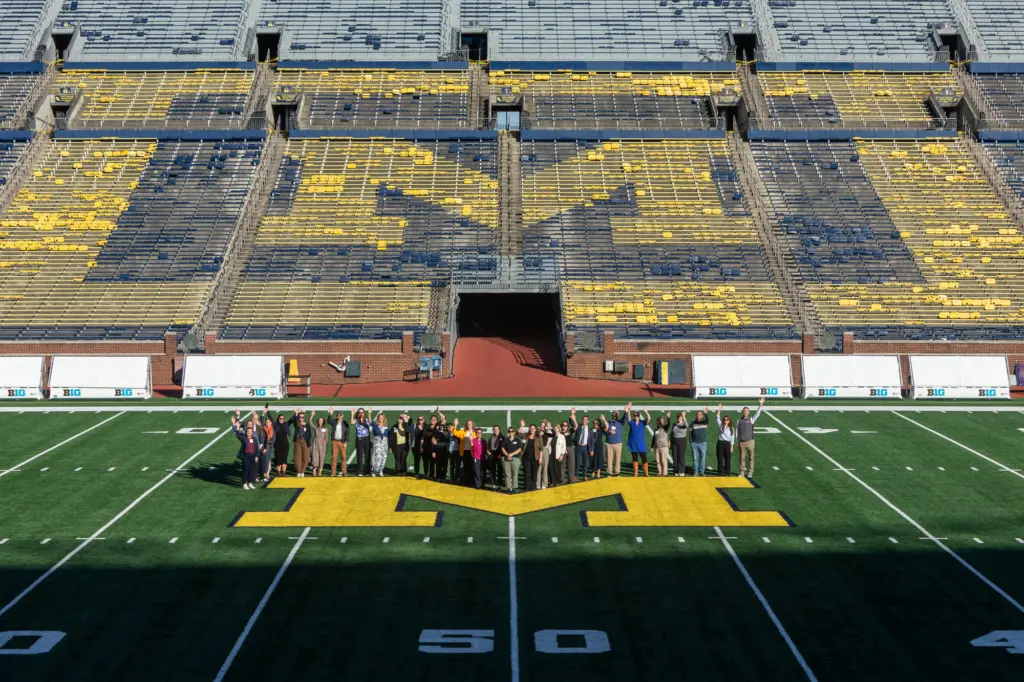
Participants in the 25th annual Business International Studies Network (BisNet) conference visit Michigan Stadium, aka the Big House, during this year’s gathering, hosted by the University of Michigan’s Ross School of Business. The conference brought together international-program leaders from 28 U.S. business schools to compare how study abroad is evolving — from career preparation and shorter, lower-cost programs to visa challenges and new ways of bringing global perspectives into the classroom. (Photo credit: Shannon Shultz)
There’s a certain generation of college students (you know who you are) for which studying abroad meant a semester in Europe, a lighter class load, and weekend trains to see the sites.
While today’s generation of business students still want the travel and the Instagramable photos, they’re demanding something more concrete.
“They’re trying to do more and more, and so they want something to be more than just a cultural exchange,” says Laura Haas, director of student experiences for Global Initiatives at the University of Michigan’s Ross School of Business.
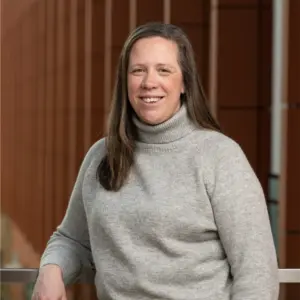
Laura Haas, Ross School of Business
Haas is also membership chair for the Business International Studies Network, or BisNet, a consortium of 28 U.S. business schools with established study-abroad and international exchange programs.
Founded in 2002 by the University of Wisconsin-Madison, BisNet gathered at Michigan Ross earlier this month for its 25th annual conference. Members traded ideas and best practices on everything from program design and scholarships to AI, visa headaches and career preparation.
“Students want more company visits. They want more meetings with alumni. They’re pushing us actually to do more because they want to make sure it’s worth it,” Haas tells Poets&Quants.
Across U.S. business schools, that expectation is helping reshape the traditional study-abroad experience. International programs are becoming more varied, more deliberately tied to academics and careers, and more focused on helping students articulate to employers the skills they develop overseas.
‘WHAT ARE THE SKILLS THAT YOU’RE DEVELOPING?’
Joseph Halaas, senior director of global programs at University of Wisconsin-Madison’s Wisconsin School of Business, has worked in international education for more than a decade. He sees today a lot more emphasis, both from students and from the people designing their undergraduate experience, on the transferable skills students can take from their host country to the job interview.
Roughly half of Wisconsin business students study abroad, among the highest participation rates in the country. The school offers more than 30 business-focused programs across semester, summer, short-term, and graduate formats in locations like Argentina, Austria, China, England, Spain, and more.
Wisconsin has built a portfolio of programs that allow business students to go overseas without substantially delaying graduation. Academic advisors work with students early to plan when and where they’d like to study, which courses they will need and how the experience fits into their degree. Career Coaches then help students make connections between what happened during their trip and what may later matter to an employer.
Even something as frustrating as navigating a difficult visa process can become an example of persistence or problem solving, Halaas says.
The Carlson School of Management at the University of Minnesota similarly coaches students to connect their global experience with the skills employers say they want. Think resilience, flexibility, adaptability and cross-cultural communication.
“The real work is to help students be able to articulate in the right situations, like interviews, what are they gaining on study abroad, and how can that help them in their careers?” says Kate Terry, senior program director for education abroad in Carlson’s Global Institute.
Carlson requires an international experience for its business undergrads, offering a range of short-term, summer, semester, and year-long study abroad programs. It partners with 32 international business schools and awarded nearly 350 study abroad scholarships last year.
The goal is to prepare graduates to work cross-culturally whether they ultimately land in Minnesota or Hong Kong, Terry says.
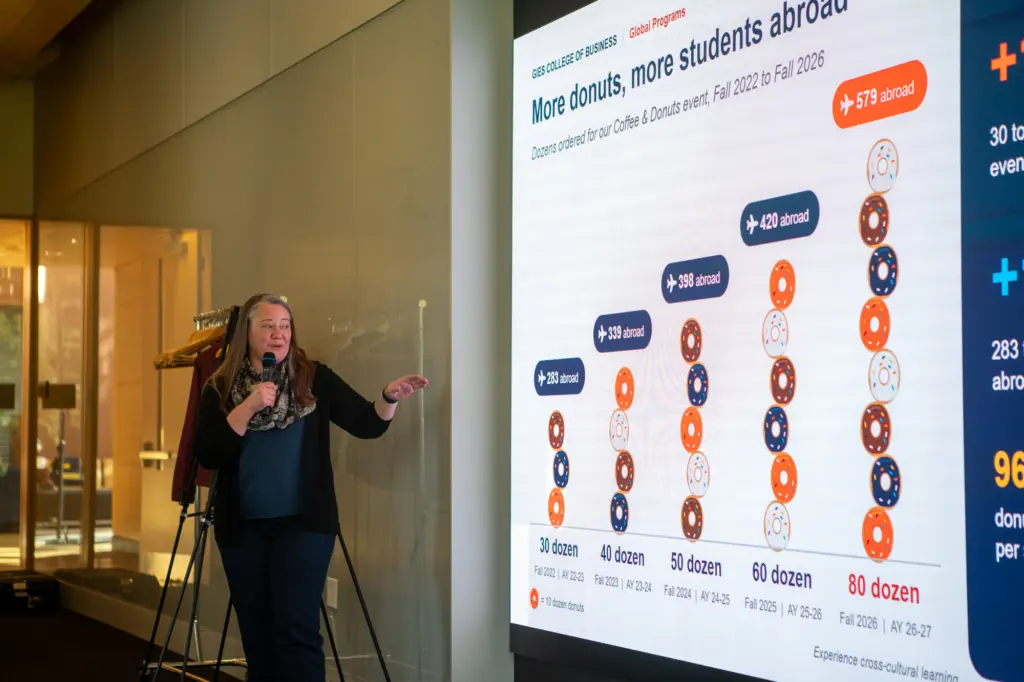
Nicole Lamers of the University of Illinois Urbana-Champaign’s Gies College of Business presents during BisNet’s best-practices session at Michigan Ross. Lamers shared Gies’ “Coffee & Donuts” approach to study-abroad recruiting, a low-lift alternative to traditional fairs that has grown alongside student participation — from 283 students abroad in 2022-23 to 579 in 2025-26. The session typified BisNet’s collaborative model, with member schools openly trading practical ideas they can take back to their own campuses. (Photo credit: Shannon Shultz)
AT HASLAM, STUDY ABROAD STARTS BEFORE THE FLIGHT
Cost is still one of the biggest barriers to studying abroad, particularly for students with high financial need and first-generation students, who participate at lower rates than their peers. Several schools offer scholarships or other programs to help defray the costs.
University of Tennessee’s Haslam College of Business, for example, offers a Global Launch Scholarship that pairs financial aid with academic study. The program, adapted from a pandemic-era alternative to traditional study abroad, awards $1,500 to students who complete an eight-week international business research project, often tied to where they later travel, says Lauren Jacobs, Haslam’s director of international programs and study abroad.
One student researched the relationship among Iceland’s tourism industry, energy sector and sustainability before joining a faculty-led program there. Once in Iceland, he brought that research into class discussions and company visits and even reached out to a University of Iceland professor whose work he had cited.
Another student studied Portugal’s tinned-fish industry before spending a summer there. She was able to see the industry firsthand and connect the research to an internship involving environmental regulation.
Students often build upon those projects after they return through undergraduate research presentations, graduate or law school applications, Fulbright opportunities and, in some cases, publication, Jacobs says. Haslam holds workshops every semester for returning students to help them translate their international experiences into talking points.
“It’s easy to list an international trip on a resume. The harder question is, ‘How are you going to talk about this experience in a way that sets you apart?’” Jacobs says.
MORE WAYS TO GO INTERNATIONAL
The changing face of study abroad is also giving business students more ways to fit global experiences into already crowded college schedules.
At Michigan Ross, for example, a new short-term exchange model aims to give more students the chance to study in more countries for less money. The one- to three-week programs are easier to fit around athletics, internships, work and rigid academic schedules than traditional semester- or yearlong exchanges. They are also cheaper for students than faculty-led programs.
Rather than rely on third-party providers for housing, travel and other logistics, Ross partners directly with international business schools where local faculty design and teach the programs.
Ross piloted the model last year with 77 undergraduate and one-year master’s students. For 2026, it doubled its partners and participation rose to 169 with programs in Europe, Asia and North Africa. With donor support, most programs cost students $500 to $900.
But shorter programs are not necessarily replacing the traditional semester abroad.
At Haslam, spring enrollment for semester trips roughly doubled two years ago and has continued to grow, while short-term faculty-led programs are also expanding at a slower, steadier pace.
“We love when our students are doing these full semester experiences and getting the 16 weeks to be immersed in the country and the culture and the business culture too,” Jacobs says. “It just gives them more opportunities to learn when they’re there for longer.”
Indiana University’s Kelley School of Business is likewise seeing growth in both semester exchanges and short-term faculty-led programs. Some students do more than one.
Students often want a prescribed path for their studies and careers, but real life is rarely so linear. Deviations teach students to navigate the ambiguity, says Laura Tiffin, associate director of international programs at Kelley.
“Most of the time, you don’t have all the information,” Tiffin says. “So you have to figure out and make decisions based on the information that you do have.”
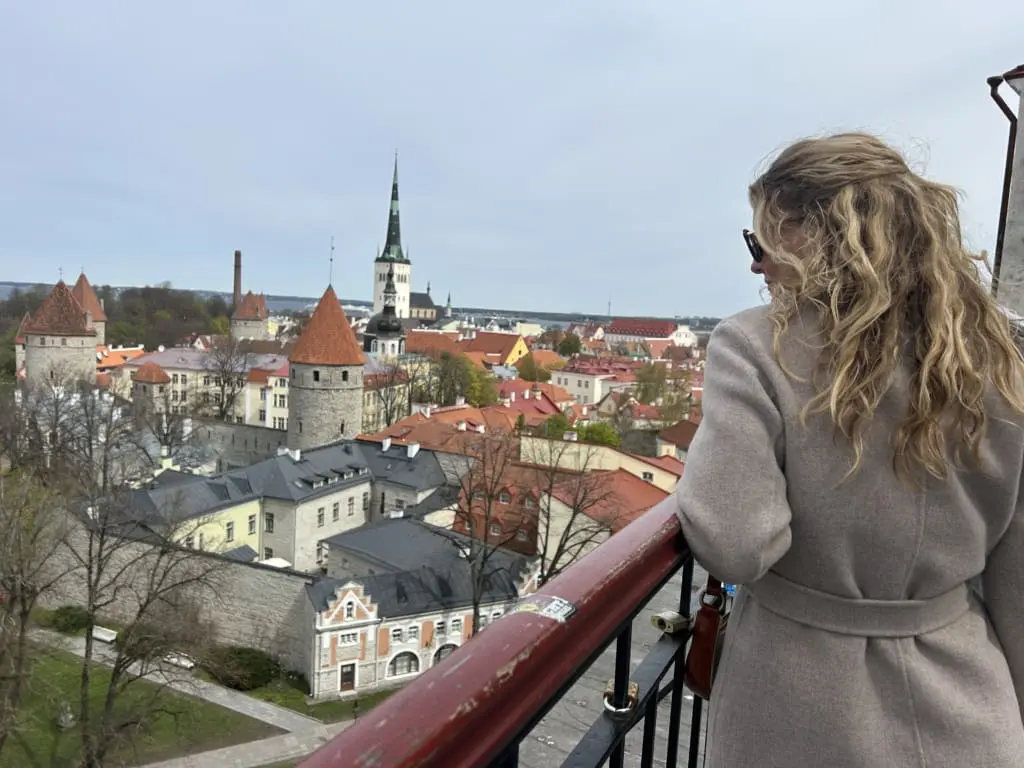
A student from University of Michigan Ross School of Business overlooks the red rooftops and church spires of Tallinn’s medieval Old Town from the city’s historic stone defense walls during a day excursion from Helsinki as part of Ross’ three-week immersion at Aalto University School of Business in May.
THE BUSINESS CASE FOR STUDY ABROAD
The business case for study abroad is straightforward: Modern business is global even when the job itself is not. Even a mom-and-pop operation may rely on equipment made overseas, global supply chains or customers and employees from different cultural backgrounds.
More than travel, Haas thinks of study abroad as a kind of soft diplomacy. It is an exercise in adaptability, problem solving and working across differences, particularly in times of geopolitical tension.
“I think it matters more than ever,” she says. “In a time where true diplomacy is struggling to make headway around big issues, it requires relationships that will sustain the turmoil.”
For students, going abroad can challenge assumptions about other countries while also forcing them to think more critically about their own.
Halaas has heard Wisconsin students return from overseas surprised by how many questions they received about the United States, and by how unprepared they sometimes were to answer them.
“Our world is still really interconnected, and I think understanding how those systems can work together is really important,” he says.
WHAT FAMILIES SHOULD LOOK FOR
In evaluating programs, Haas recommends that prospective business students look beyond the number of destinations listed on a school’s study-abroad webpage. Look instead at how deeply international perspectives are built into the broader curriculum.
Cost, athletics, academic requirements and other commitments mean that not every students will be able to study abroad during their degree. Families should also ask whether international students are part of the classroom experience, what faculty are researching, whether study abroad can fit without delaying graduation, and how career support connects to the experience.
At Ross, one way students gain global exposure without leaving Ann Arbor is through the international exchange students who cycle through its classrooms each semester.
“The fact that Ross is so in on cultural exchange is that every semester, we have new international perspectives coming into the classroom,” Haas says. “You get to sit next to 200 international students who are just here for a brief time, and they’re coming with this completely different academic and cultural experience.”
DON’T MISS: AT AALTO, ROSS STUDENTS FIND FINNISH SAUNA CULTURE, PUB CRAWLS, AND A DIFFERENT PACE OF LIFE AND ‘EARLY AND OFTEN’: HOW MIAMI FARMER IS BUILDING A CAREER ECOSYSTEM BEYOND THE FIRST JOB
© Copyright 2026 Poets & Quants. All rights reserved. This article may not be republished, rewritten or otherwise distributed without written permission. To reprint or license this article or any content from Poets & Quants, please submit your request HERE.


